


05.11.2026
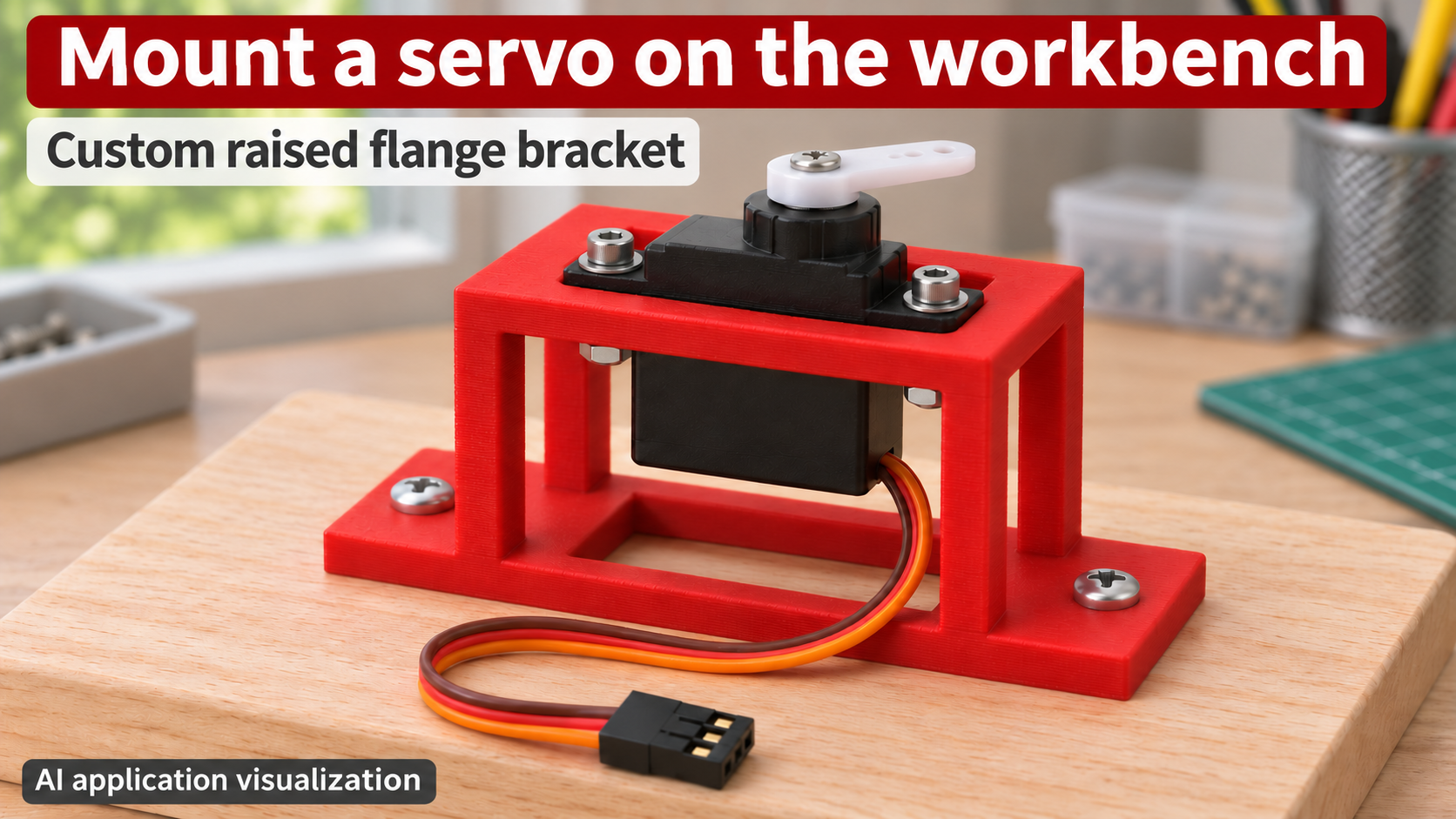
Mount a small hobby servo on a workbench with a raised flange bracket
The open bridge supports a servo by its two mounting ears while keeping the case underside and cable accessible beneath the upper frame.
Read more →Daily problem-solution articles for realistic repair, retrofit and spare-part scenarios. Each post shows when a configurable 3D printed part can be useful.
05.11.2026
The open bridge supports a servo by its two mounting ears while keeping the case underside and cable accessible beneath the upper frame.
Read more →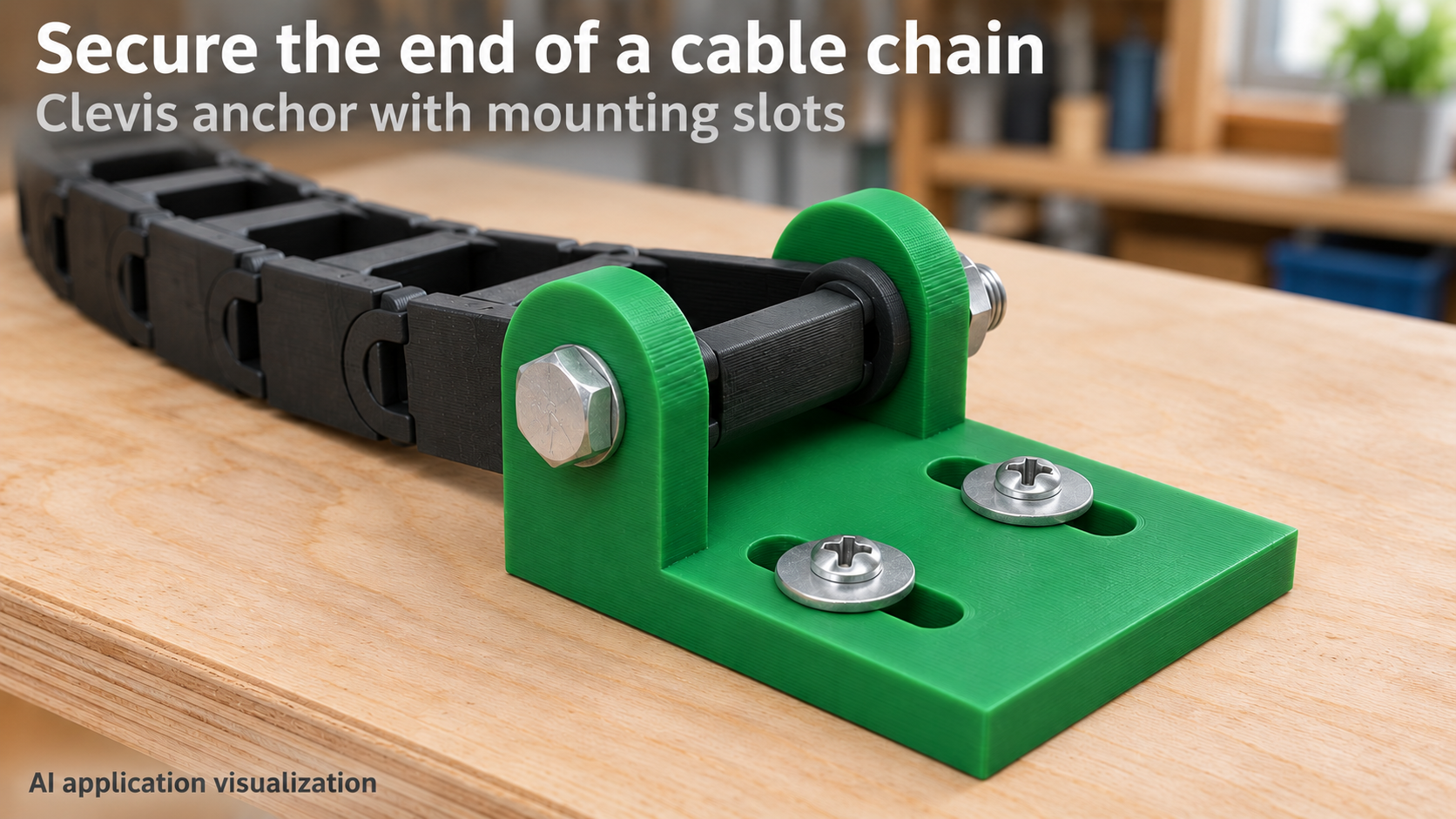
04.11.2026
Hold a suitable terminal link between two cheeks on a through axle. Two lengthwise mounting slots help align it on a flat support surface.
Read more →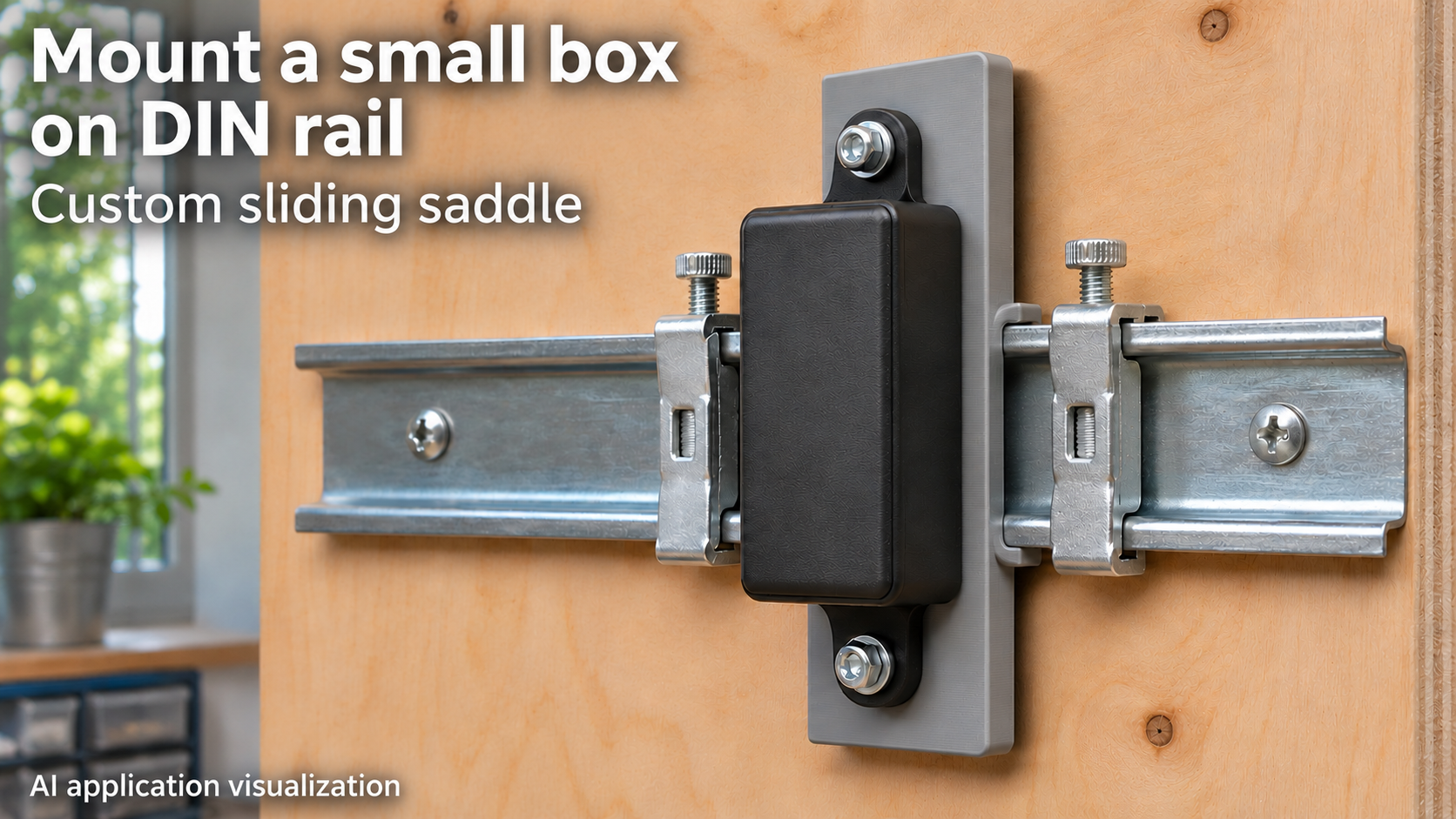
04.11.2026
Attach a lightweight closed enclosure through two mounting holes outside the rail. Match the rail profile and add separate end stops to control sliding.
Read more →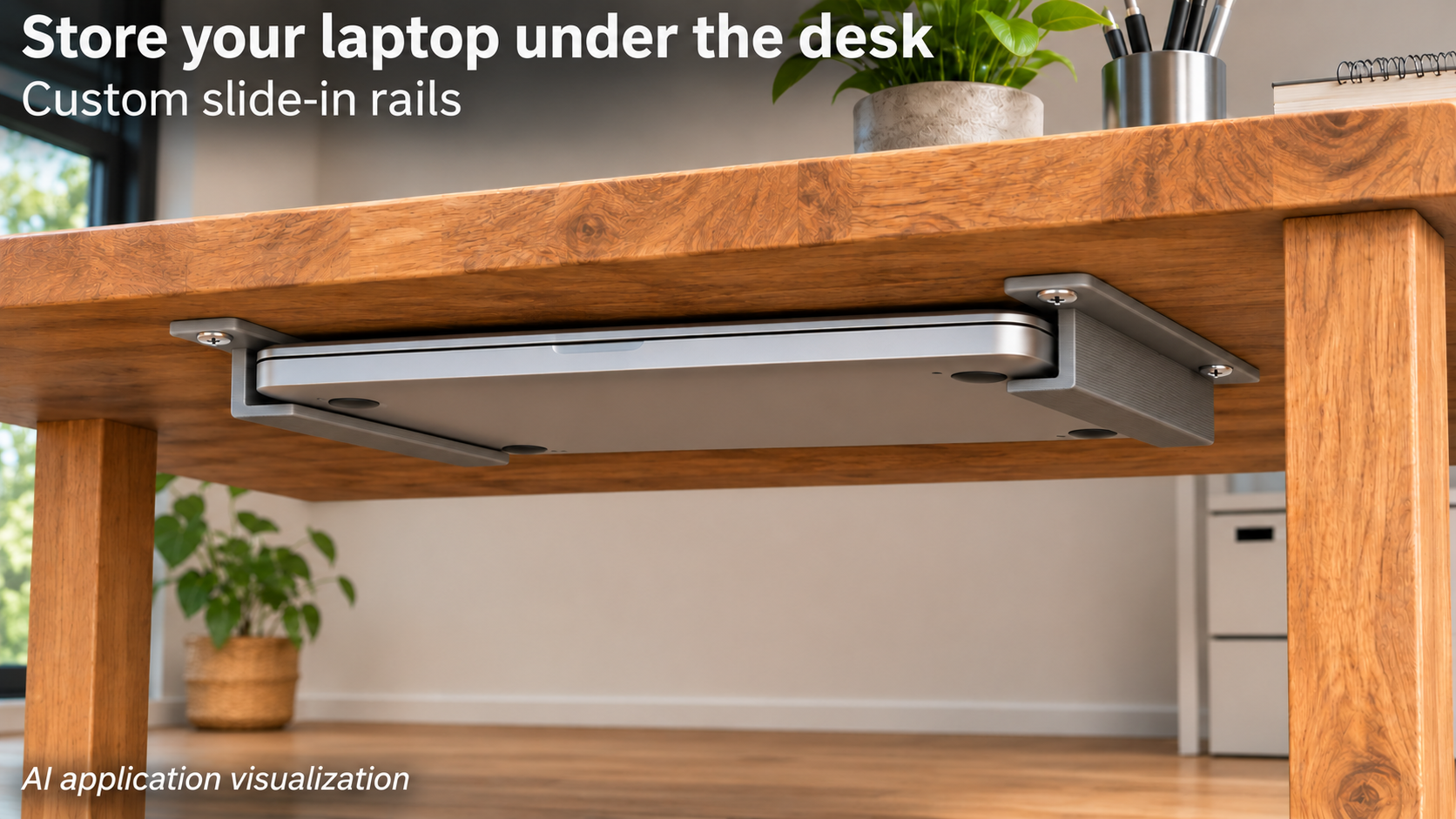
04.11.2026
Two separate rails create storage for a switched-off notebook. Match the opening height, support ledges and installed spacing to your own device.
Read more →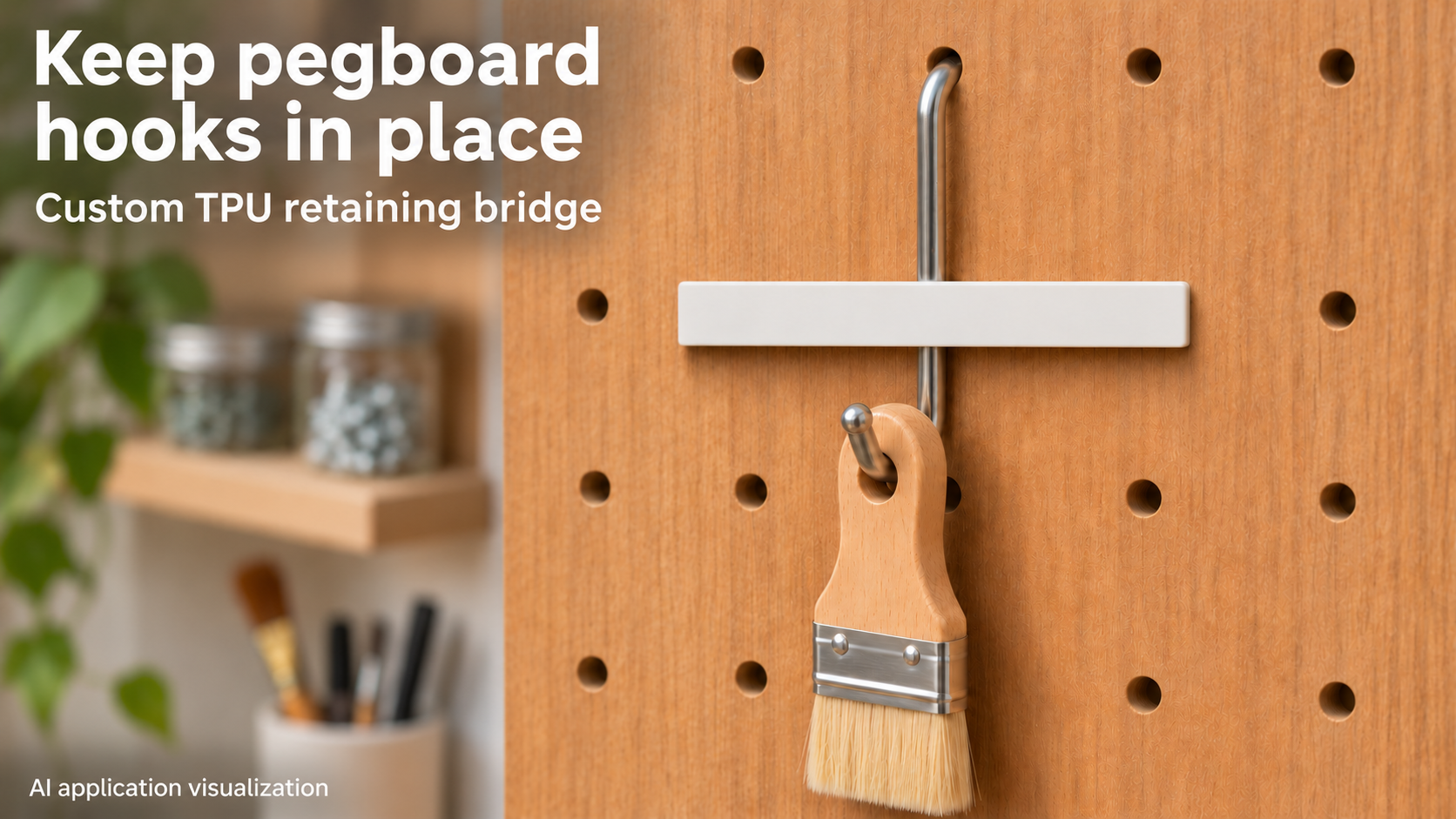
04.11.2026
When a hook comes away with a lightweight brush, a fitted retaining bridge can hold its wire shank against the pegboard.
Read more →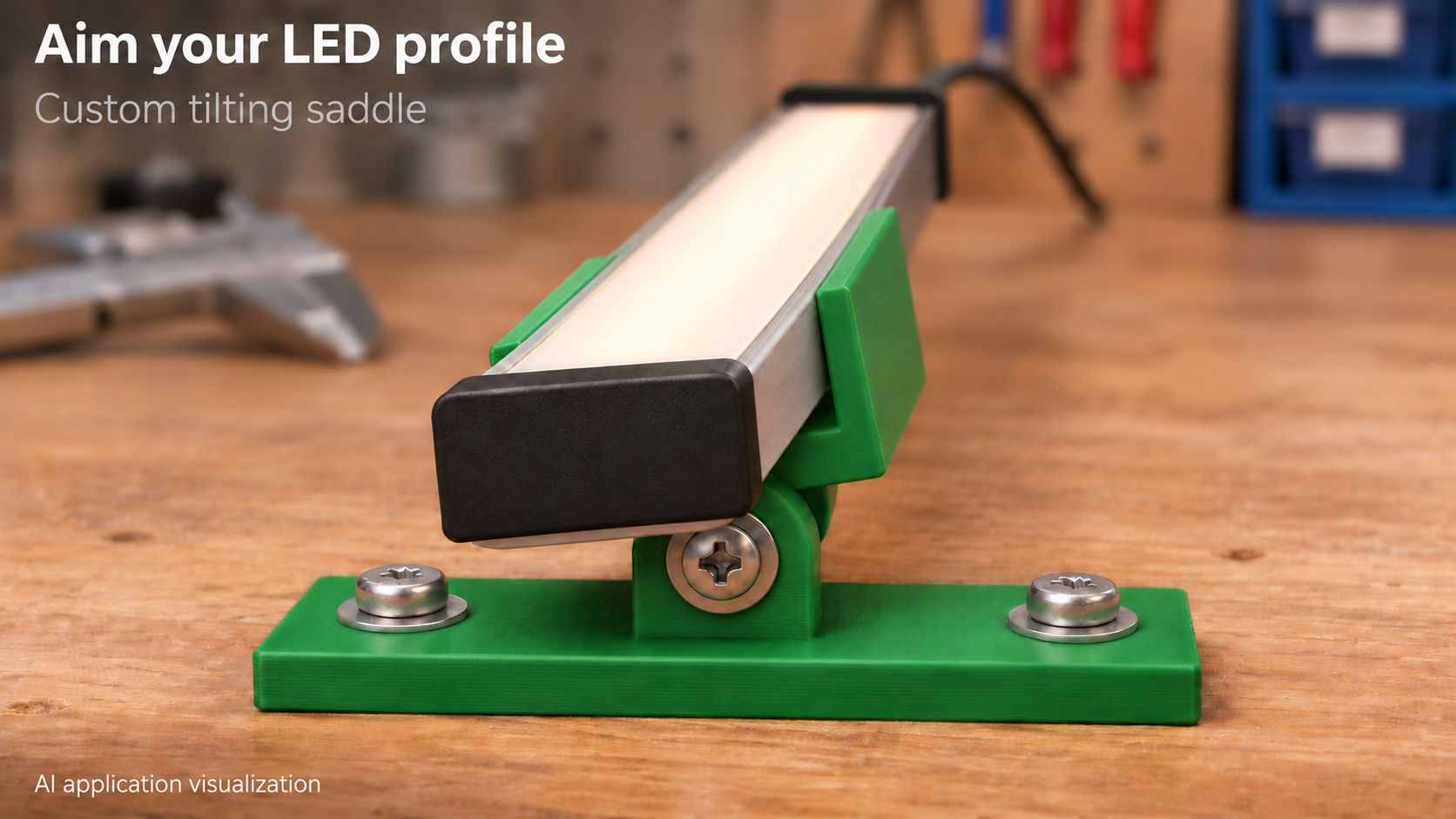
04.11.2026
Direct a short aluminium LED profile towards your work area using an end-slide saddle and a separate screw-mounted pivot base.
Read more →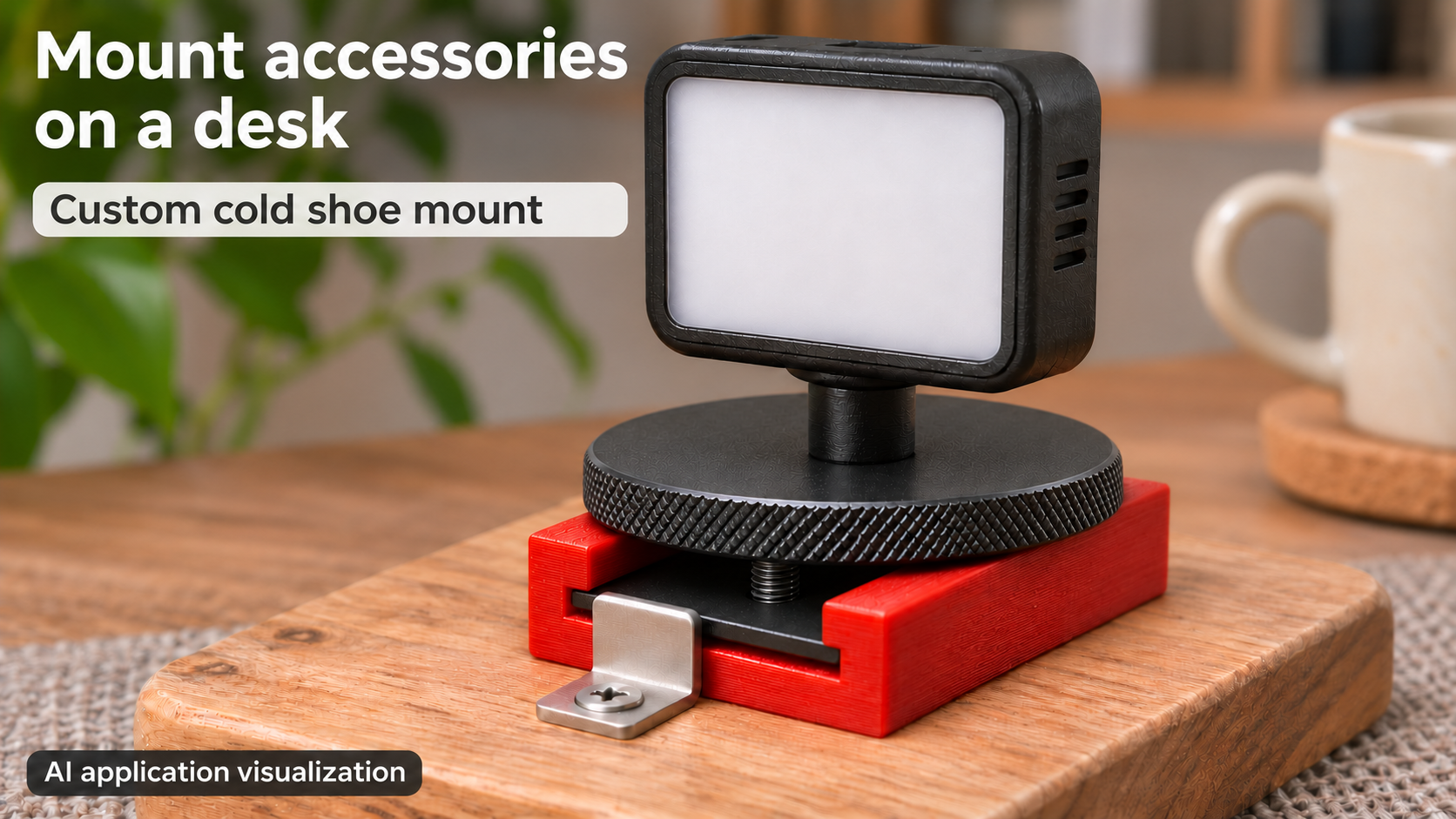
04.11.2026
Fit a lightweight accessory shoe to a wooden base with adjustable rails, countersunk fixing holes and a separate stop at the open end.
Read more →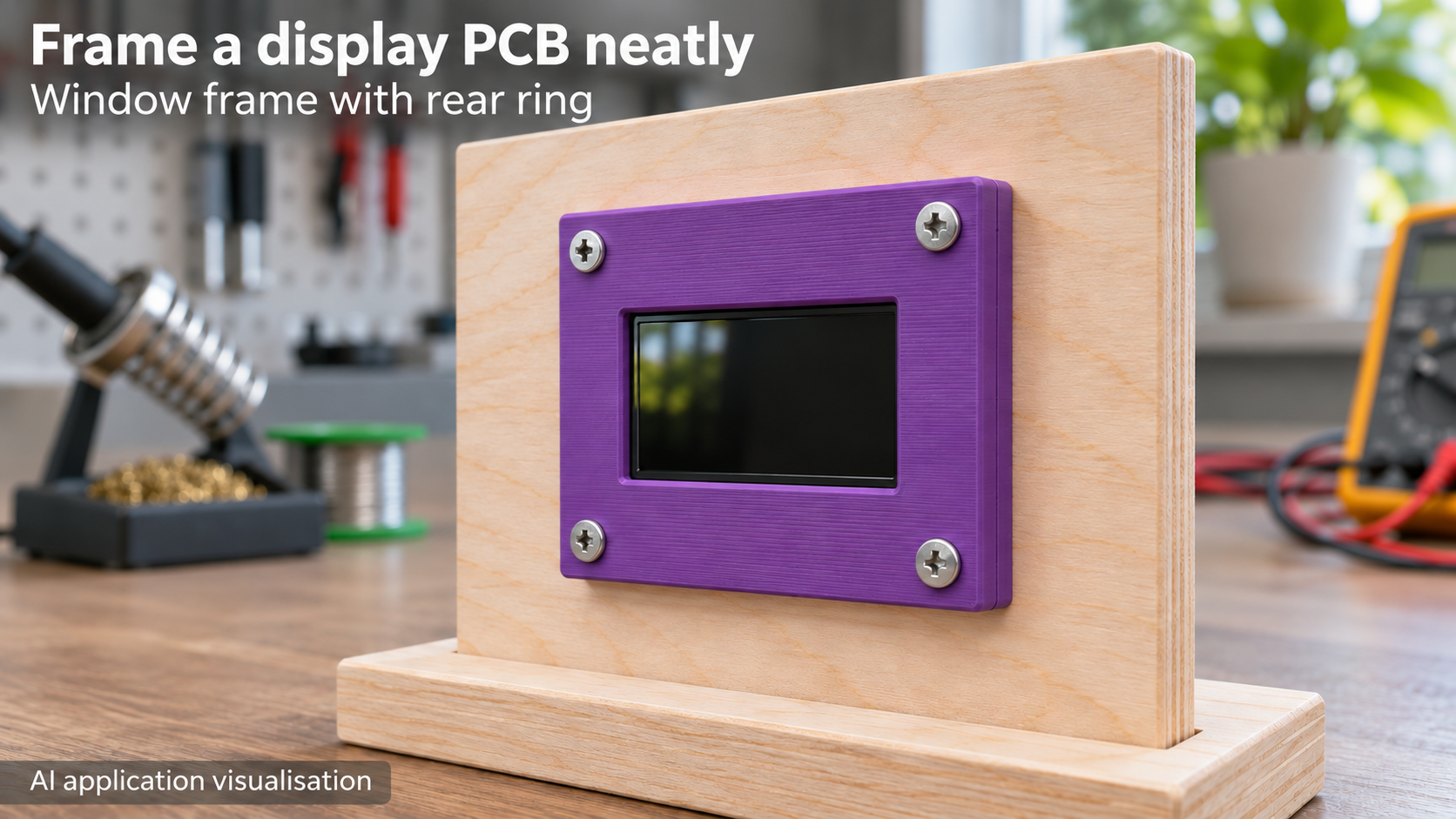
04.11.2026
Give a small display a neat position in a prototype front panel. A front PCB seat and separate retaining ring capture the board at clear edge areas.
Read more →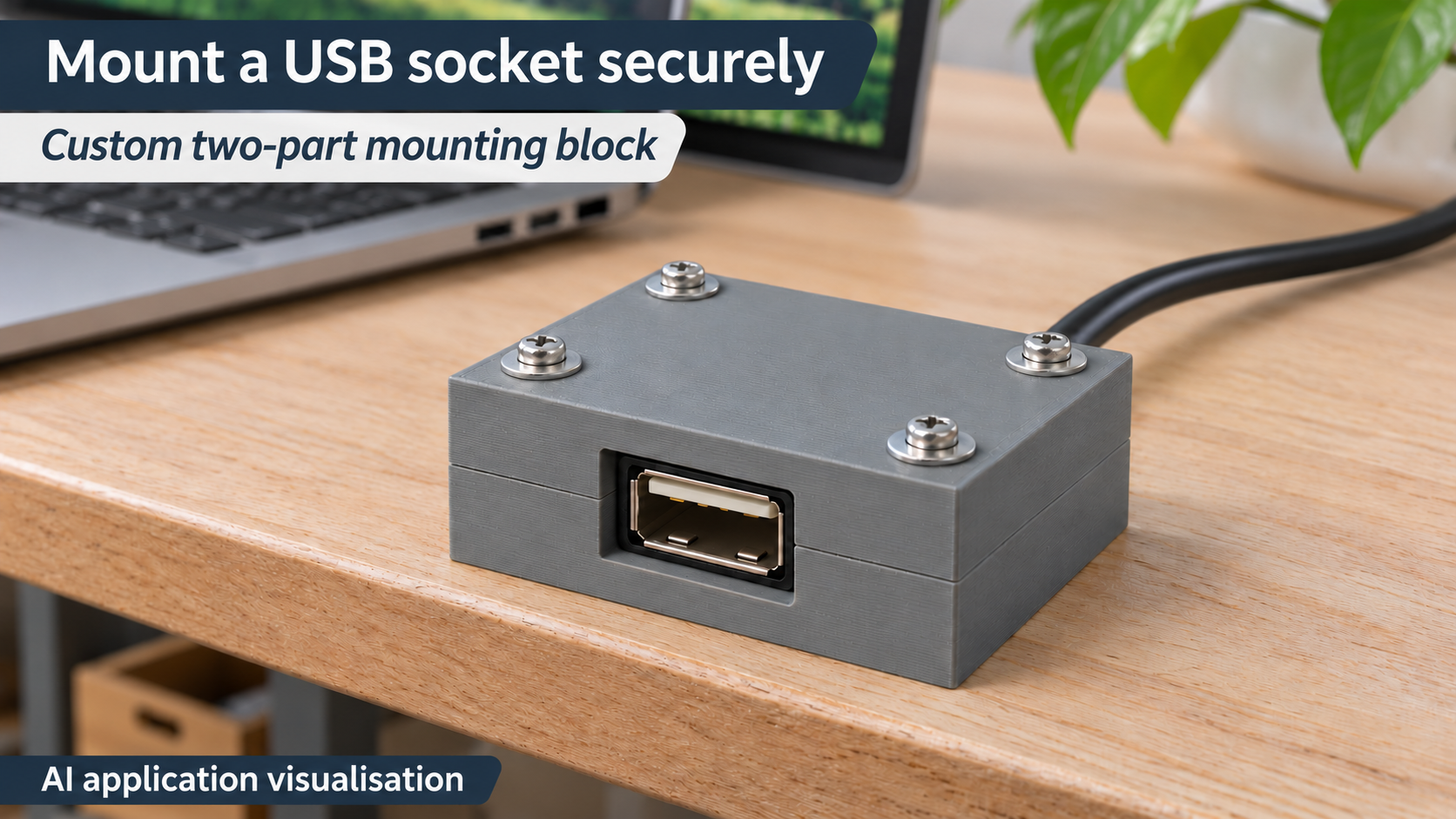
04.11.2026
Keep a cable socket within reach on a mounting surface. Two printed halves retain a suitable insulated housing by its front and rear shoulders.
Read more →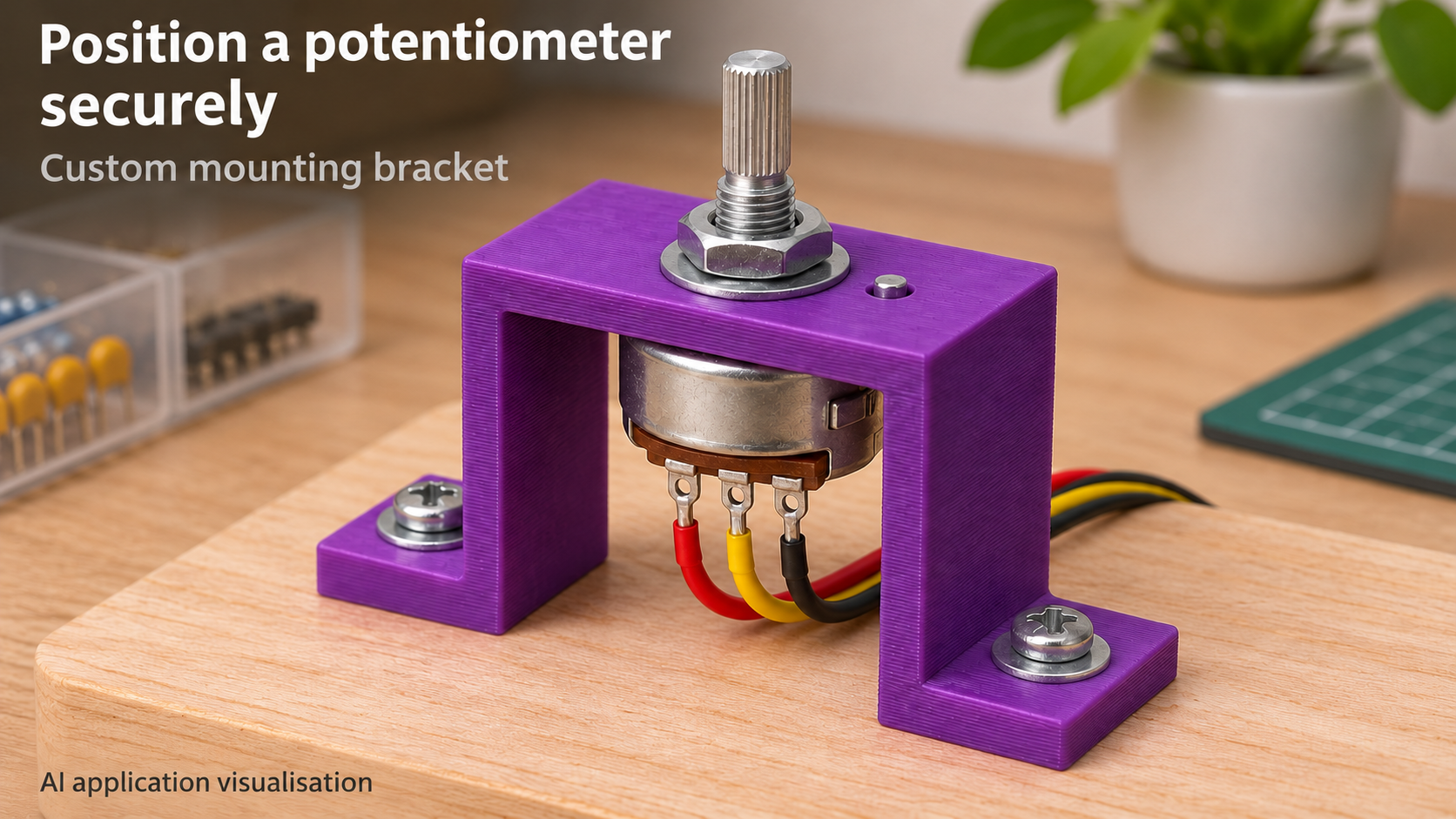
04.11.2026
Give a rotary potentiometer a fixed place in a bench experiment. This open bracket supports its threaded bushing and existing locating pin while leaving room for terminals.
Read more →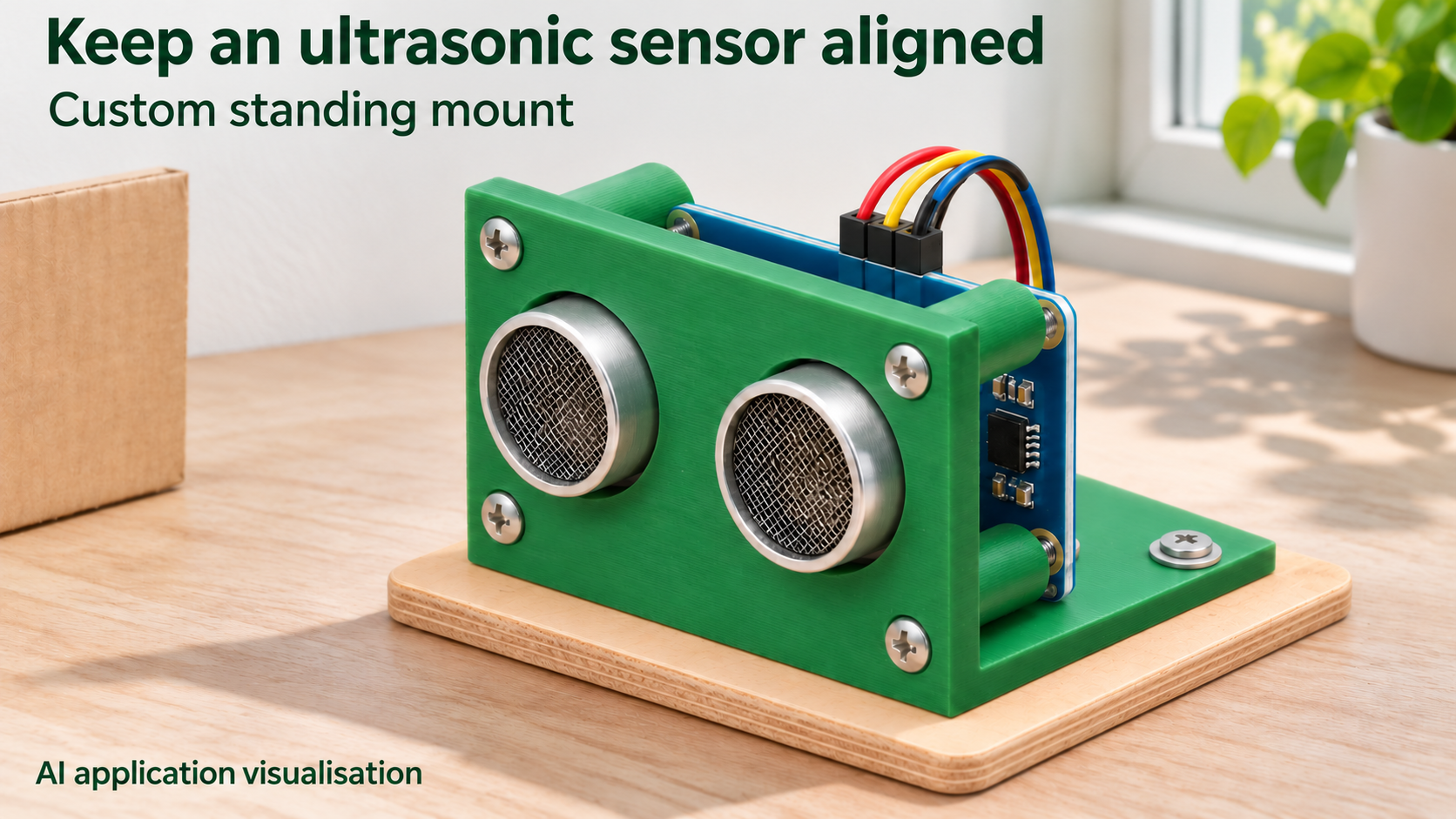
04.11.2026
Keep a two-transducer module steady during a tabletop experiment. Match the front openings, PCB hole pattern and rear spacing to the actual sensor.
Read more →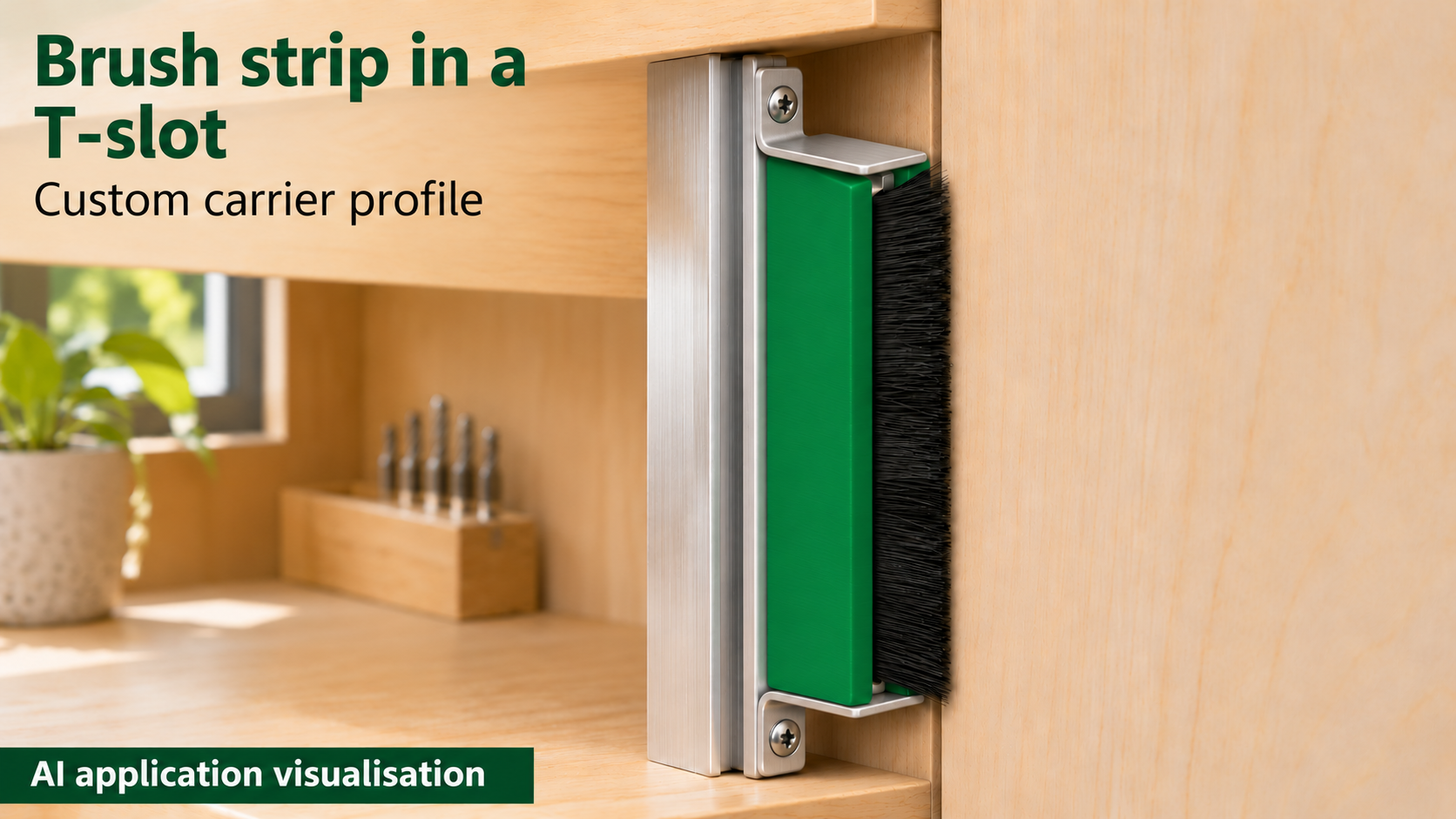
04.11.2026
When an existing brush backing does not fit the rail, a printed intermediate profile connects its flat strip to a compatible T-slot on light furniture.
Read more →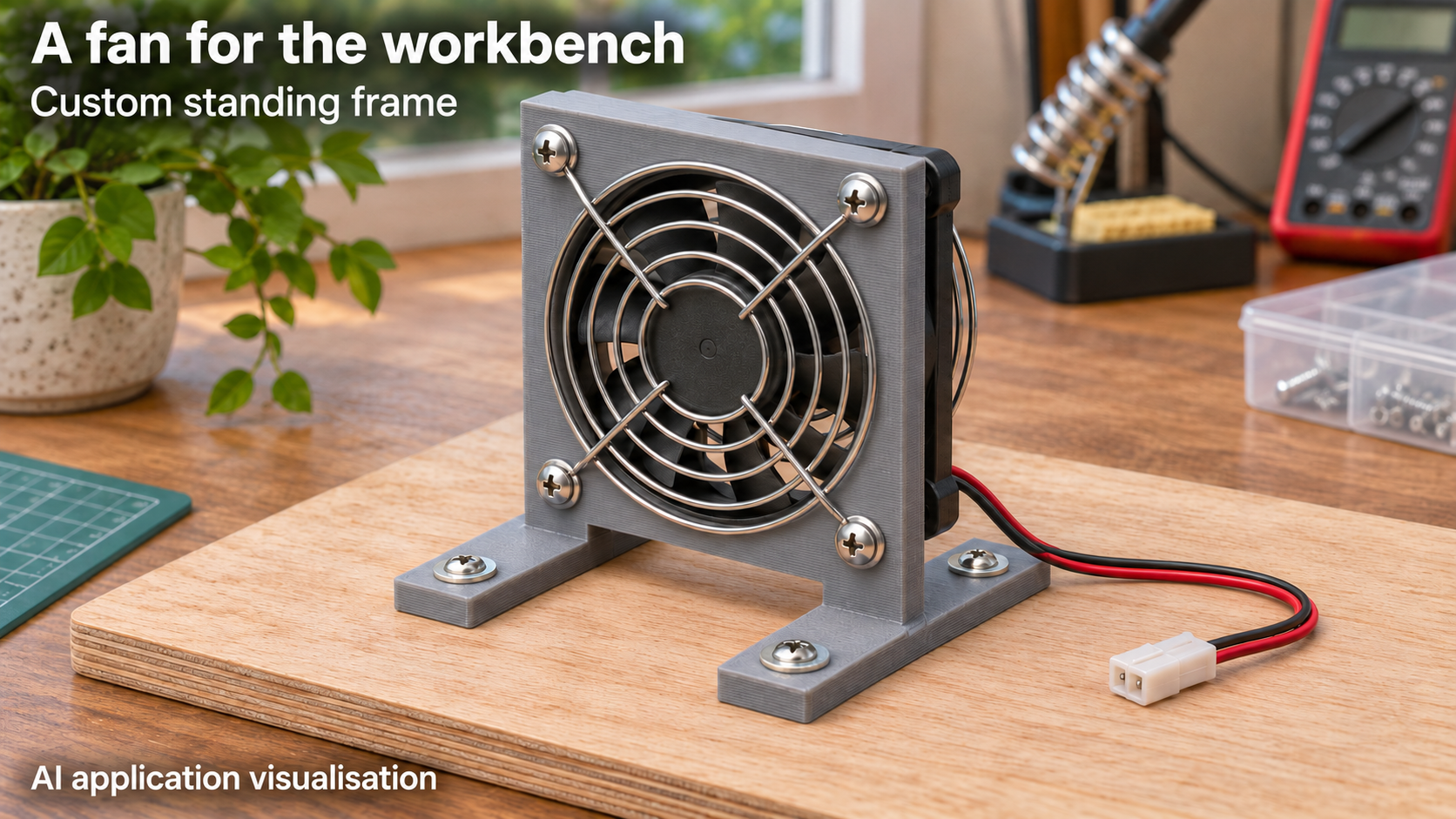
04.11.2026
Mount a square low-voltage fan on a prototype board. Match the frame, hole pattern and air opening, then secure its two feet to the base.
Read more →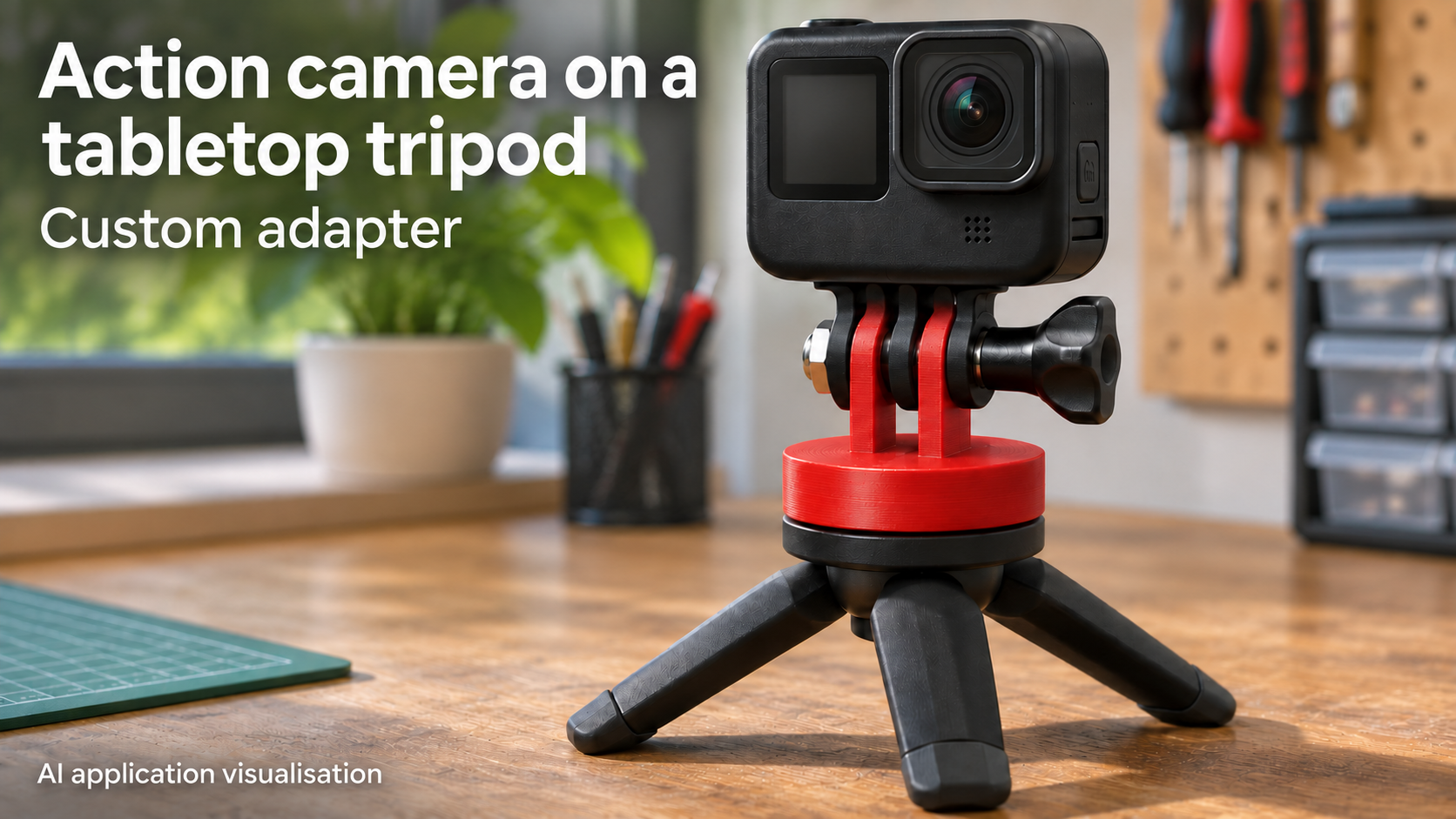
04.11.2026
Position a small action camera for desk recordings. Two printed fingers connect a matching three-finger camera fitting to a separate metal tripod nut.
Read more →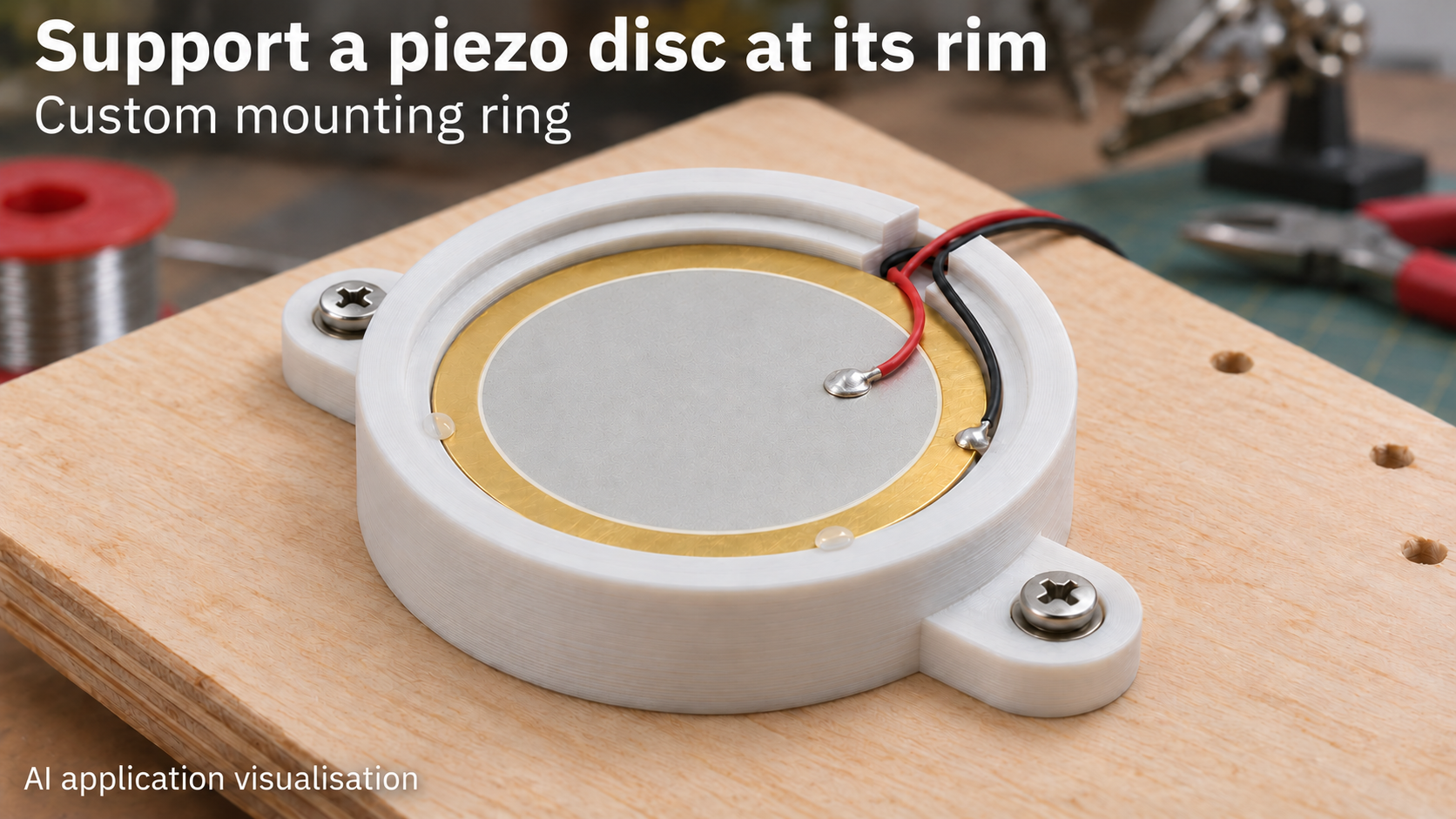
04.11.2026
Attach a piezo disc to a prototype board without bonding its centre down. Match the rim support, wire exit and screw ears to the actual component.
Read more →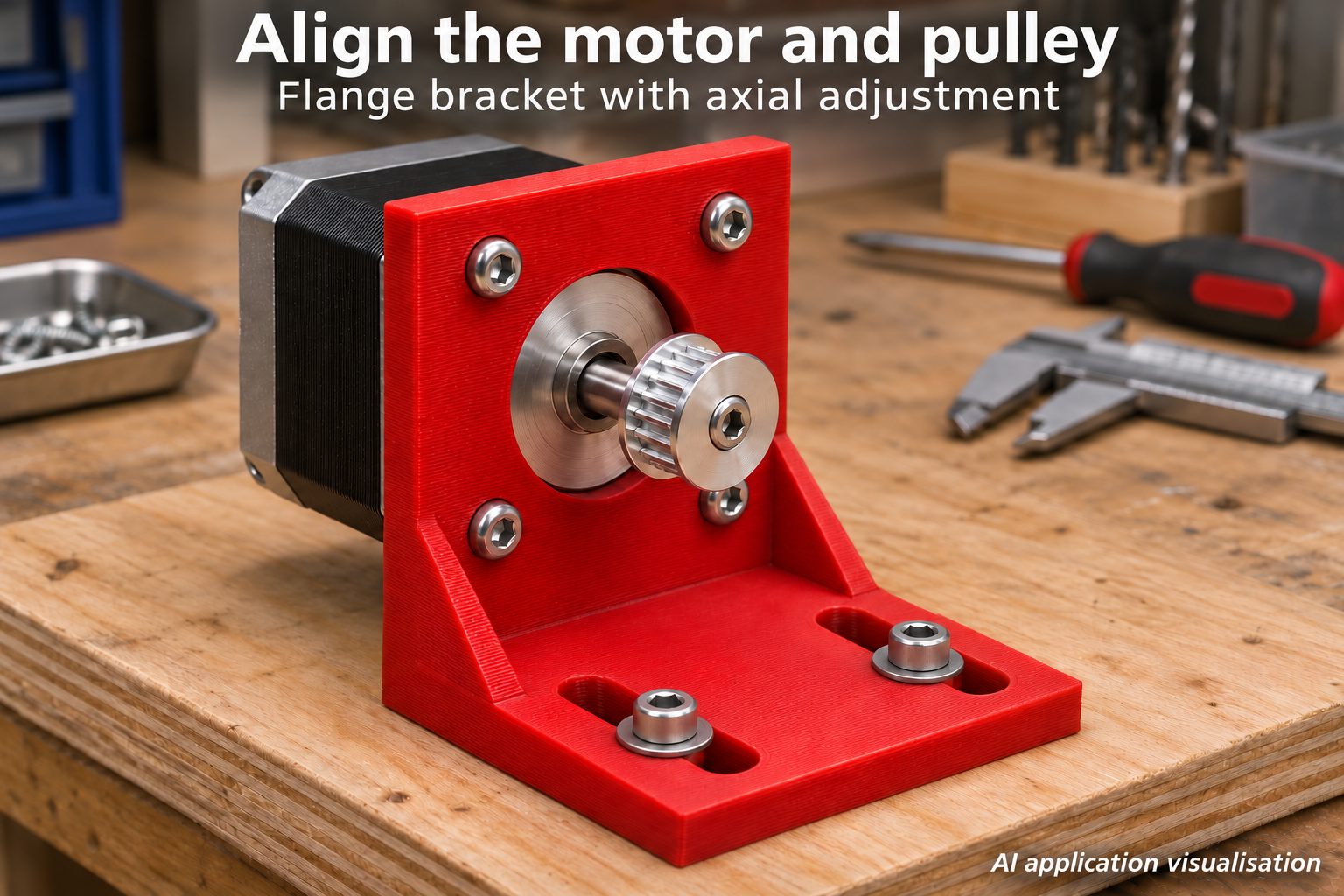
04.11.2026
Four face screws secure the motor while two base slots allow movement along its shaft. Match the bracket to your hole pattern, locating boss and shaft height.
Read more →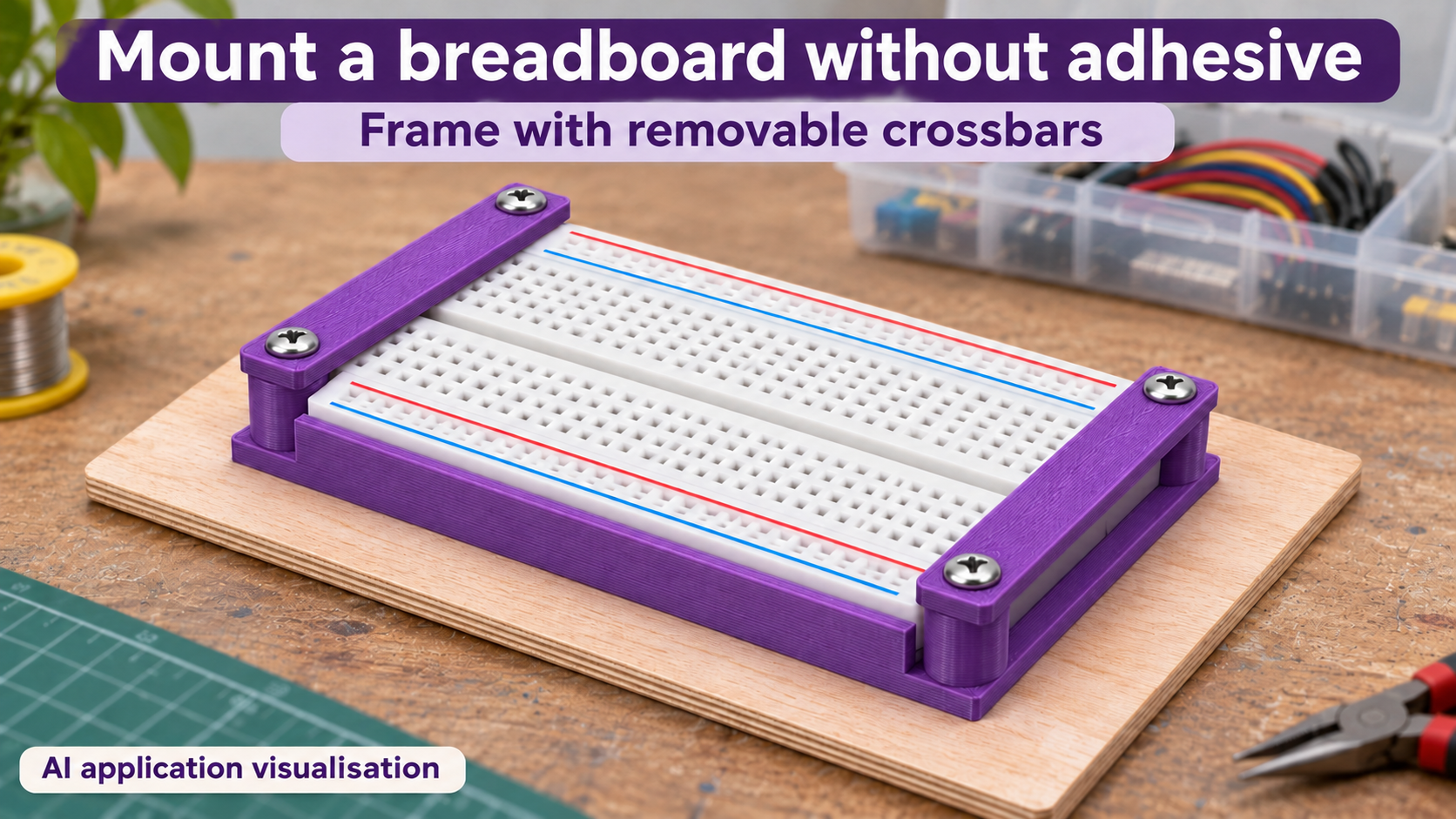
04.11.2026
An open frame supports the breadboard’s bottom perimeter. Two removable crossbars retain its unused end margins while keeping the contact field accessible.
Read more →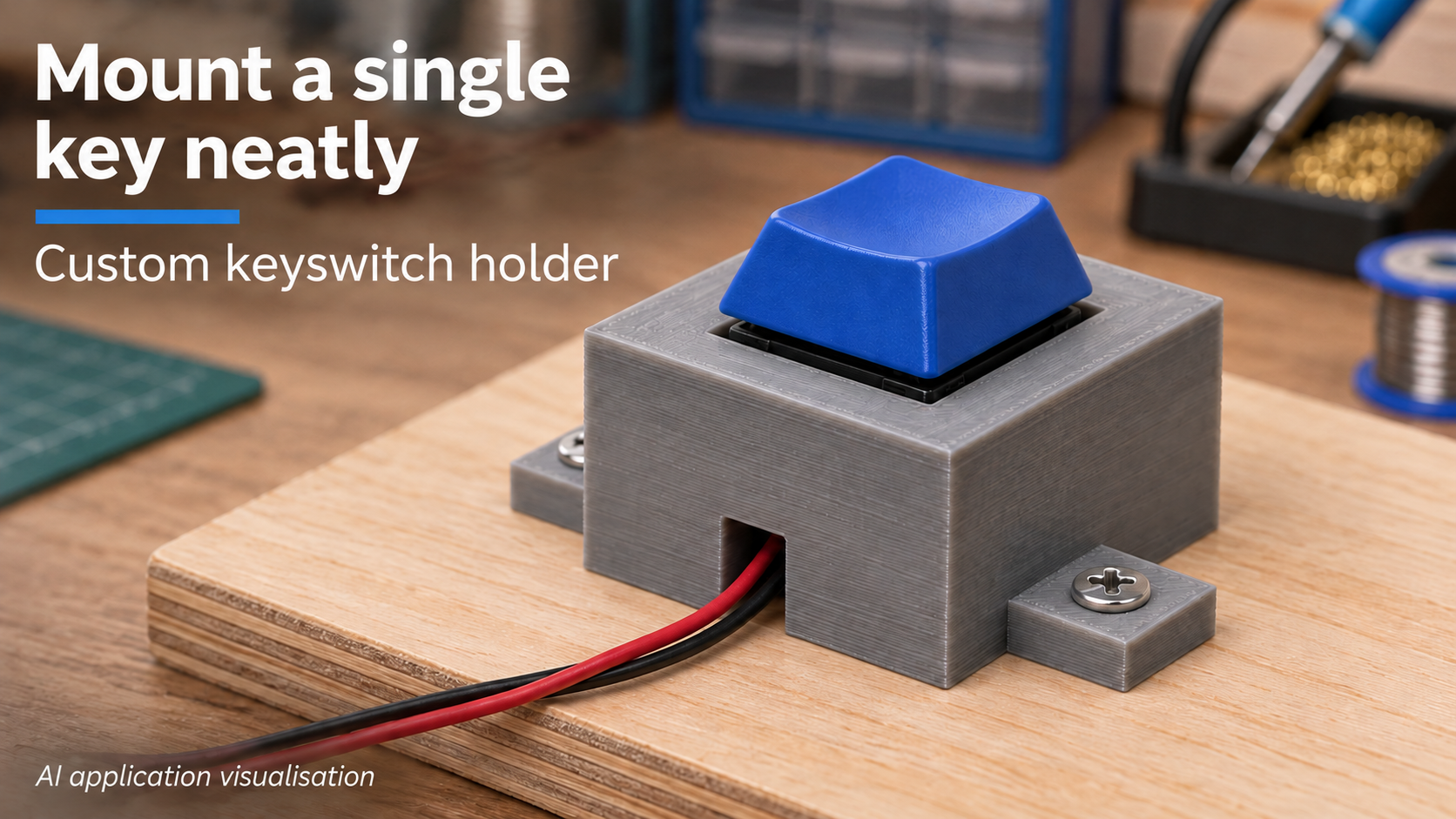
04.11.2026
A printed holder uses a thin retaining plate for a compatible keyswitch. Two feet secure it to your base, while an open-bottom notch routes the wires out.
Read more →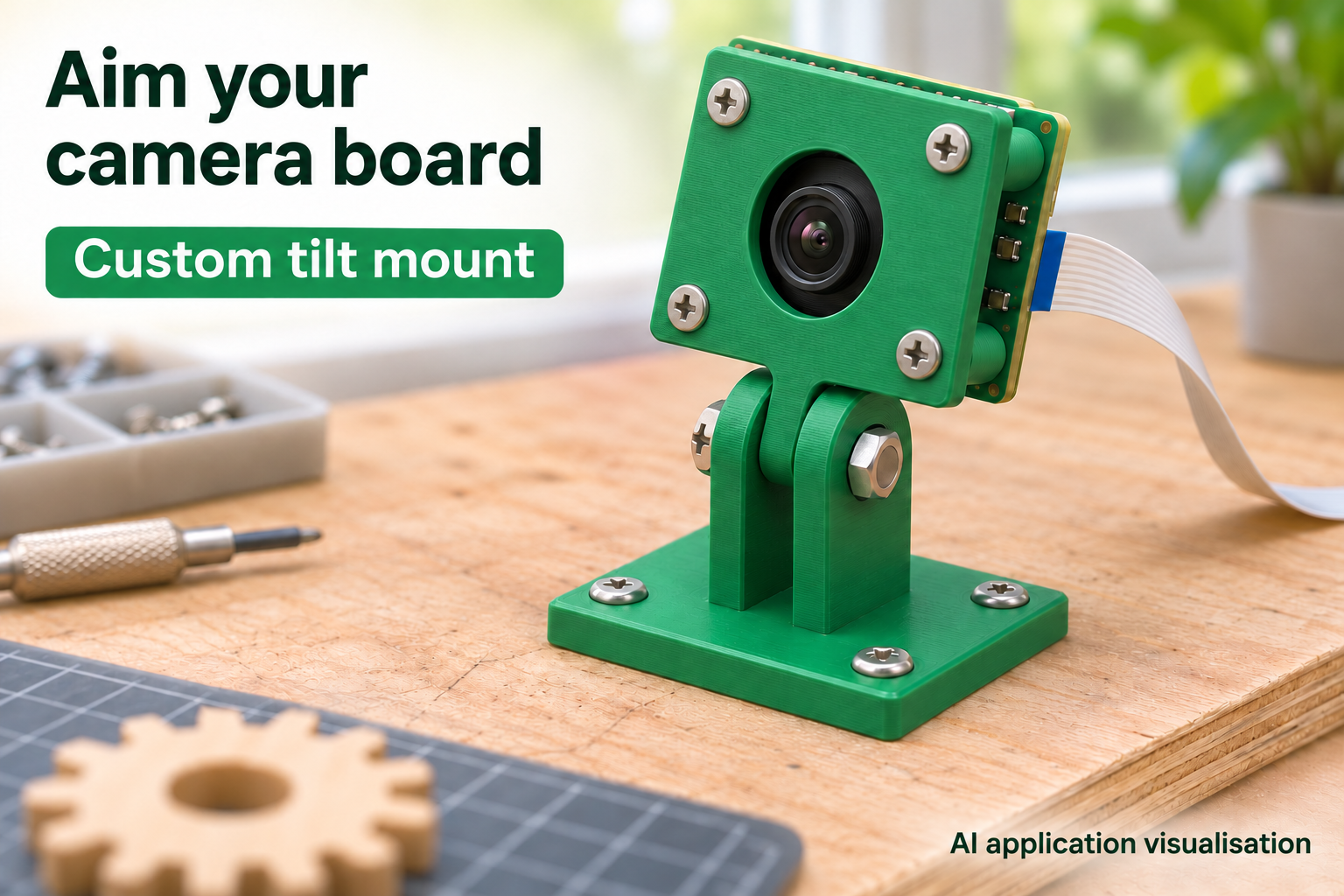
04.11.2026
Four spacer bosses carry your camera PCB and a screw pivot sets its tilt. Measure the hole pattern, lens opening and cable clearance before creating the mount.
Read more →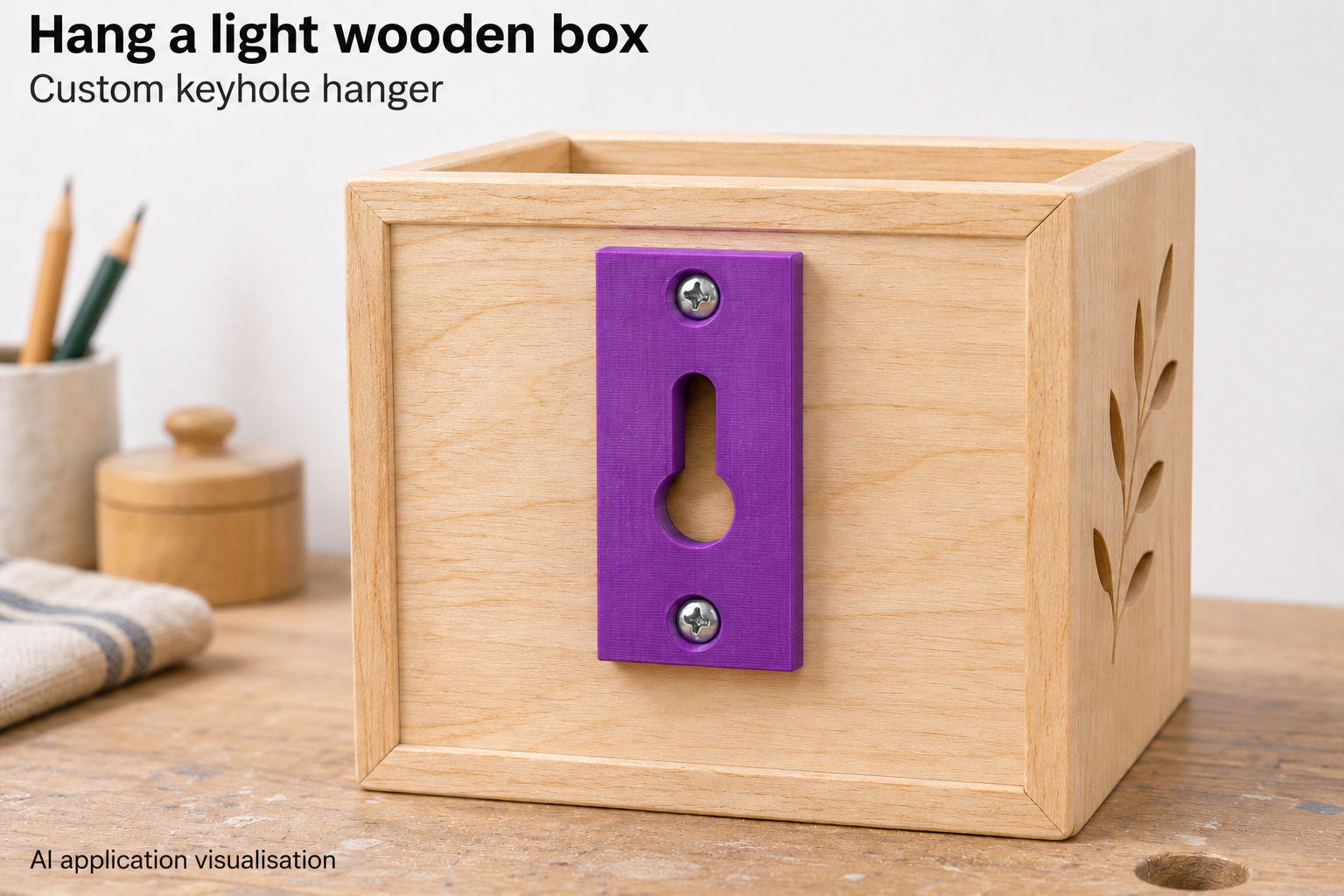
04.11.2026
A screw-mounted block captures a wall-screw head behind a narrow slot. Match the entry, rear pocket and mounting holes to your lightweight decorative box.
Read more →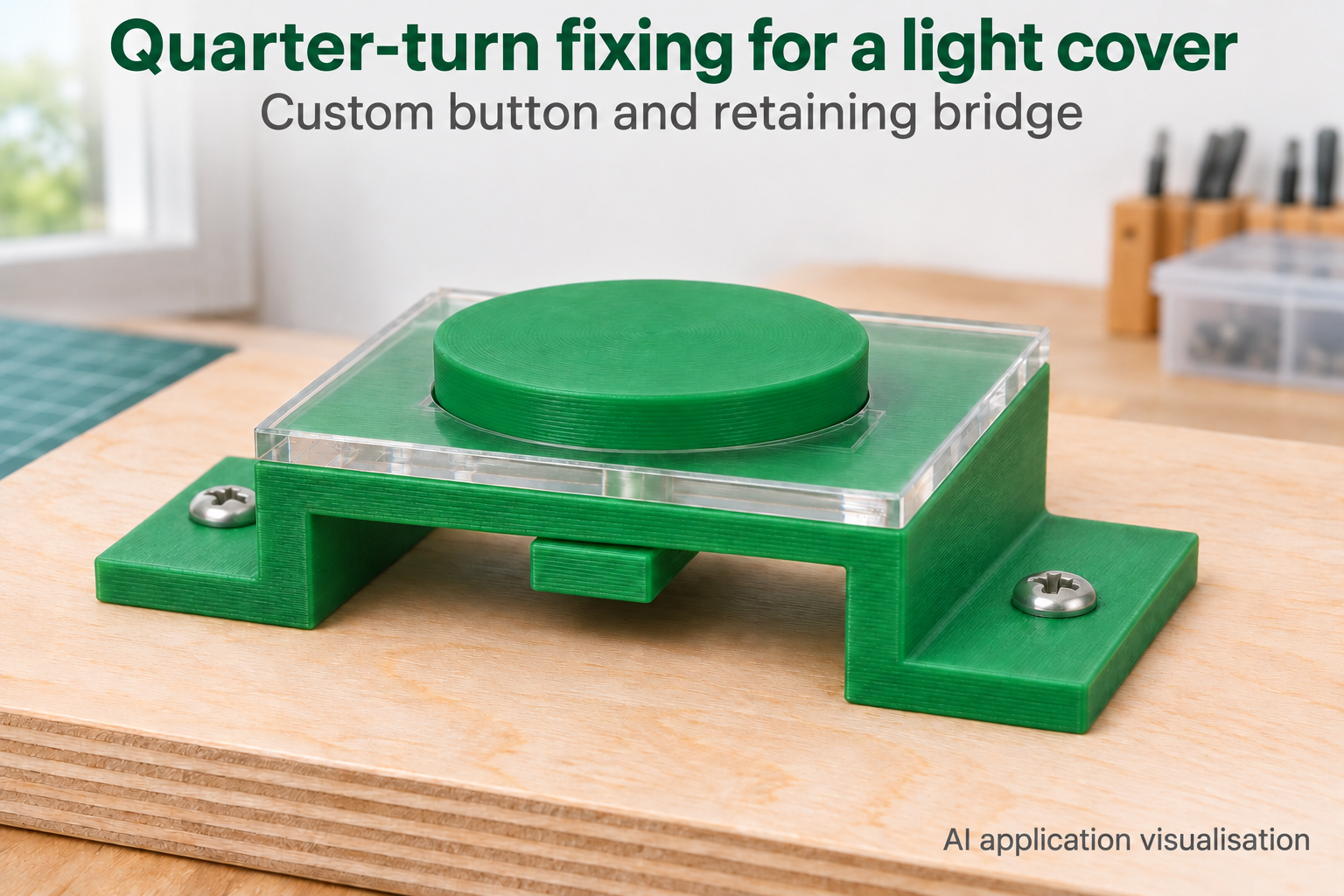
04.11.2026
Insert a crossbar through a cover and retaining bridge, then turn it 90 degrees. Plan the slot, clearance and installation space for your light removable cover.
Read more →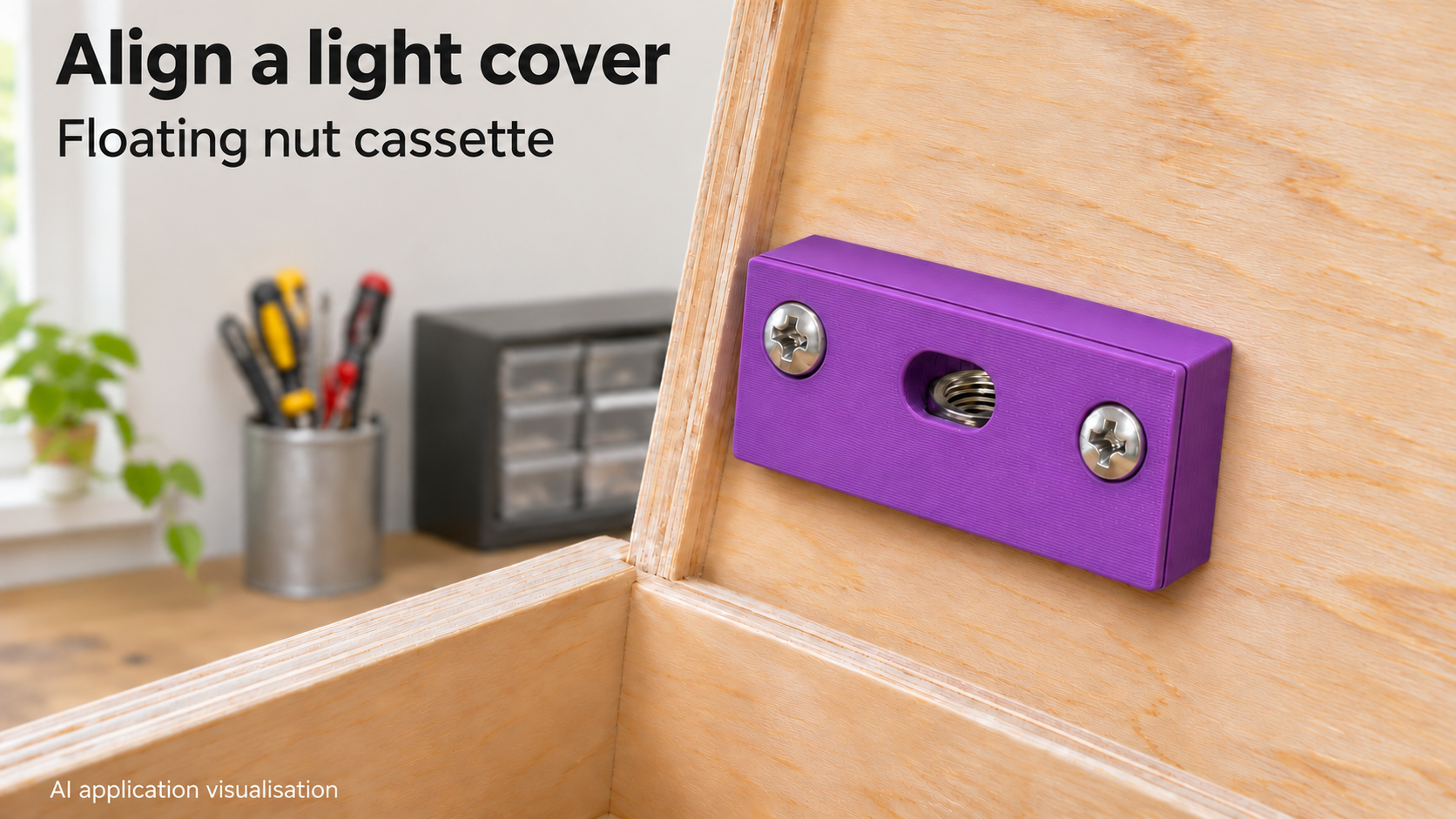
04.11.2026
A captured hex nut can accommodate a small hole offset. Size this printed cassette for the actual nut, screw and support behind your removable cover.
Read more →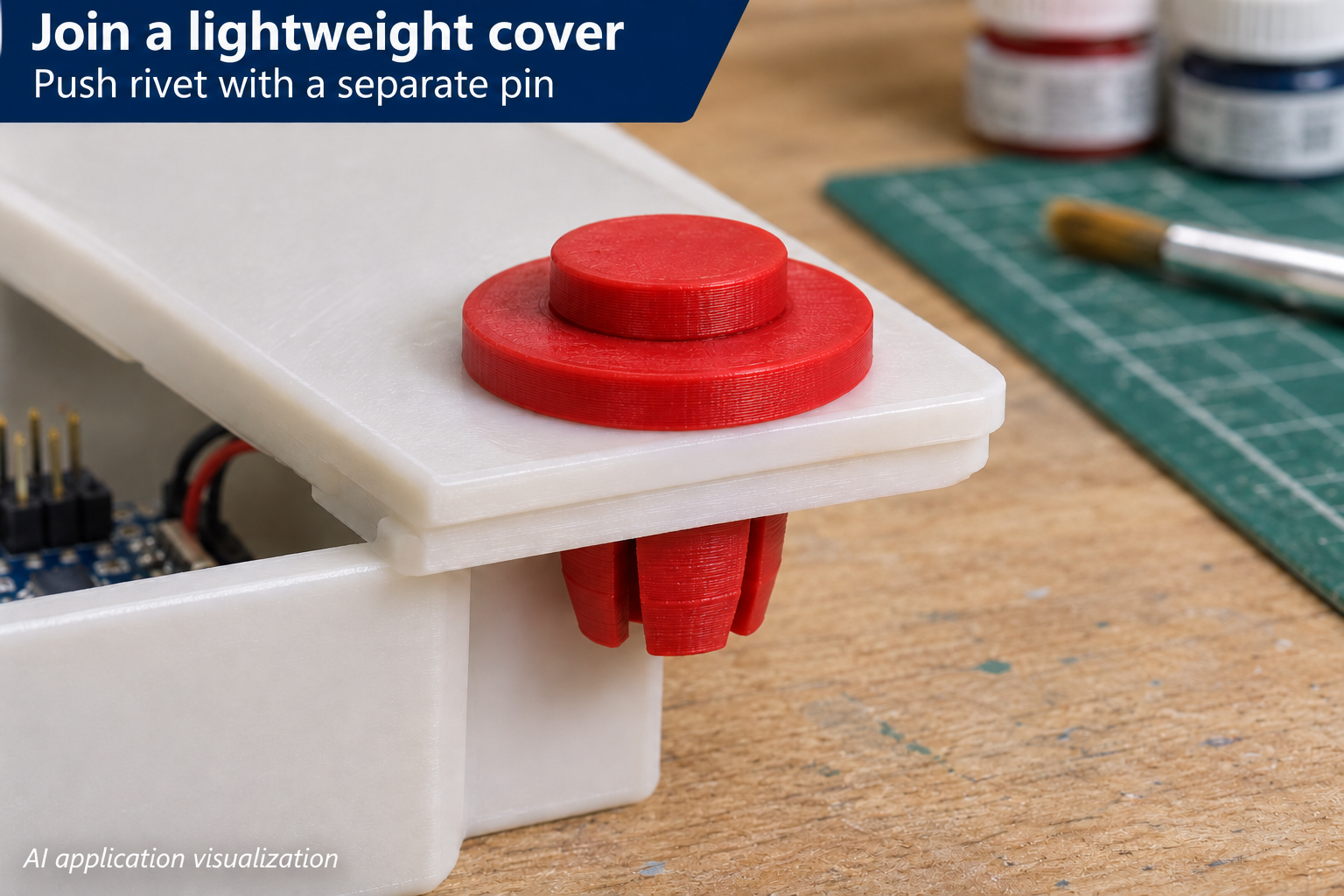
04.11.2026
A slotted rivet body passes through aligned panel holes. A separate pin enters from the flange side and expands the legs behind the panel stack.
Read more →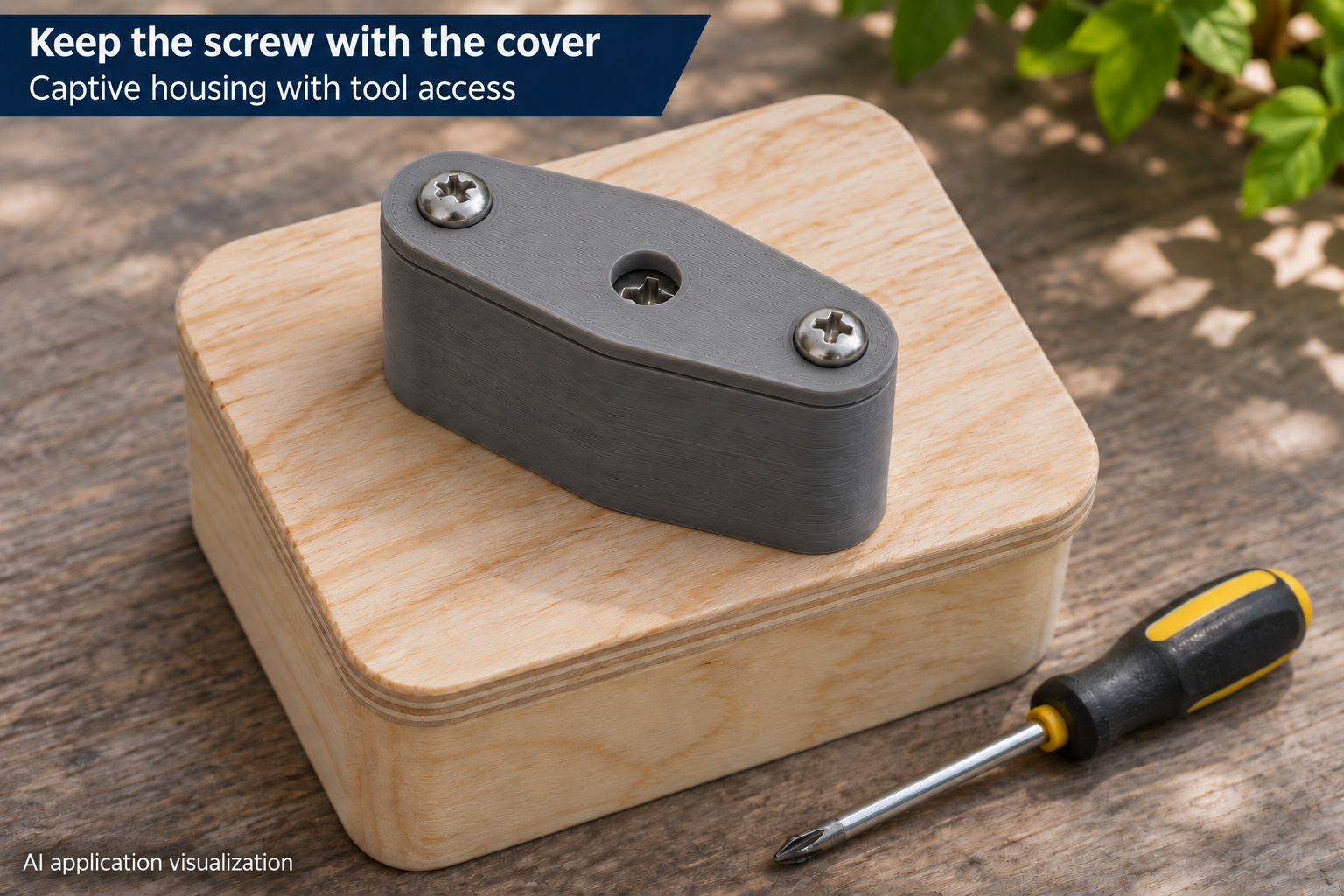
04.11.2026
The screw head slides inside a closed printed housing instead of falling out as a loose part. A smaller tool opening in the lid keeps the head captive inside.
Read more →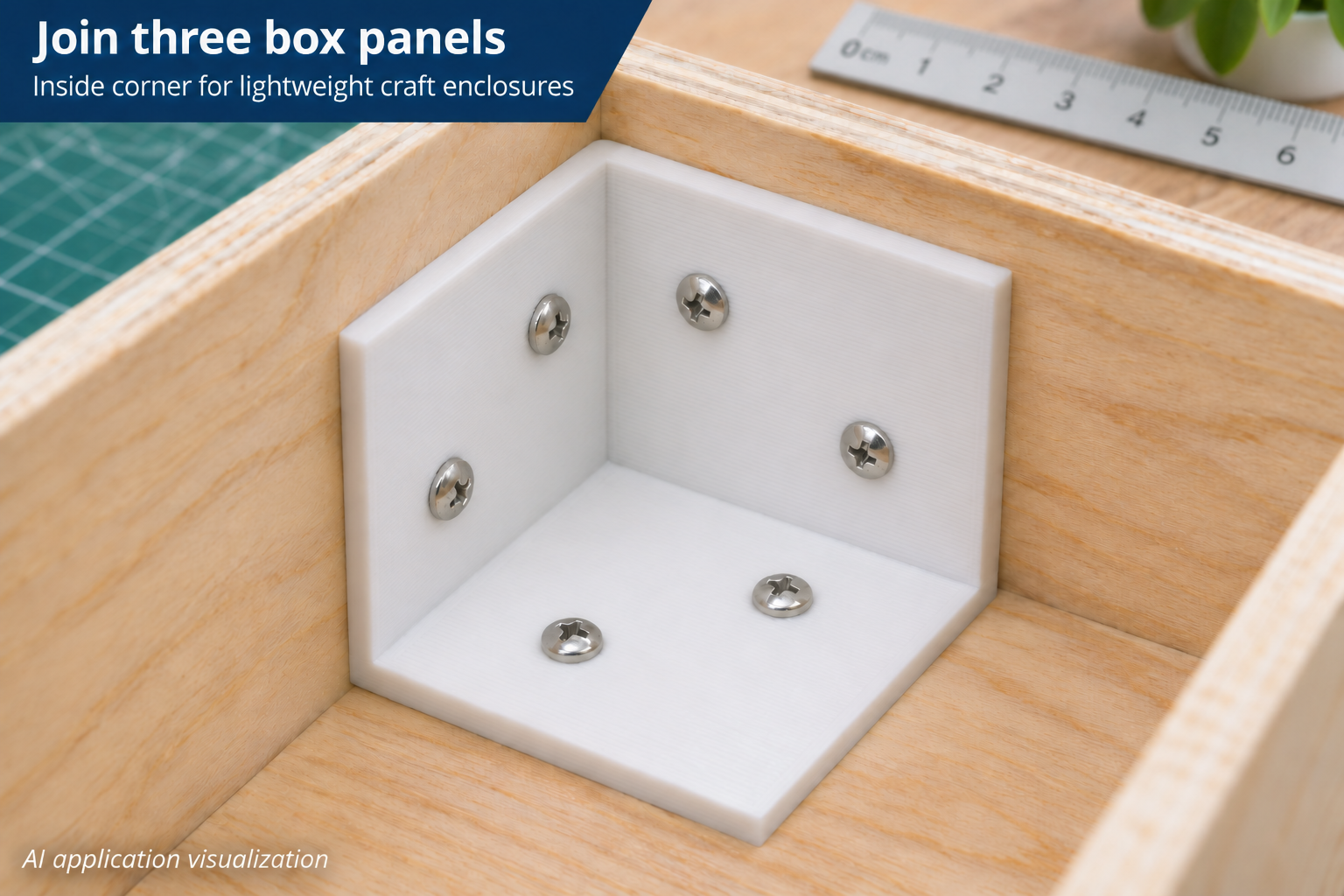
04.11.2026
Three perpendicular faces sit against the floor and two adjoining walls. Two screw passages in each face distribute the attachment across all three panels.
Read more →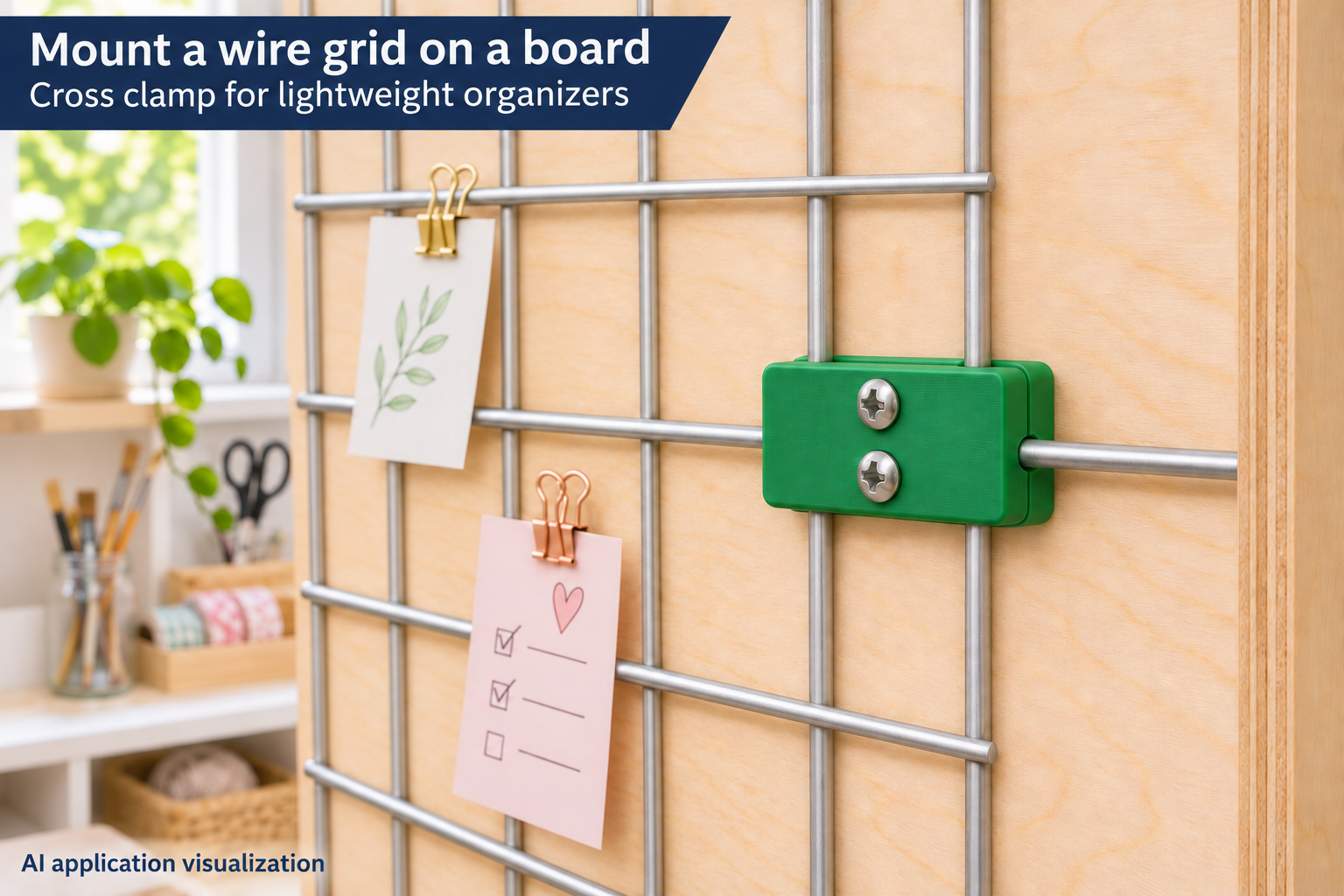
04.11.2026
Two printed halves capture parallel grid wires and the crosswire above them. Matching the actual wire diameters and centre offset gives an indoor organizer a suitable mounting point.
Read more →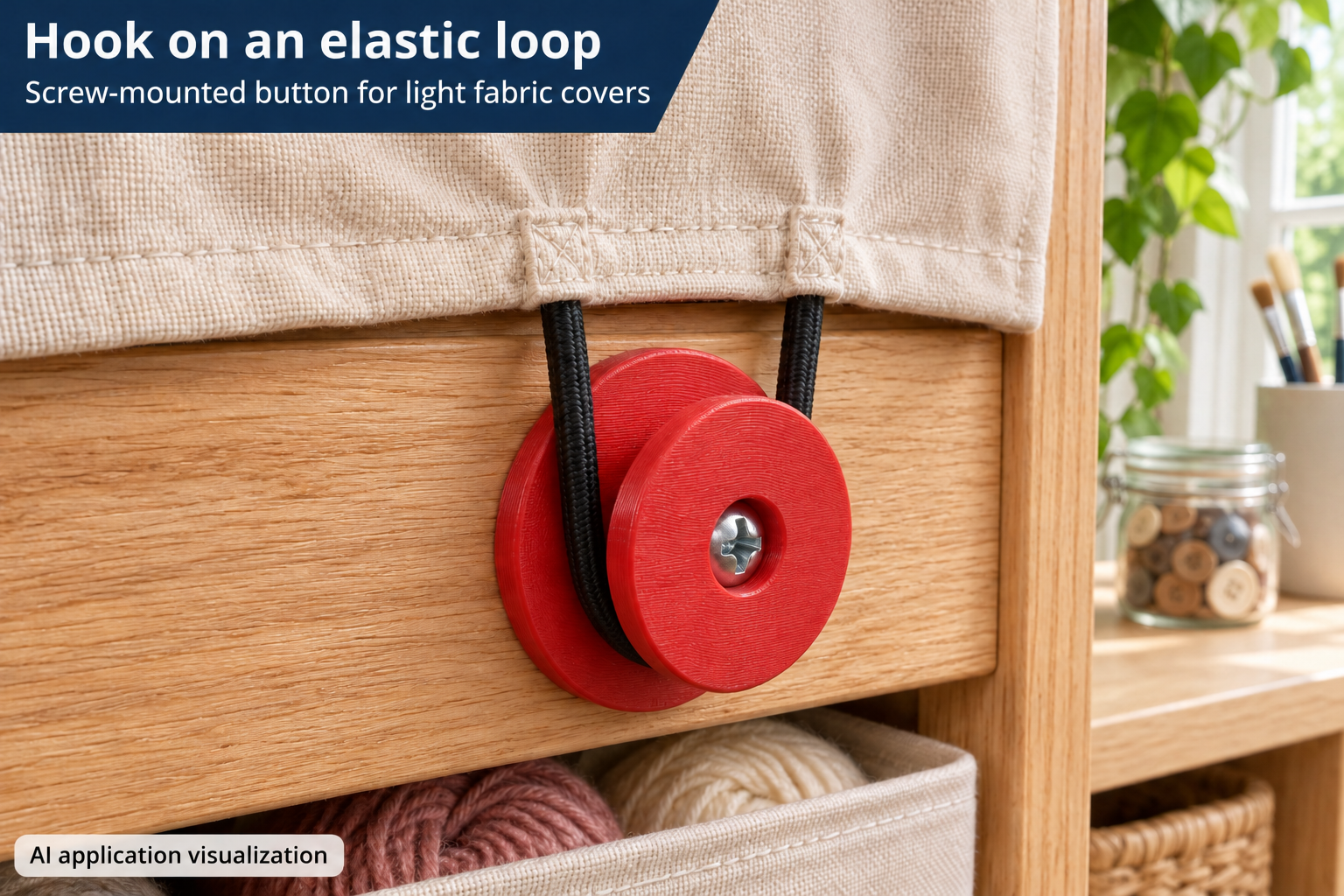
04.11.2026
Stretch the loop over the button head so it settles around the narrower neck. A larger base disc spaces the loop away from the mounting surface.
Read more →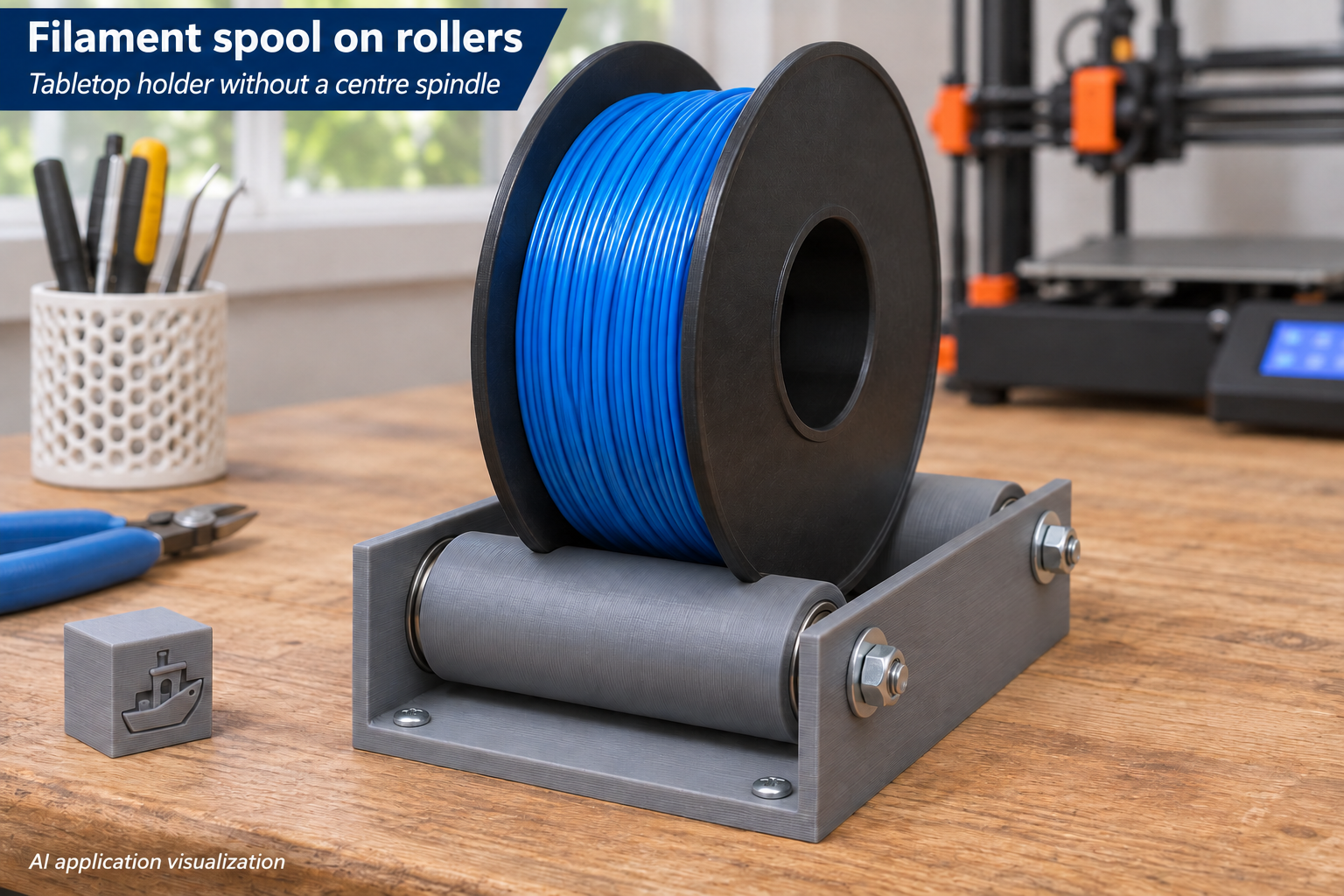
04.11.2026
The spool flange rims run on two parallel rollers while the centre hole stays unused. Width, axle spacing and base clearance must suit the actual spool.
Read more →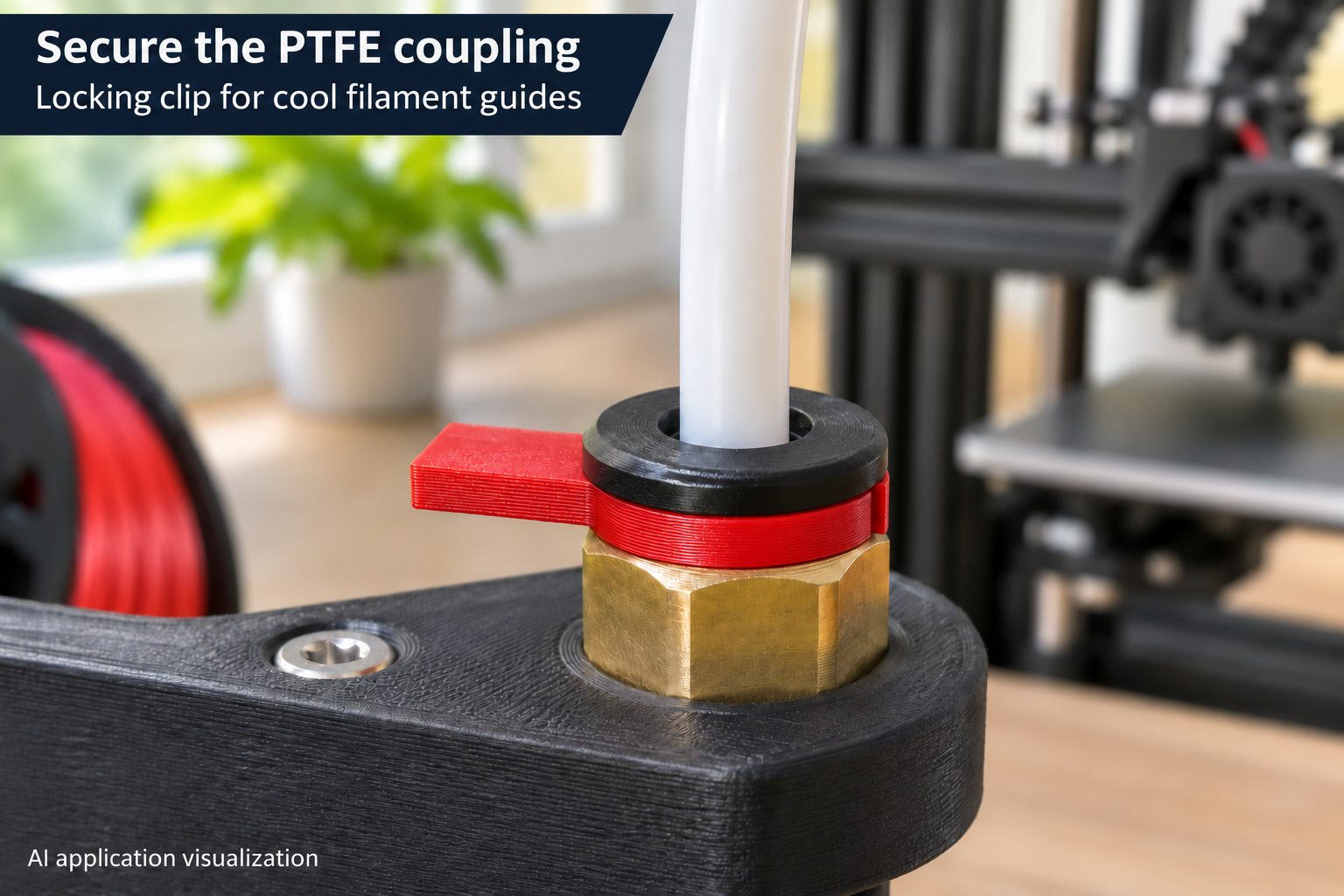
04.11.2026
A flat C-clip fills the space beneath a raised release collar to prevent accidental downward movement. Measure the fitting neck and available height before choosing dimensions.
Read more →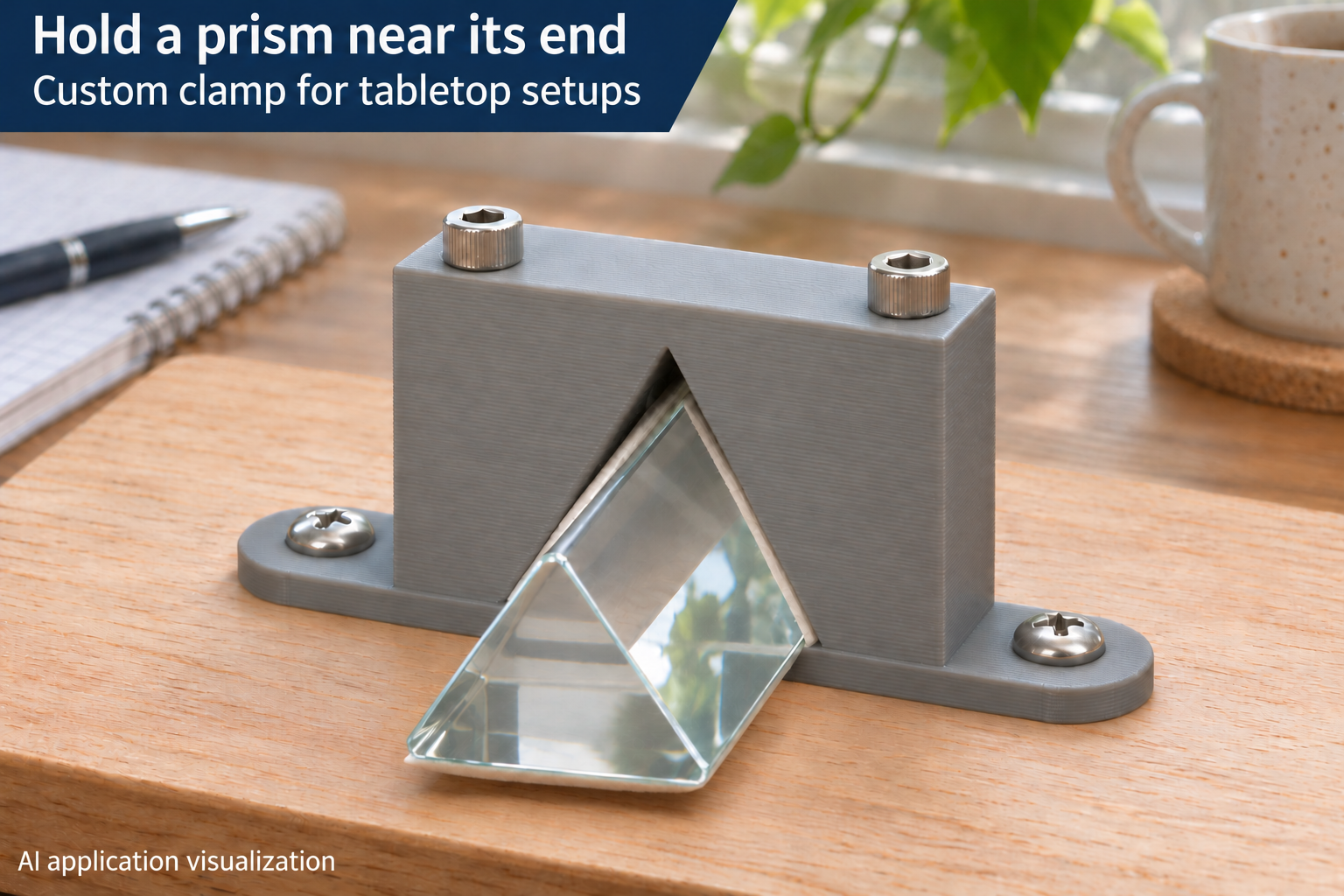
04.11.2026
A separate screw bridge retains the prism over a flat printed base. Thin soft liners and a correctly sized triangular opening leave most of its long faces exposed.
Read more →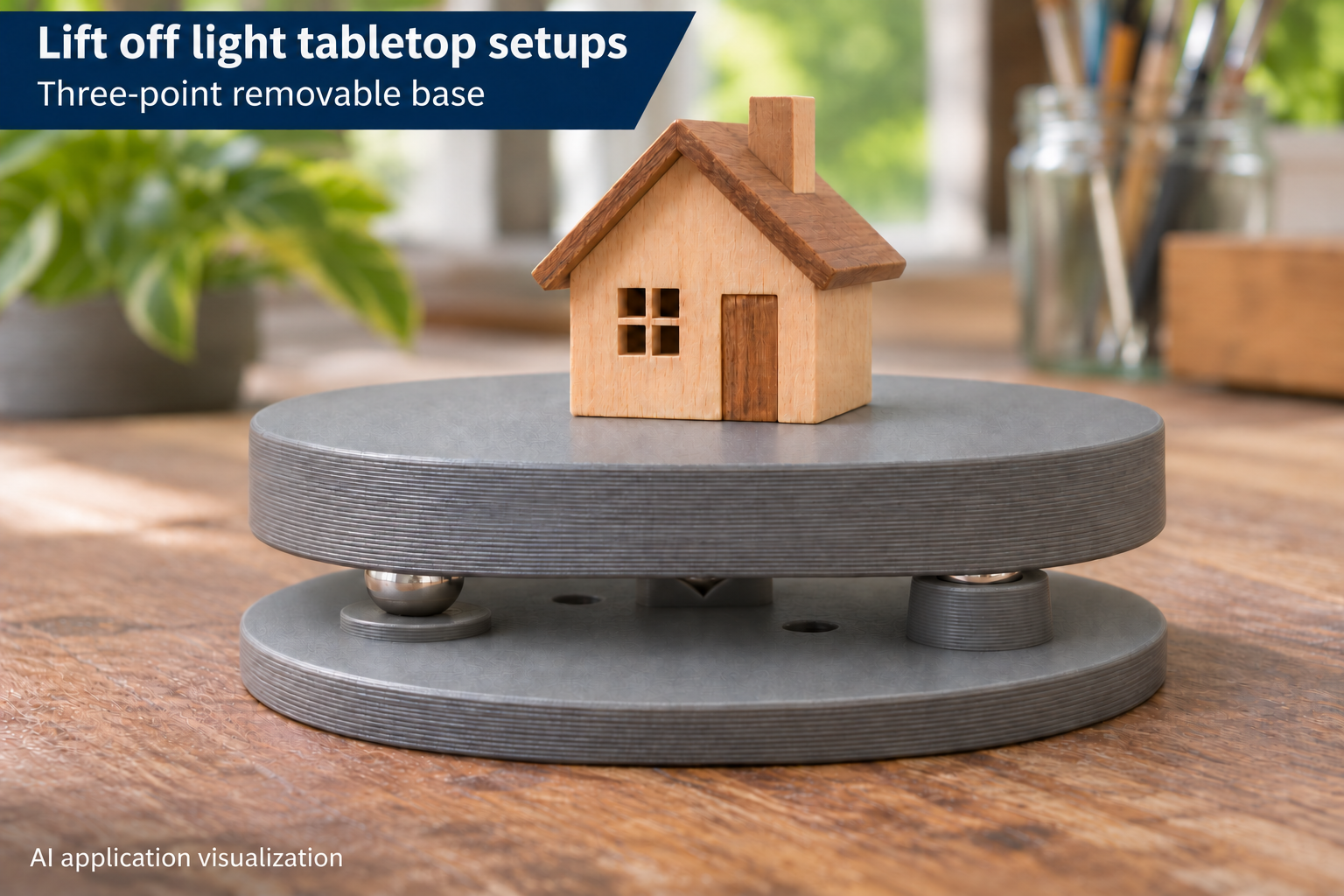
04.11.2026
Three bonded balls support an upper plate on a cone, V-groove and flat. Lift off a small tabletop setup together with its platform, then place it back on the contacts.
Read more →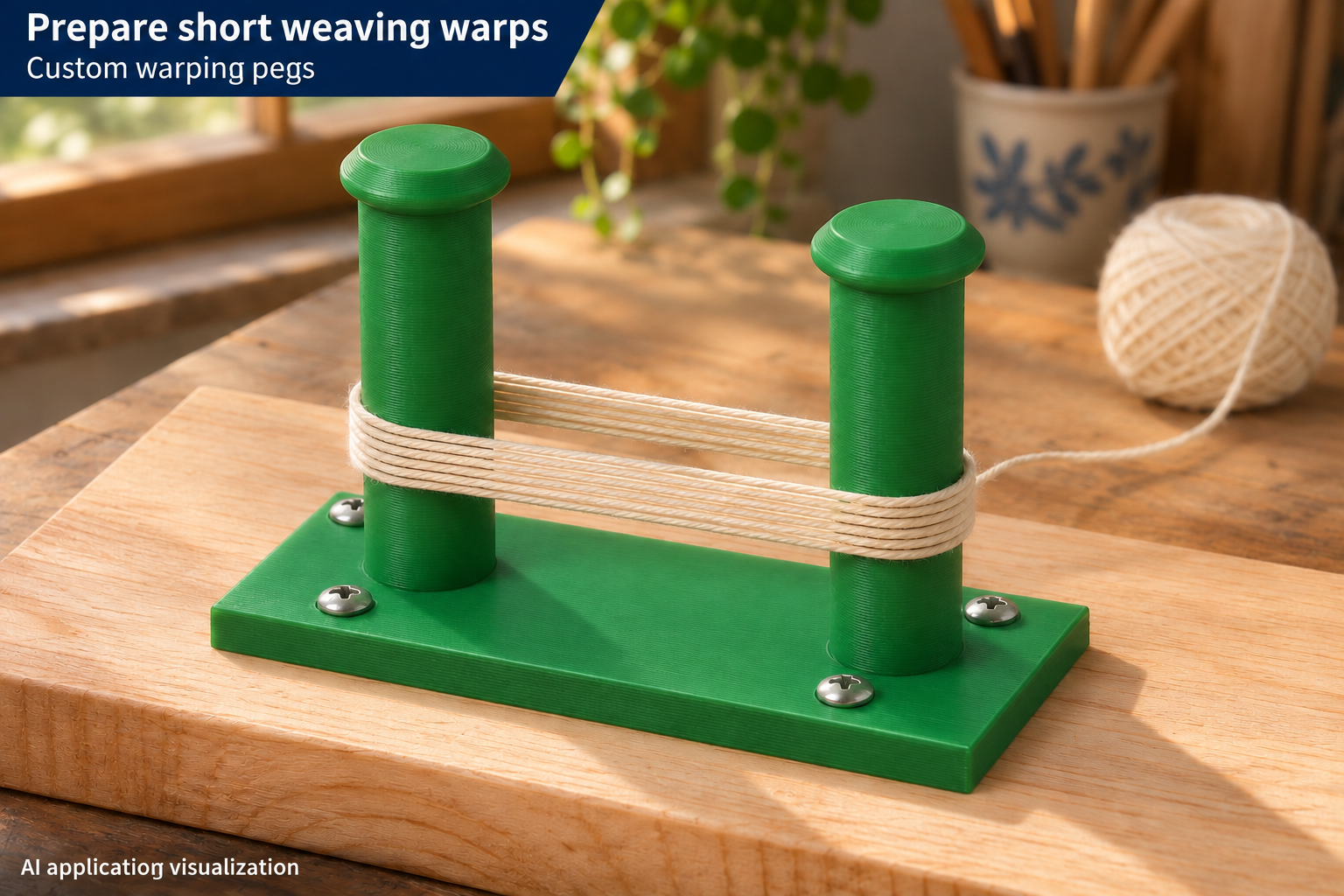
04.11.2026
Two pegs on a screw-mounted plate guide yarn loops on your own board. Match their height, spacing and mounting pattern to your yarn bundle and planned warping path.
Read more →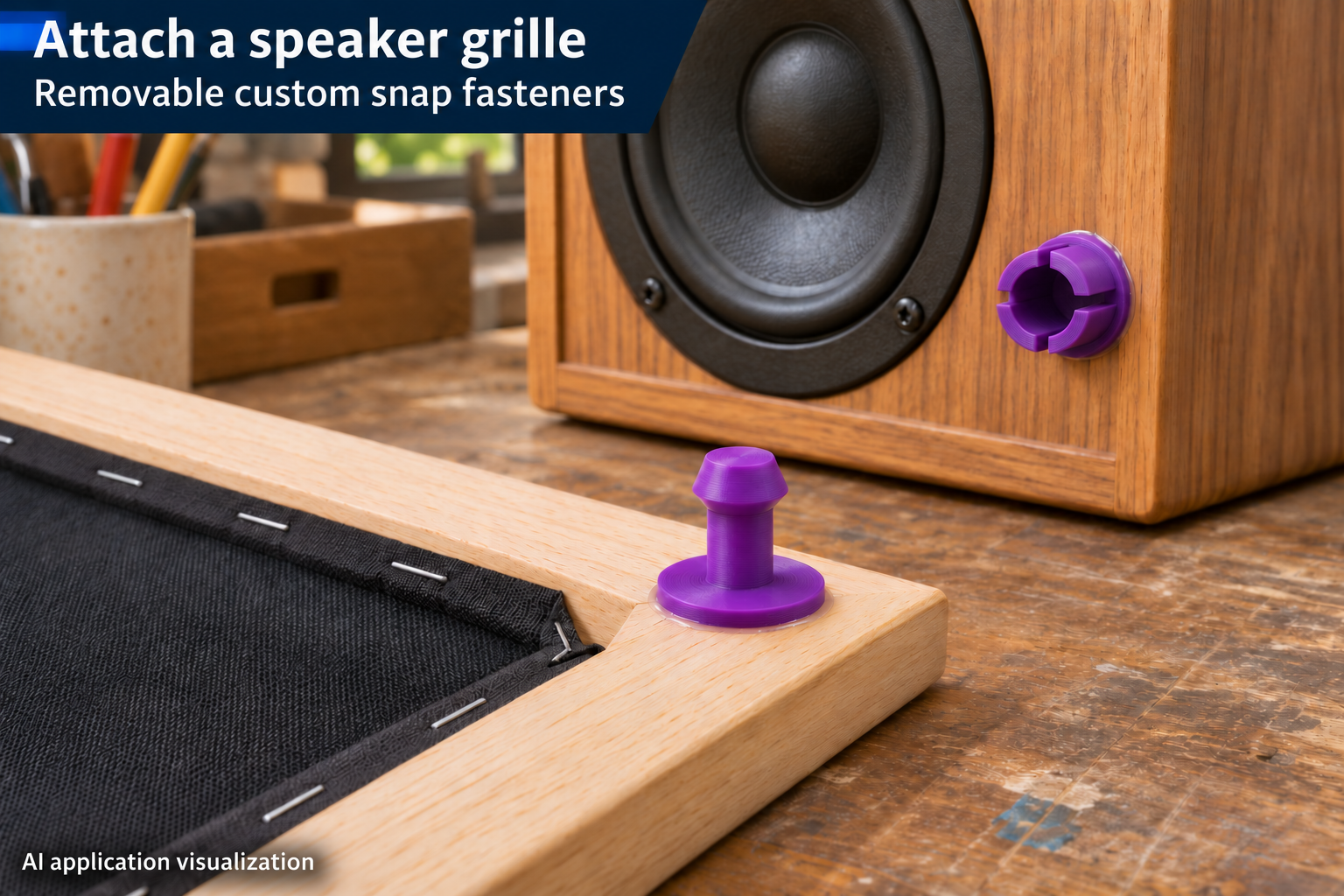
04.11.2026
A mushroom stud on the grille frame clips into a slotted socket on the cabinet. Both printed parts have glue pads and adjustable dimensions for your own assembly.
Read more →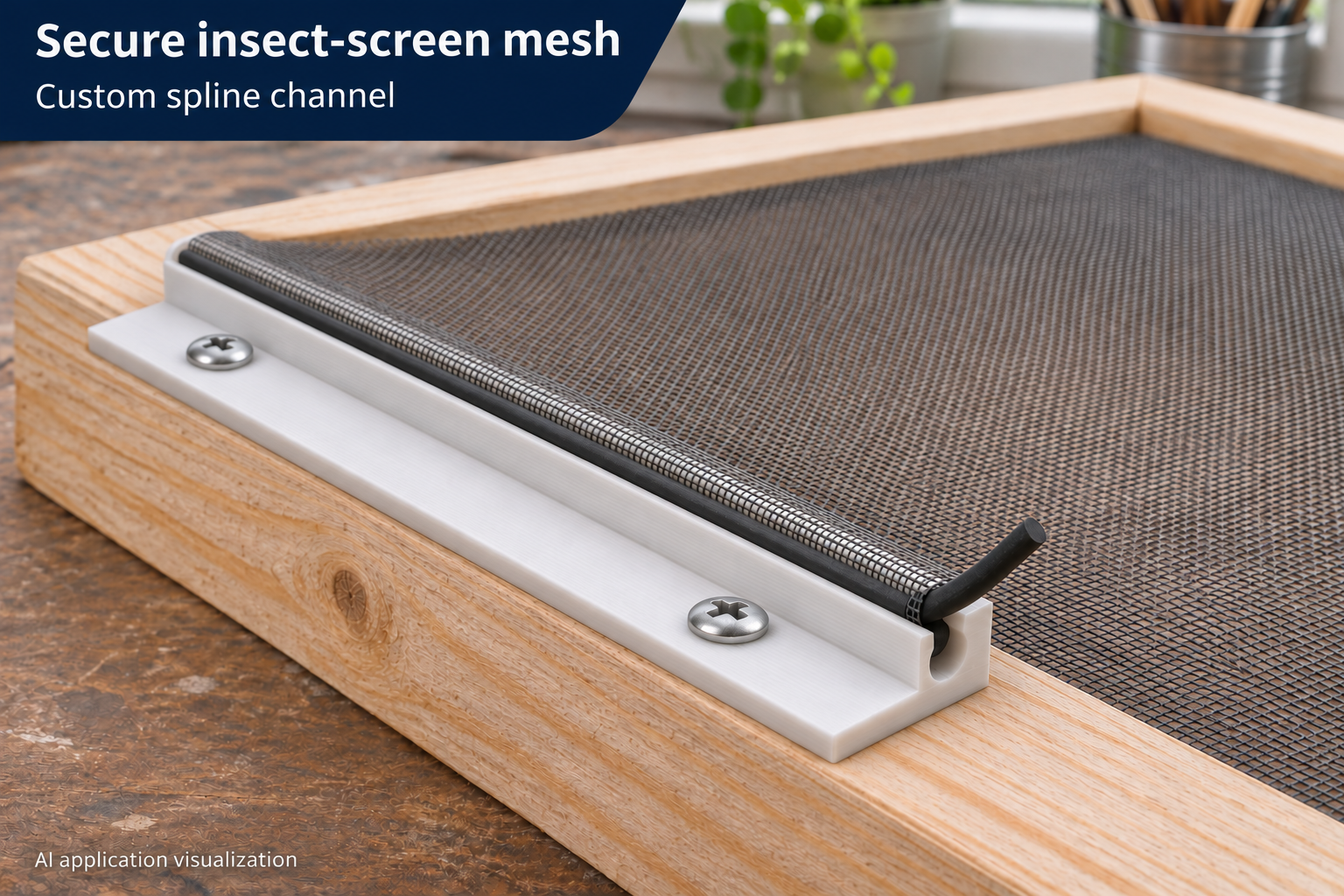
04.11.2026
A screw-on profile holds loose insect-screen mesh with a separate flexible spline. Match its groove, opening and screw spacing to a small indoor frame.
Read more →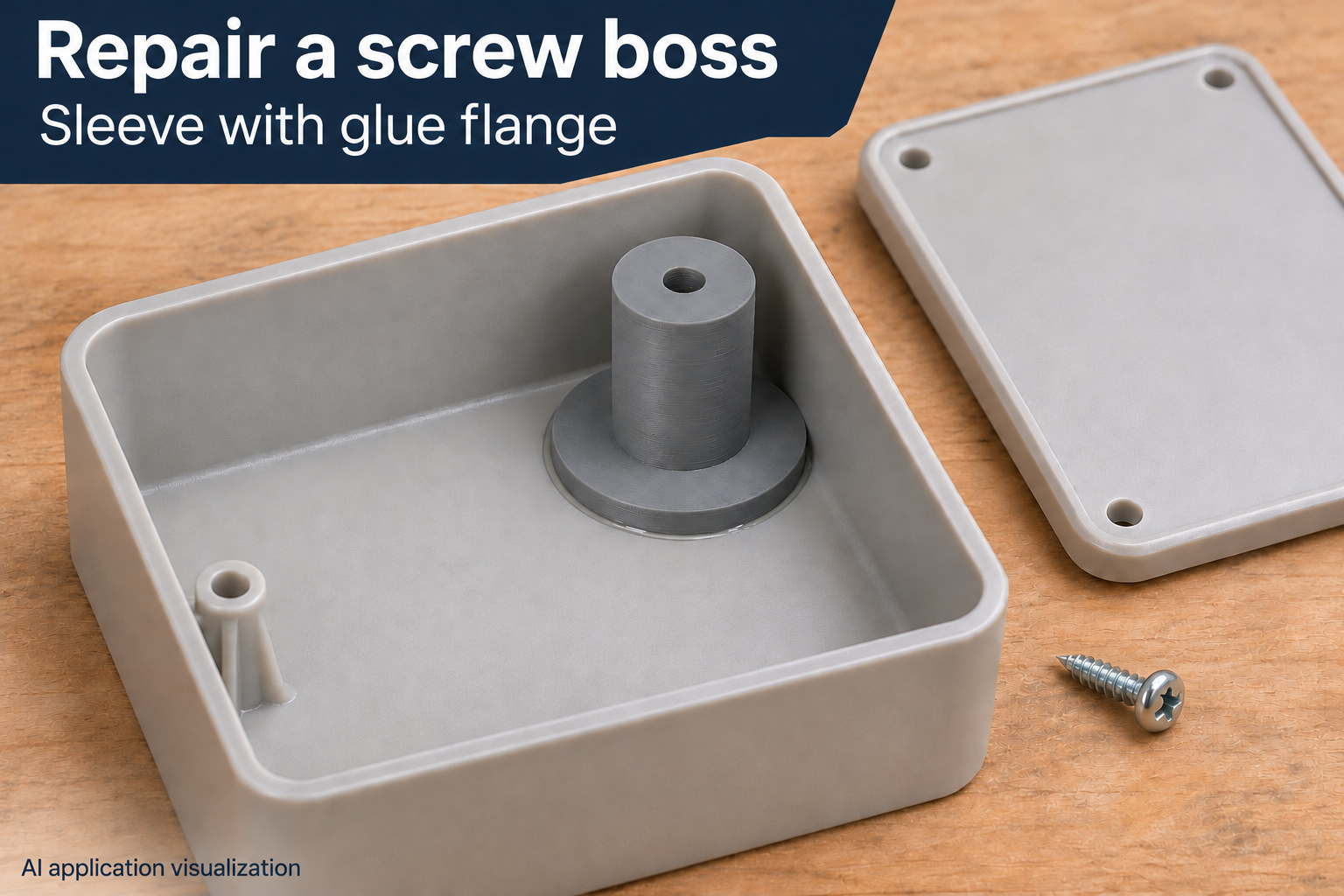
04.11.2026
The sleeve locates over a sound stump of the original screw boss. Its broad flange bonds to the flat enclosure floor, while a small pilot hole accepts the lid screw.
Read more →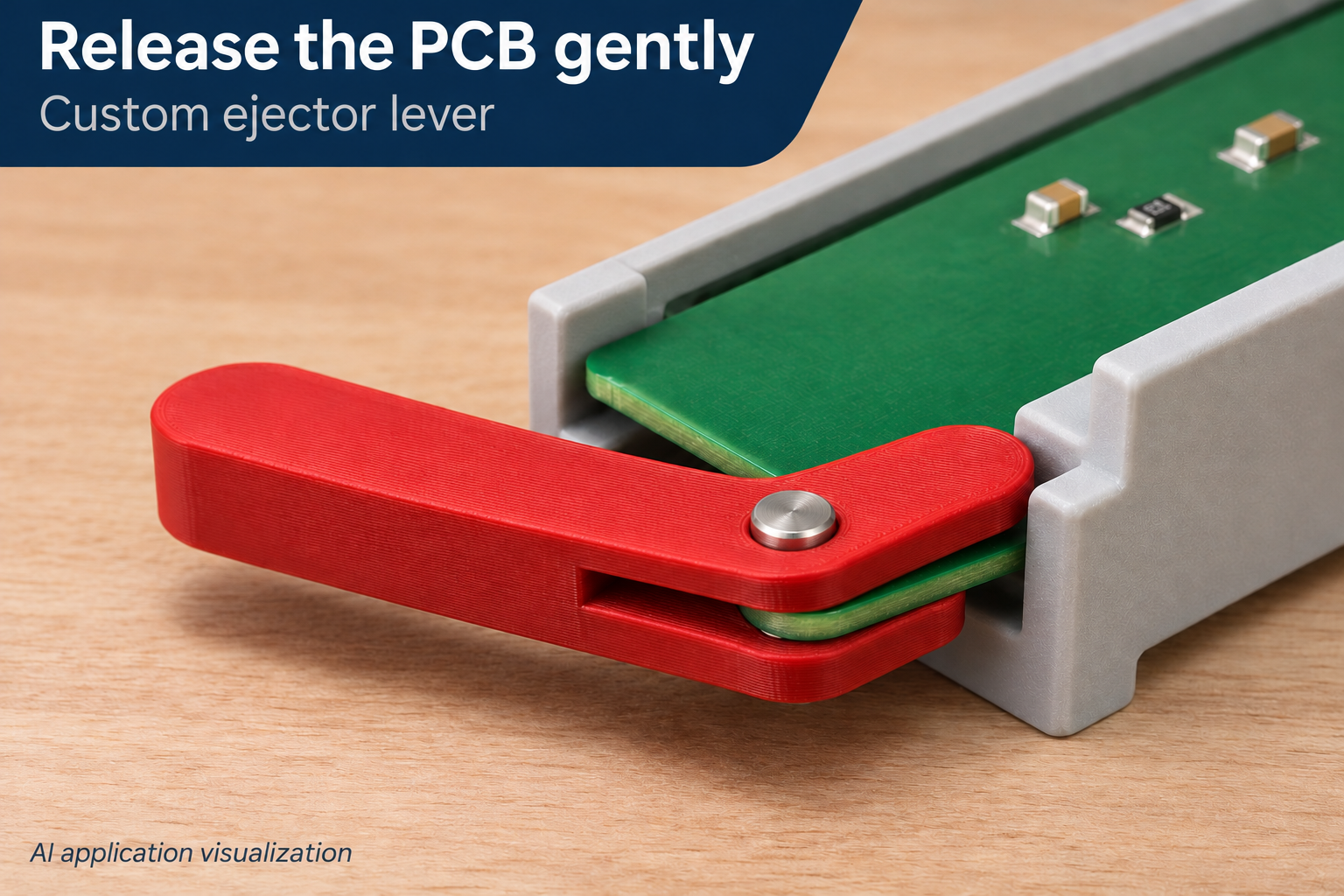
04.11.2026
A forked lever pivots on a separate metal pin at a prepared PCB edge. Its short nose bears against the enclosure to start the board moving out of its guides.
Read more →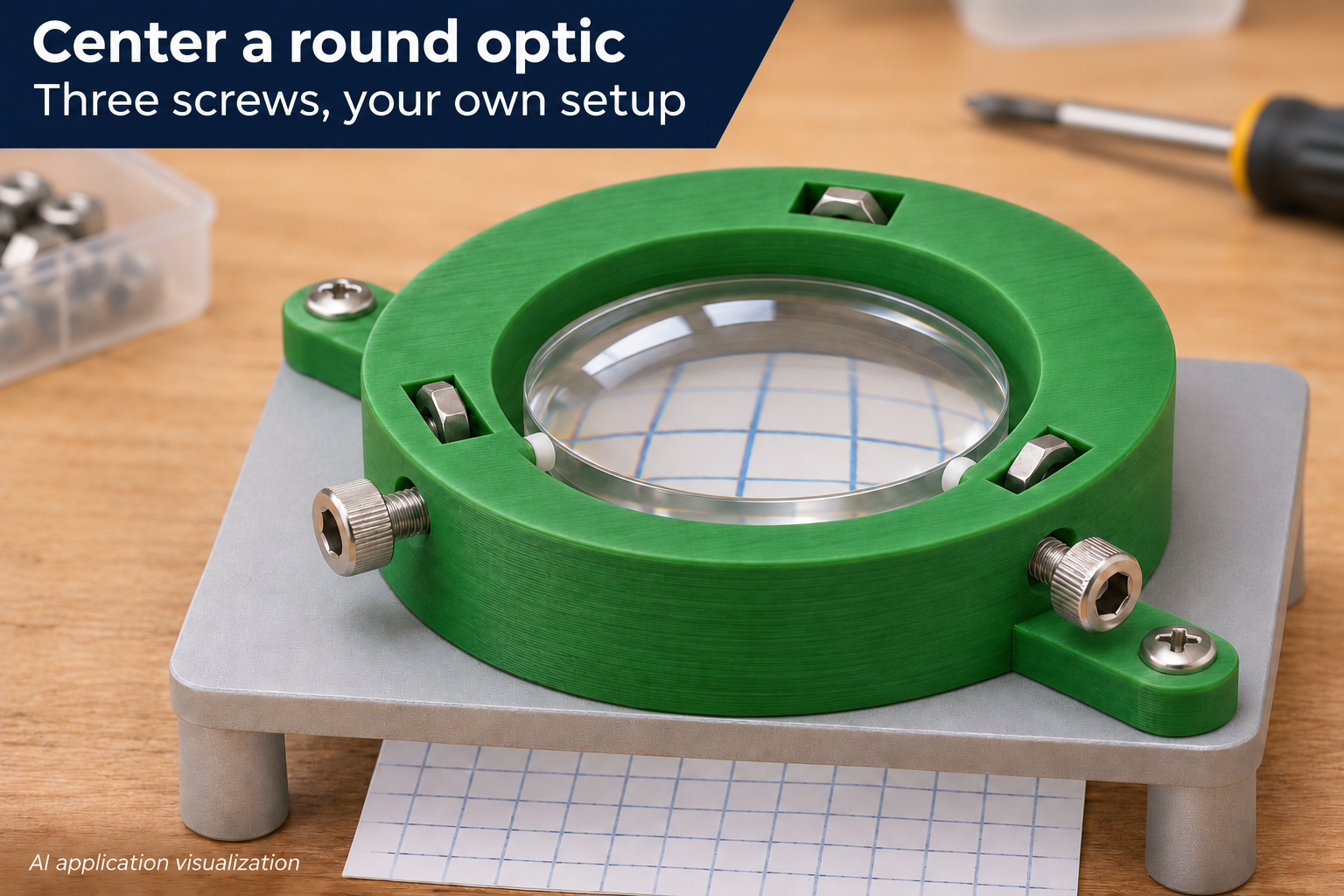
04.11.2026
A small round optic rests on an internal ledge while three screws adjust its edge position. Lens diameter, edge thickness and screw height must work together.
Read more →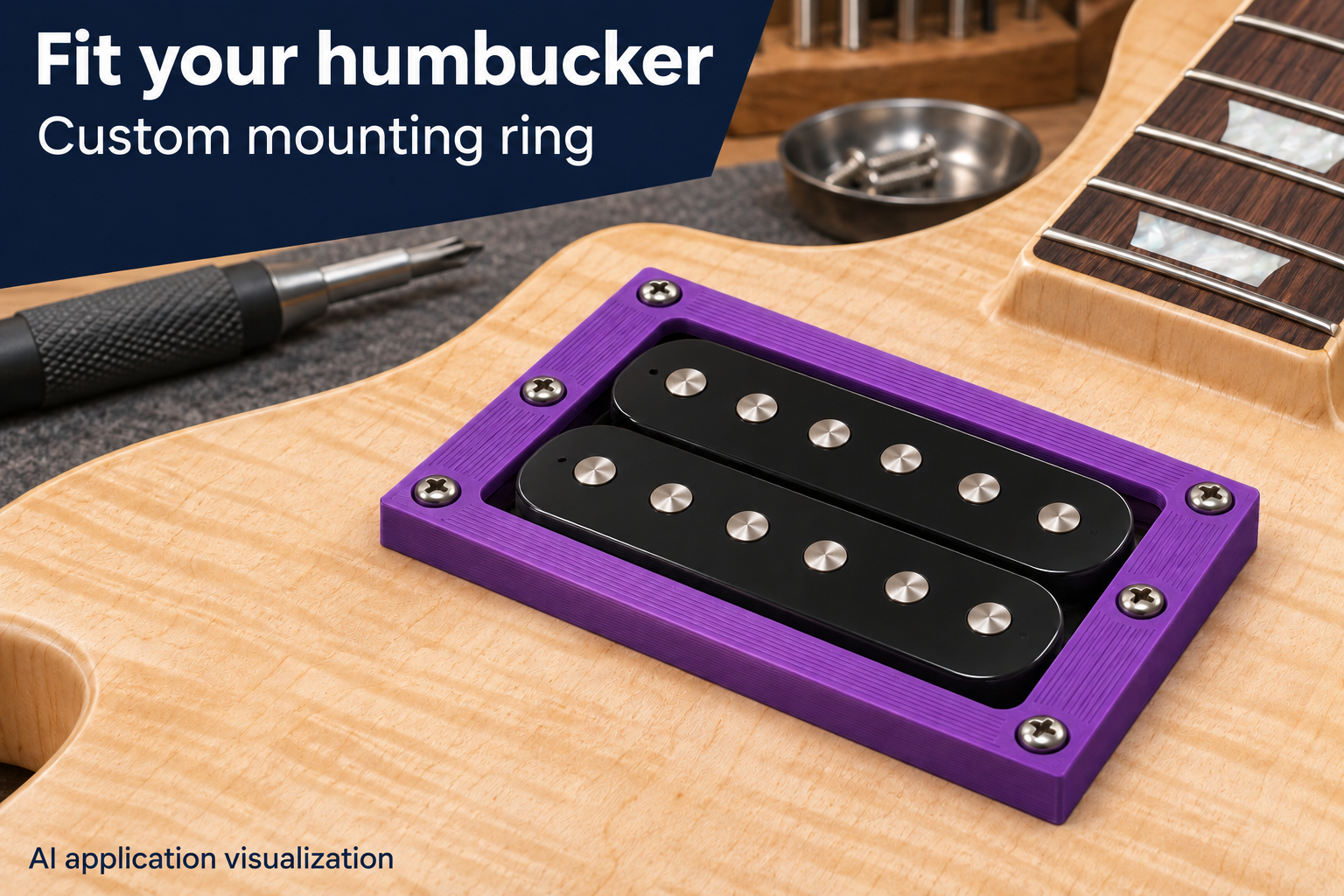
04.11.2026
A wedge-shaped ring supports a humbucker above a flat guitar body. Match its opening, height and six fixing positions to your own pickup and instrument.
Read more →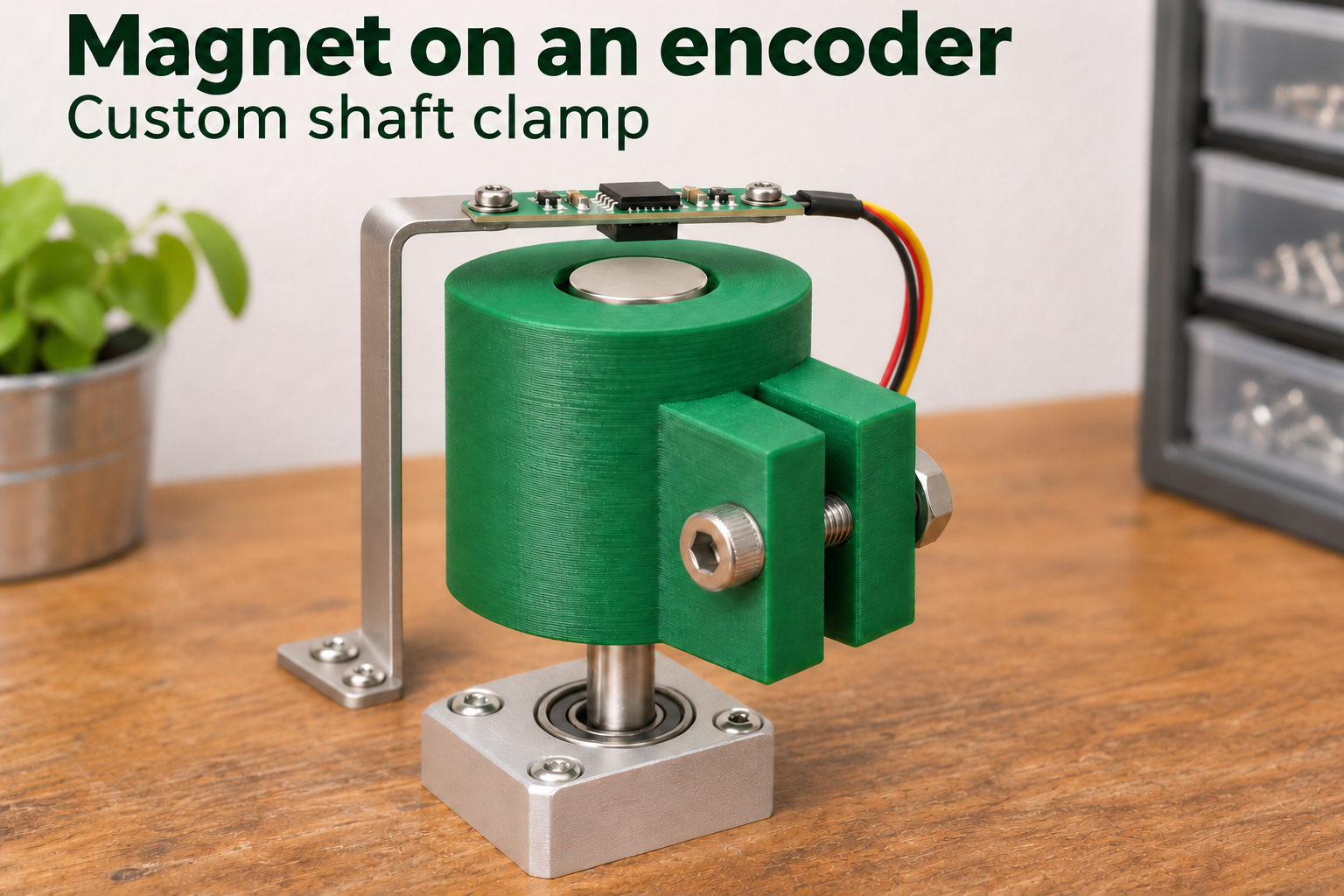
03.11.2026
An adjustable hub carries a disc magnet on a small shaft for a slow, hand-turned encoder experiment while the sensor remains independently fixed.
Read more →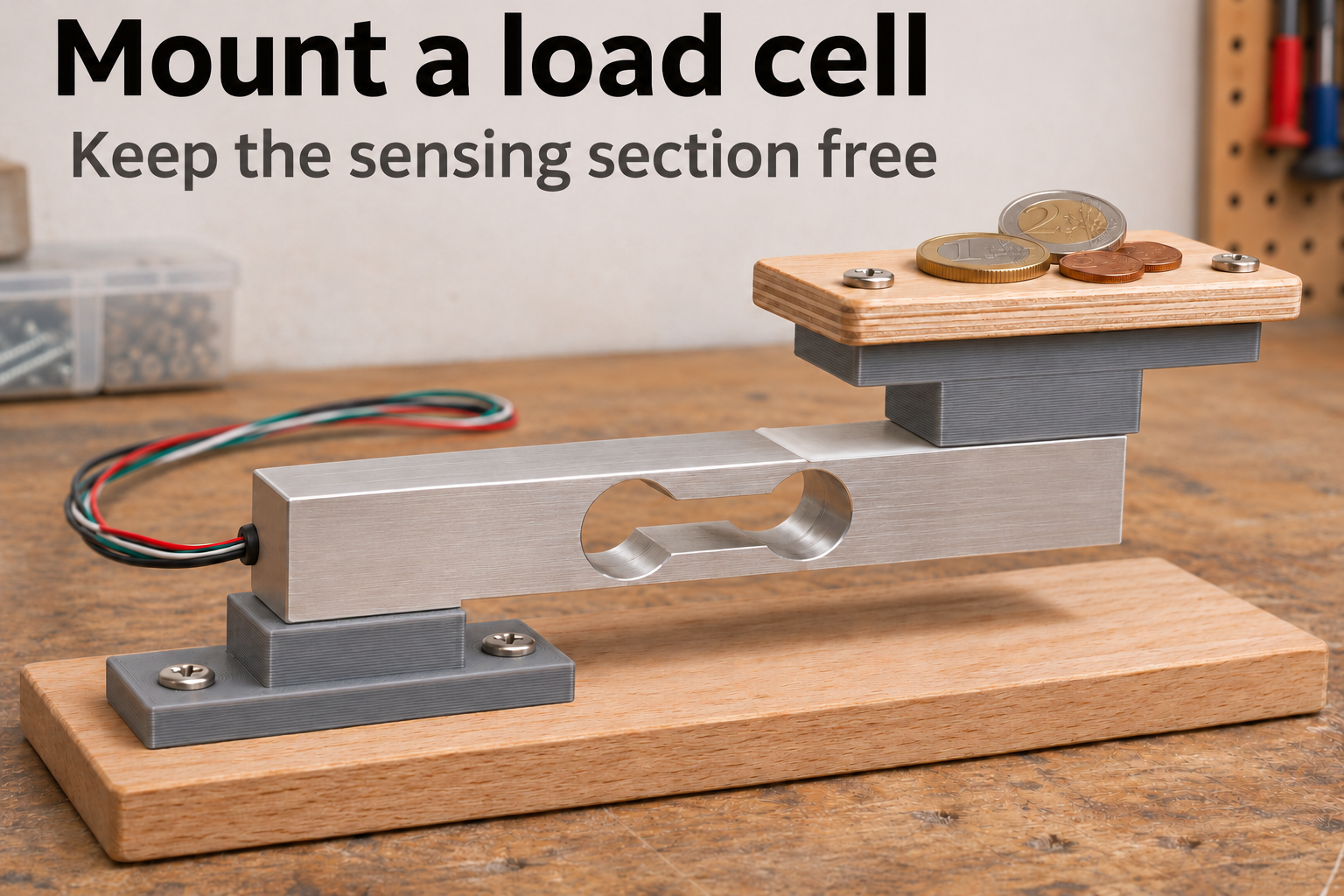
03.11.2026
Two printed adapters connect a bar load cell to a base and weighing platform while leaving its central sensing section free to deflect.
Read more →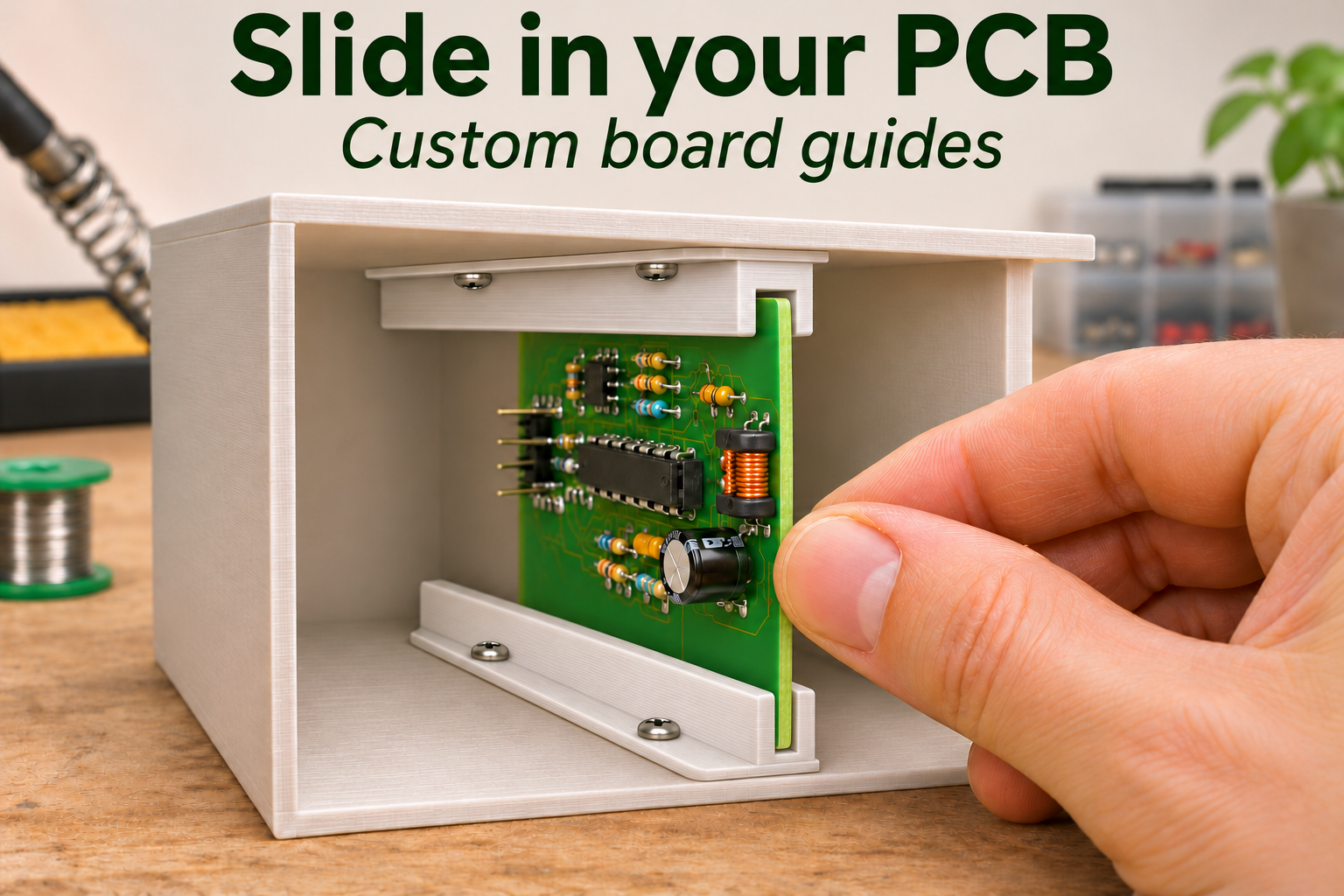
03.11.2026
A pair of printed rails guides clear circuit-board edges and provides a rear stop, making a small low-voltage hobby board easier to remove for access.
Read more →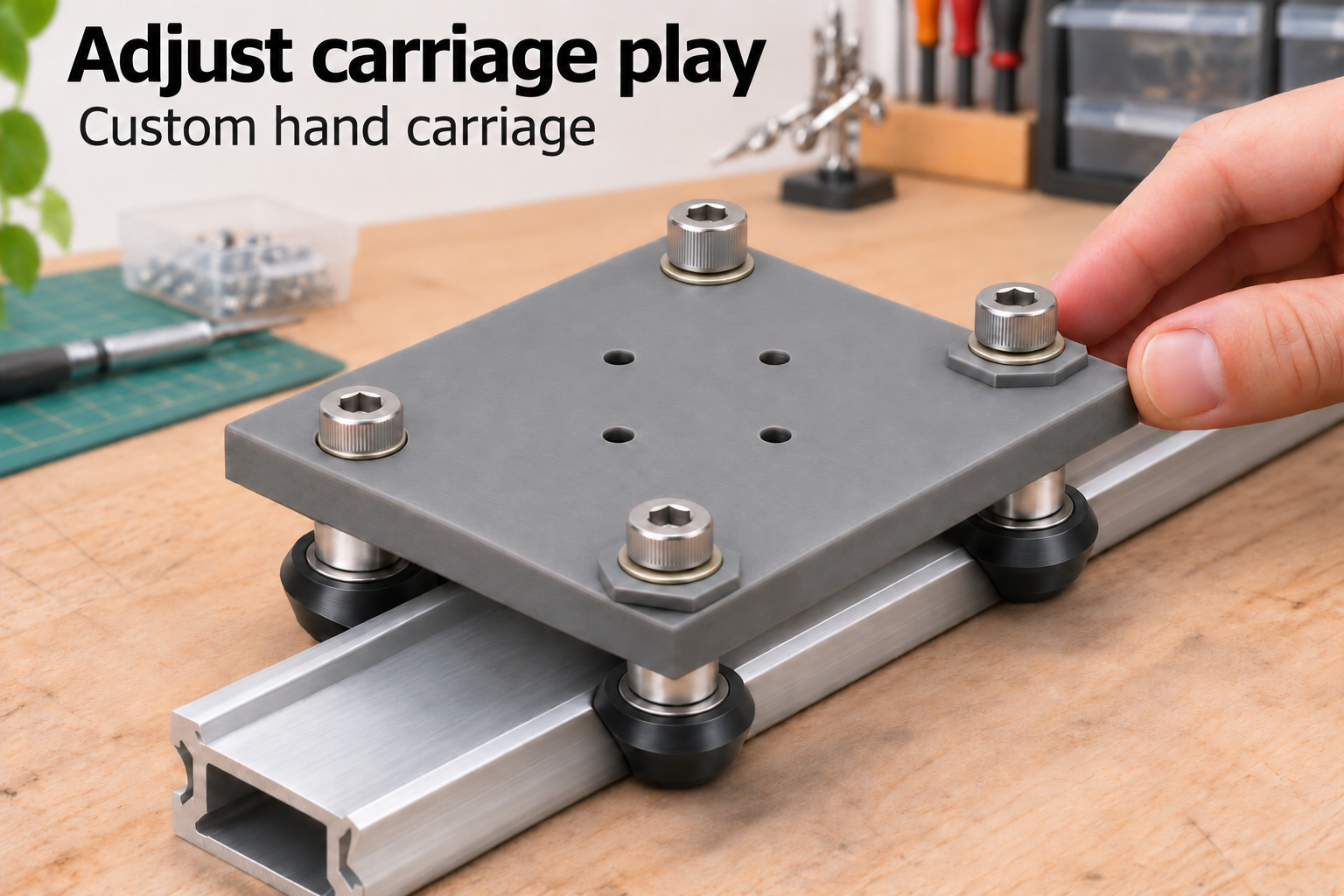
03.11.2026
A printed four-wheel plate and two eccentric bushes let you set the running clearance of a light hand-operated carriage around your own wheels and rail.
Read more →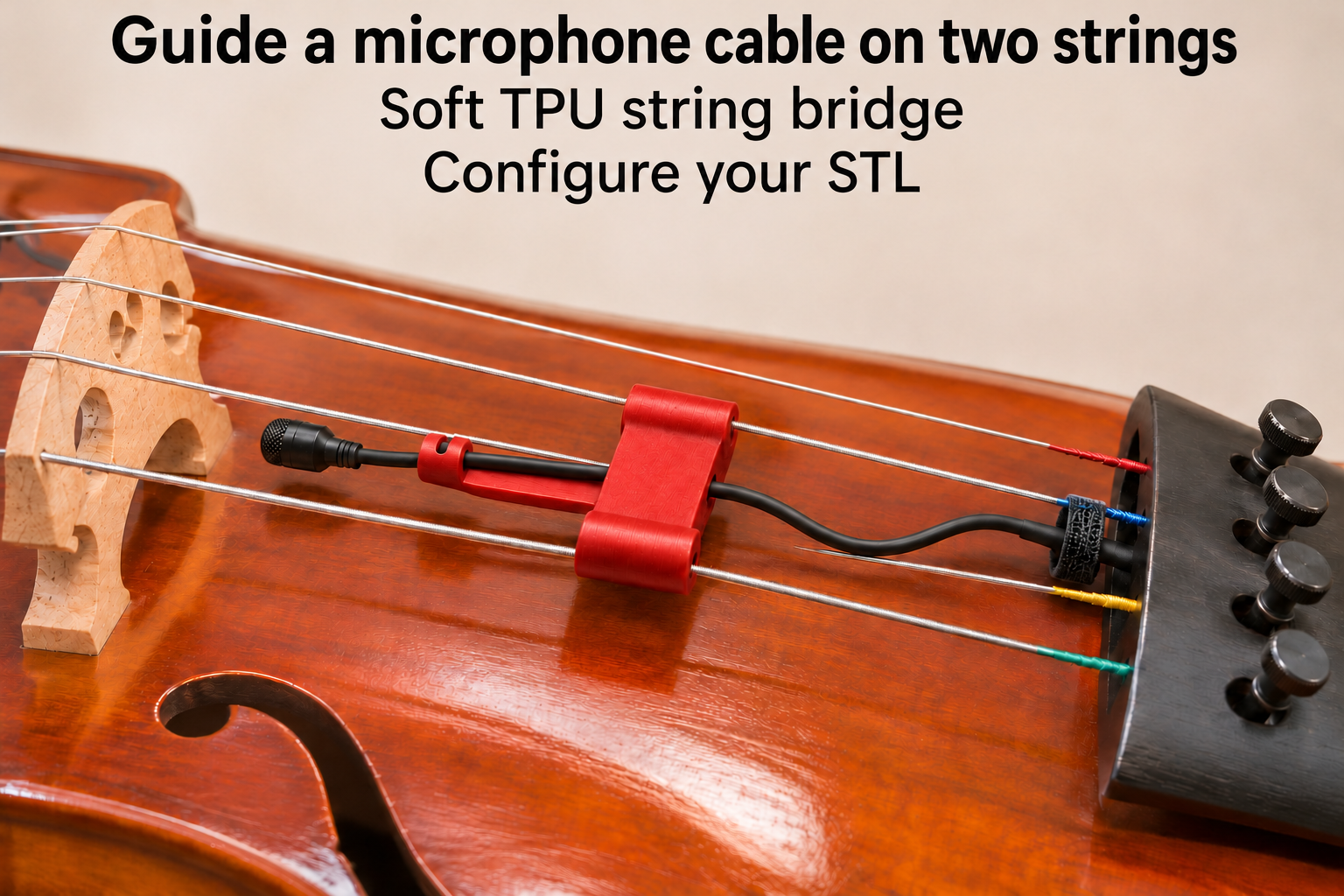
03.11.2026
Two slotted sockets grip strings between the bridge and tailpiece. A separate open clip guides the cable while the microphone capsule remains free.
Read more →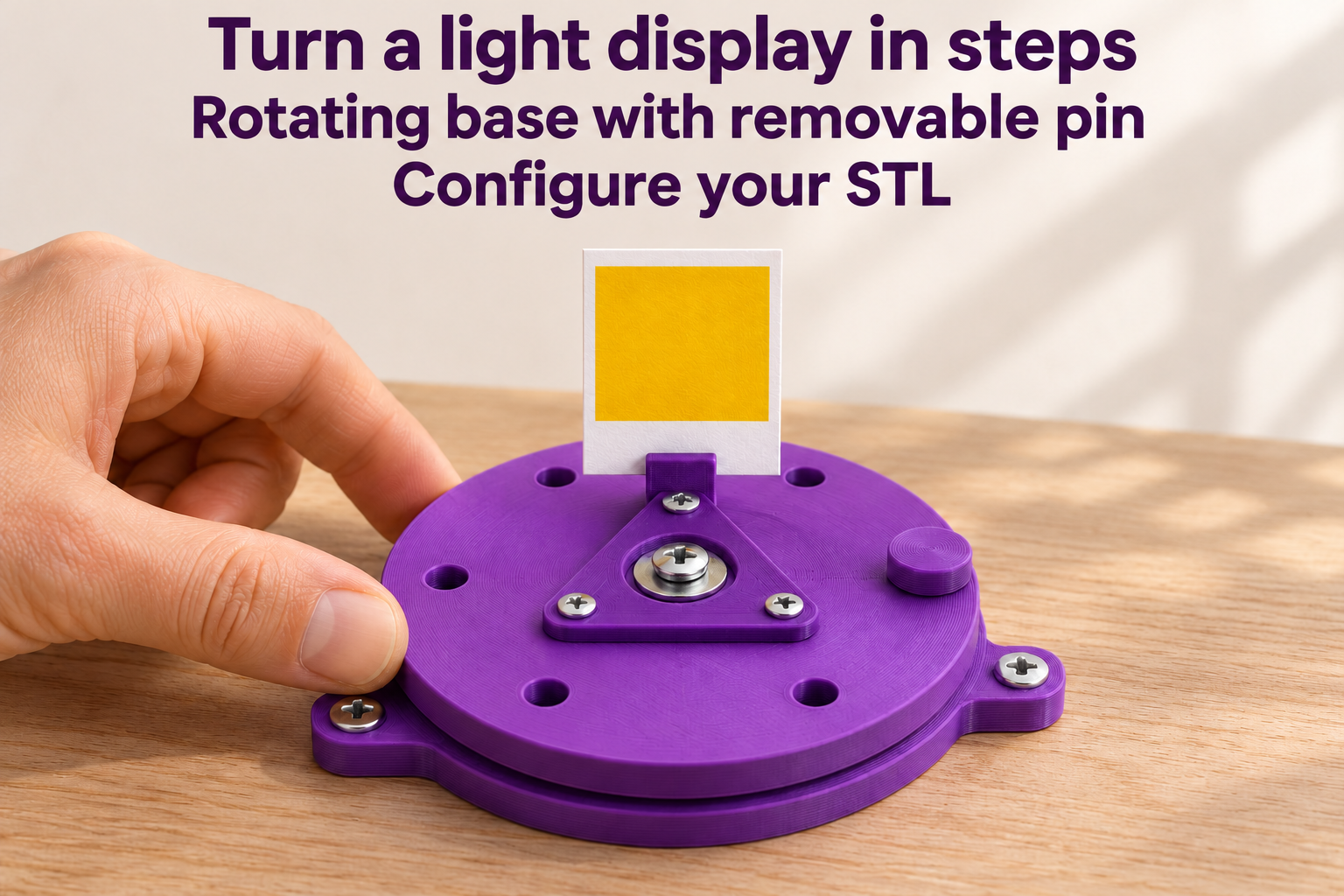
03.11.2026
A fixed base, rotating hole plate and loose pin provide a simple manual adjustment for small horizontal hobby displays.
Read more →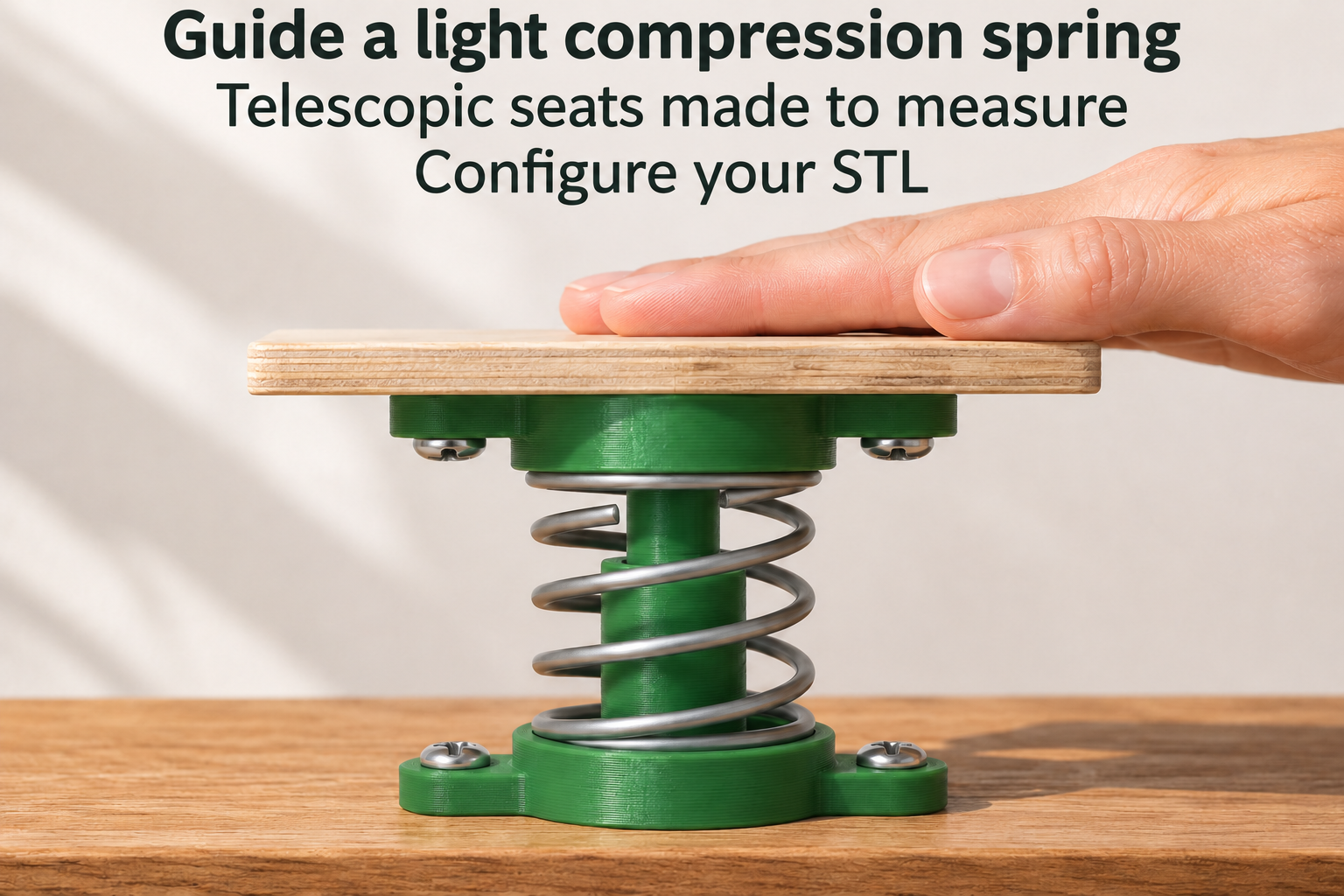
03.11.2026
A tube and mating pin guide your own spring from the inside. Size the seats for the spring and plan sufficient overlap plus a separate travel stop.
Read more →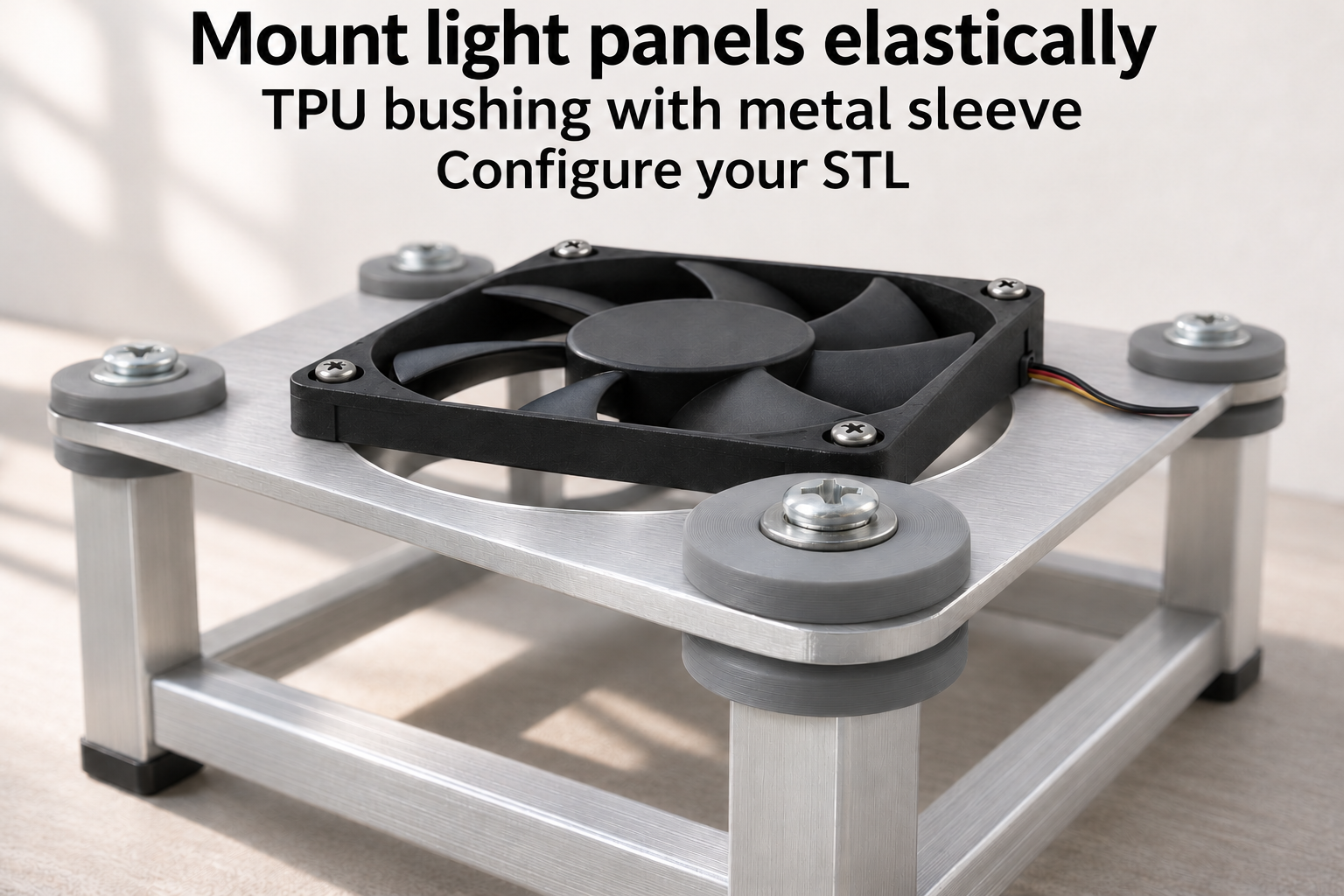
03.11.2026
Two flexible flanges capture the panel around its hole. A separate metal sleeve guides the screw and limits crushing when the fastening is tightened.
Read more →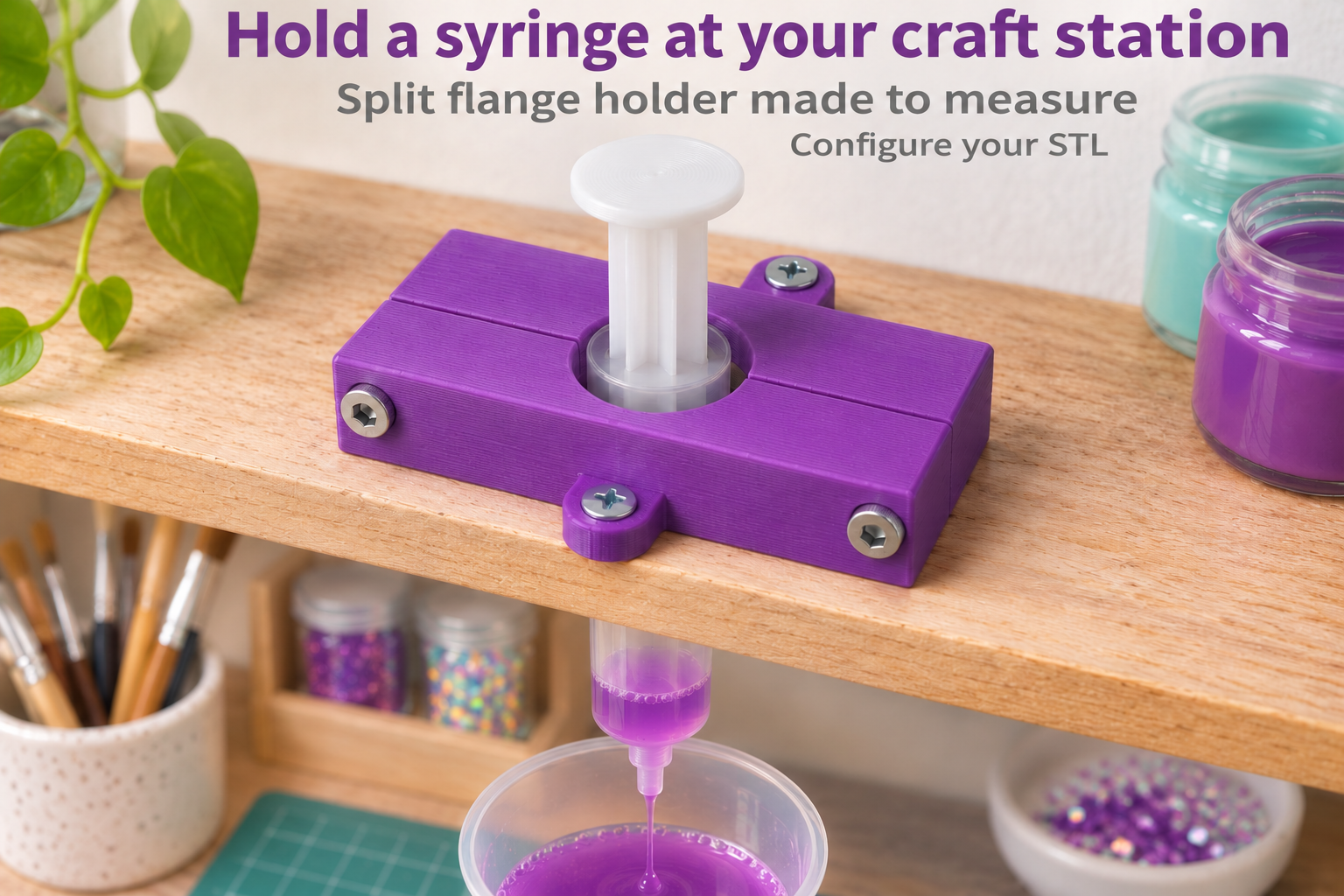
03.11.2026
Two half-shells enclose a rectangular finger flange. Measure the barrel and flange, allow a plate cutout and keep the plunger moving freely.
Read more →
03.11.2026
Match tooth geometry, face width and shaft opening to your own test assembly. A square bore can engage directly with the matching shaft shape.
Read more →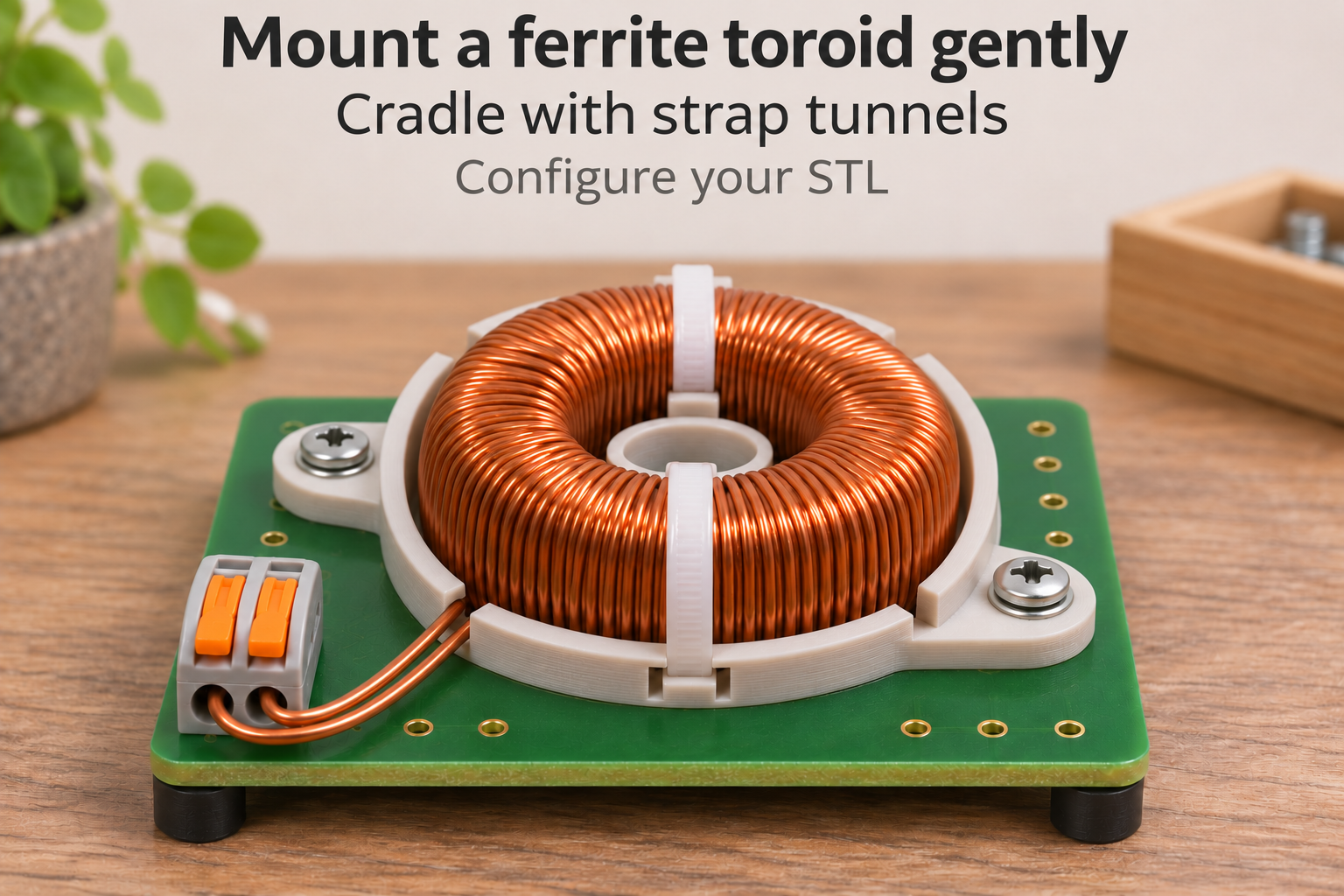
03.11.2026
Measure the wound ring and provide room for a soft liner. An annular seat, two strap tunnels and open wire routes support a tidy hobby-board installation.
Read more →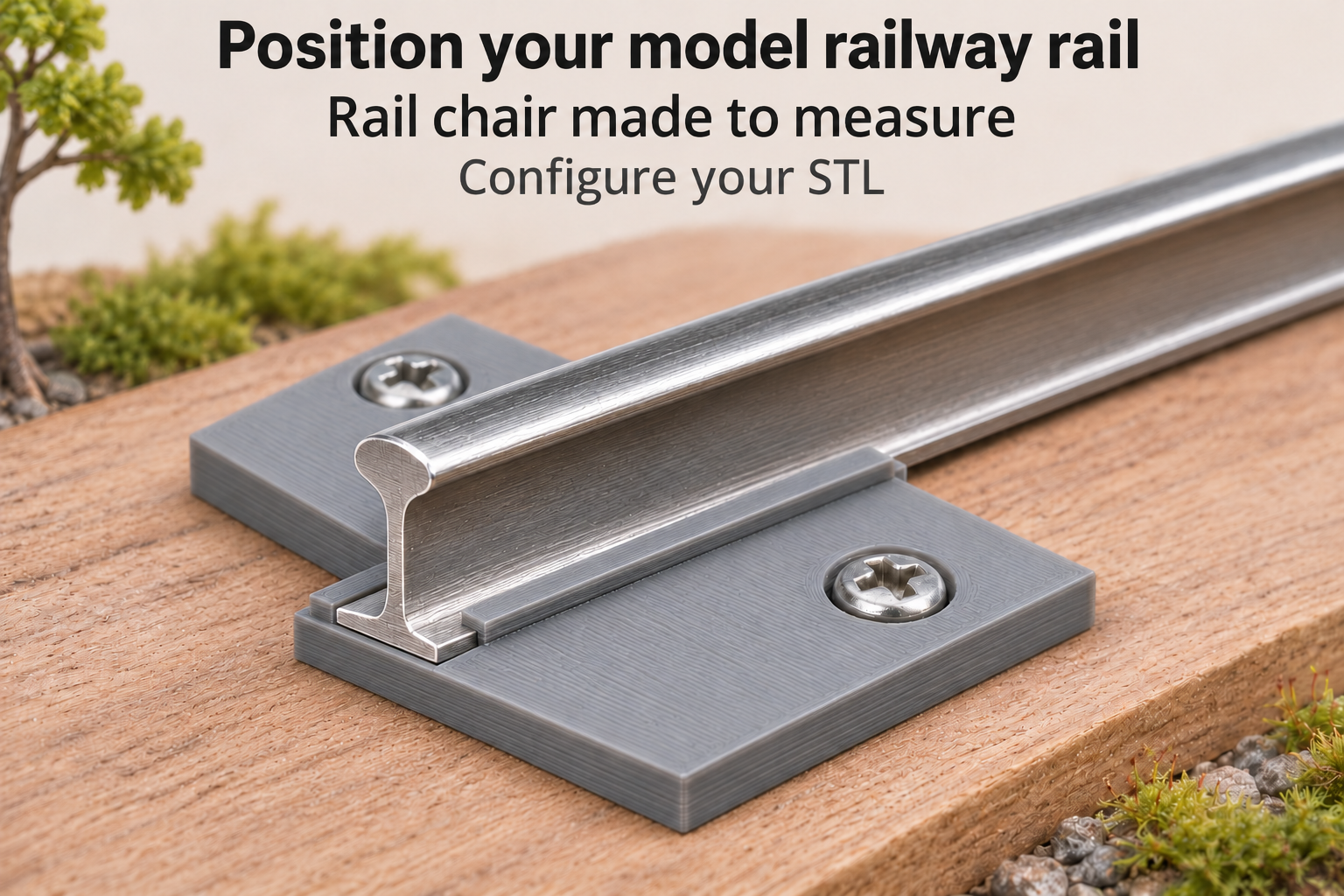
03.11.2026
Slide the rail foot under two retaining ledges, size the channel around its actual cross-section and screw the chair to your baseboard.
Read more →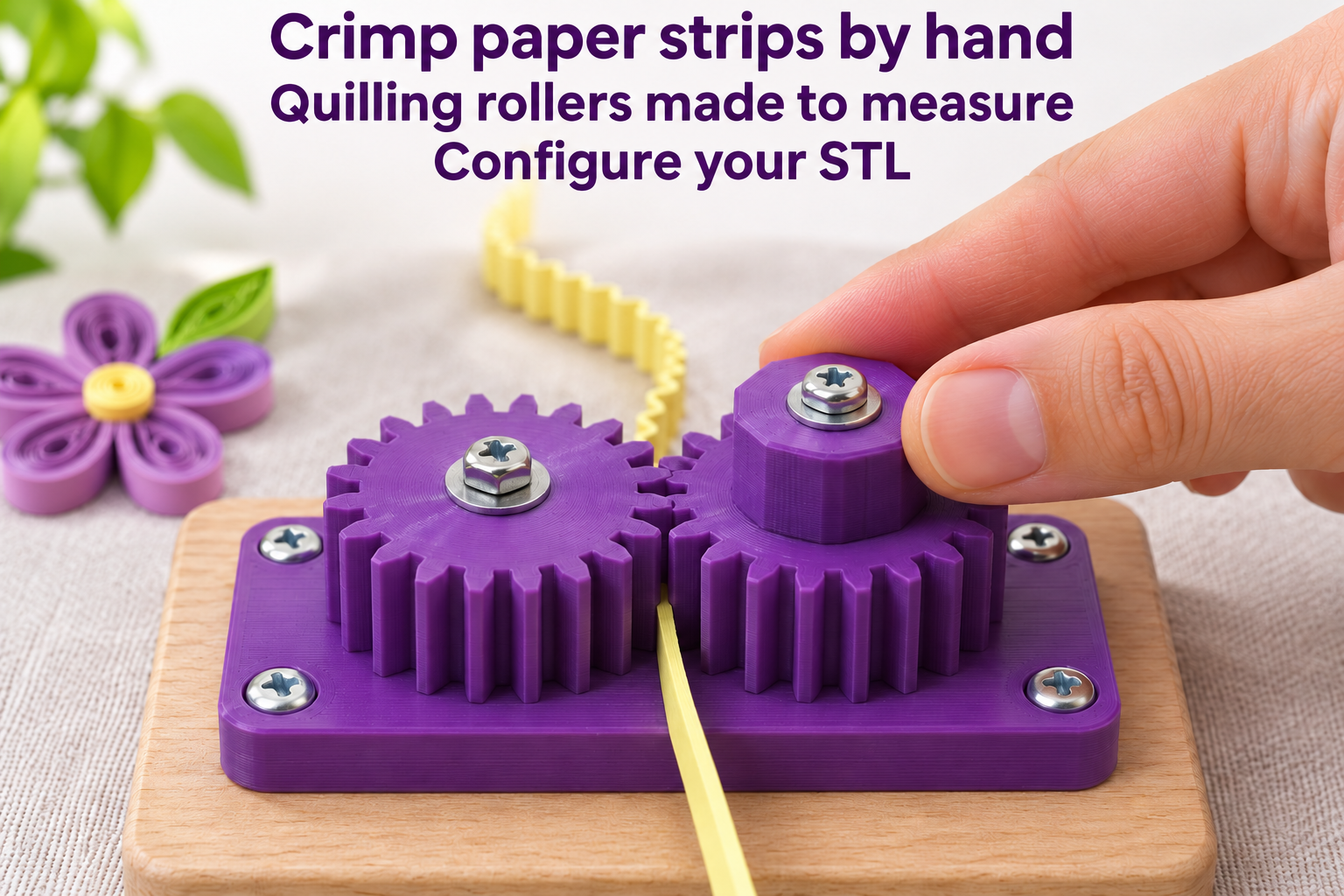
03.11.2026
Two meshing rollers add texture to paper strips. Choose the working width and tooth module for your craft project.
Read more →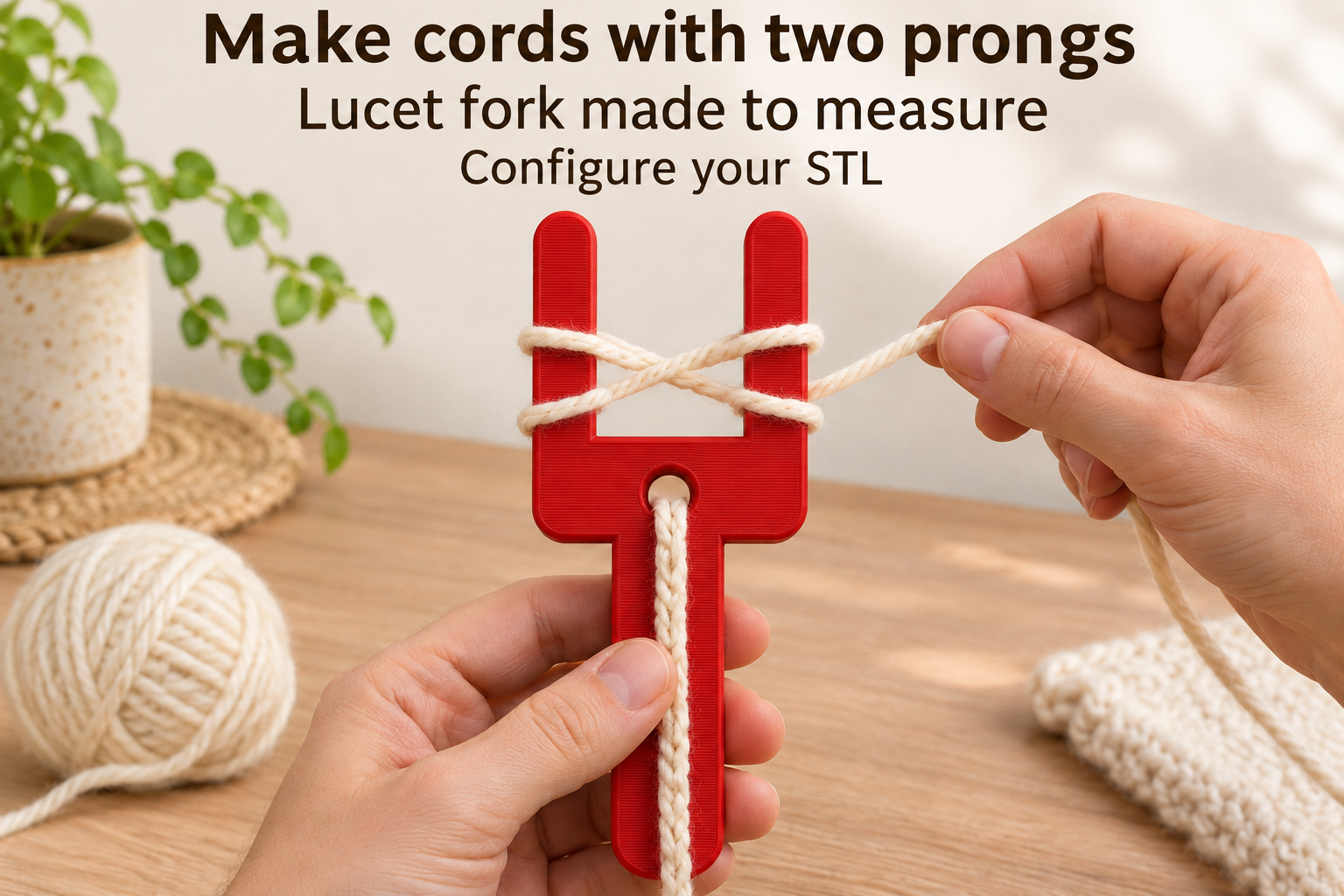
03.11.2026
Set the space between two prongs and choose a comfortable handle for small cord-making projects with soft yarn.
Read more →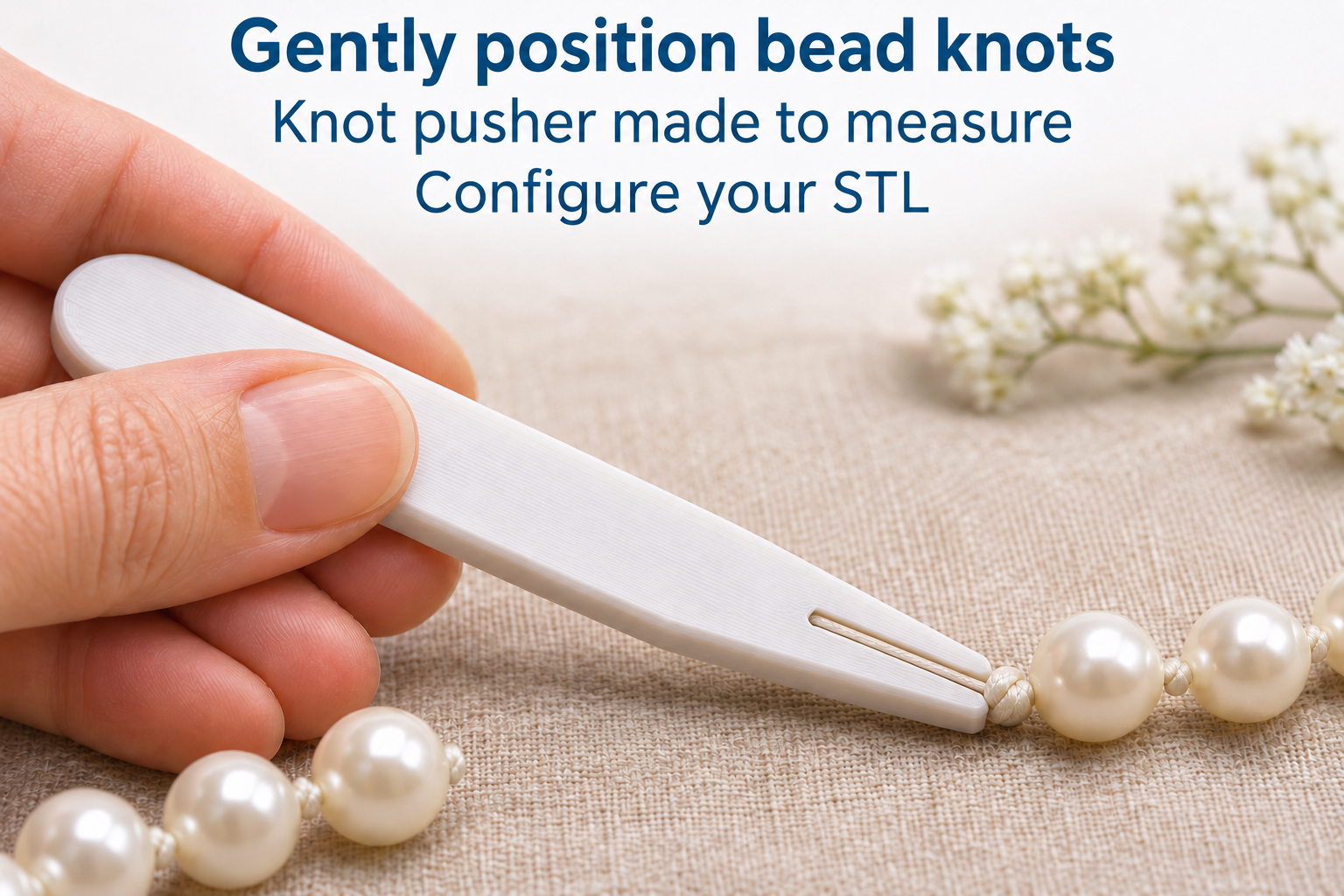
03.11.2026
Size the slot for the thread and loose knot. The small fork receives a single strand and gently guides the knot toward the preceding bead.
Read more →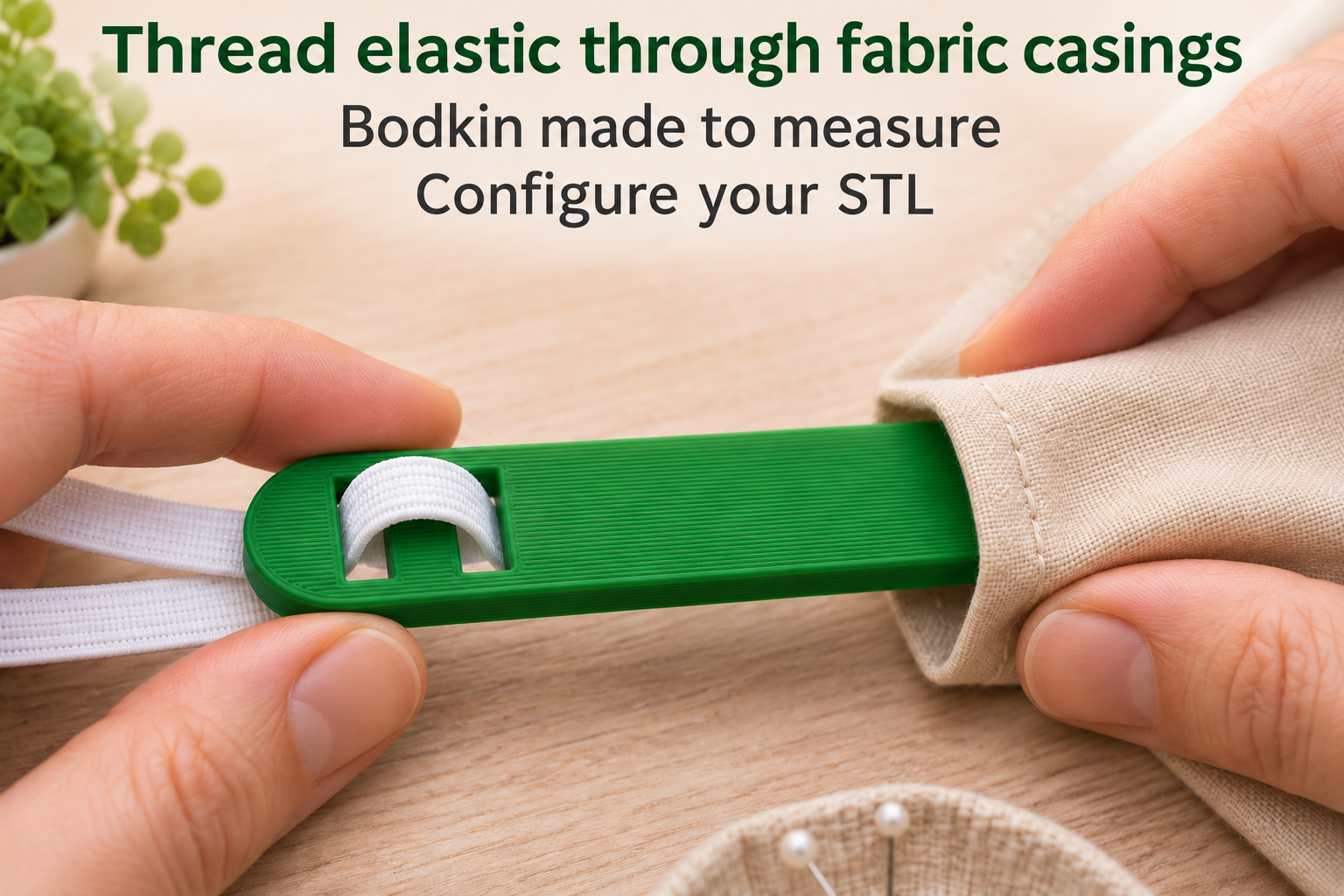
03.11.2026
Match slot length and bodkin thickness to the elastic and casing. Thread the band back through both slots and guide the blunt front through the existing opening.
Read more →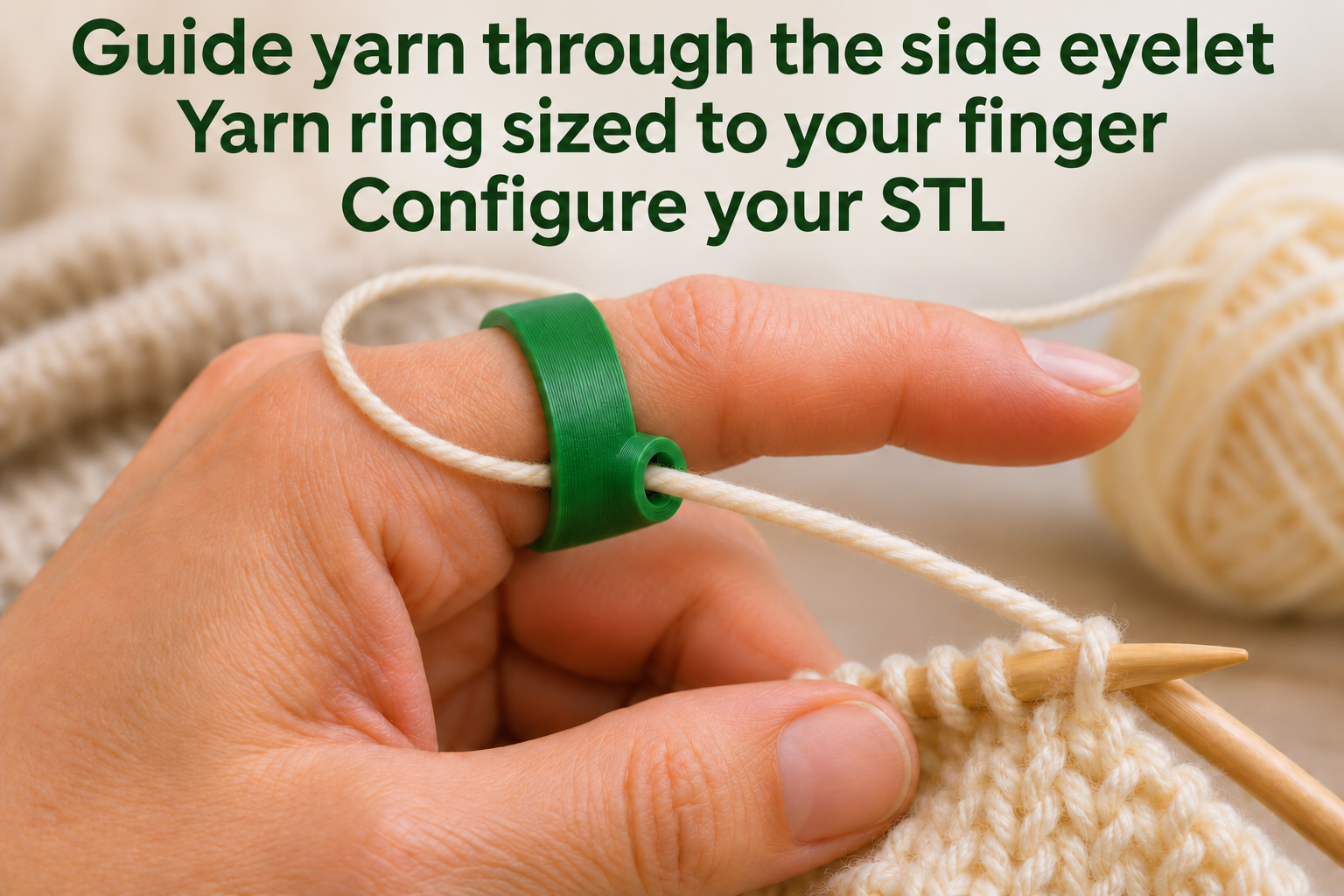
02.11.2026
Choose a comfortably removable finger ring and suitable yarn opening. Thread the yarn end through the closed eyelet before working; tension stays under manual control.
Read more →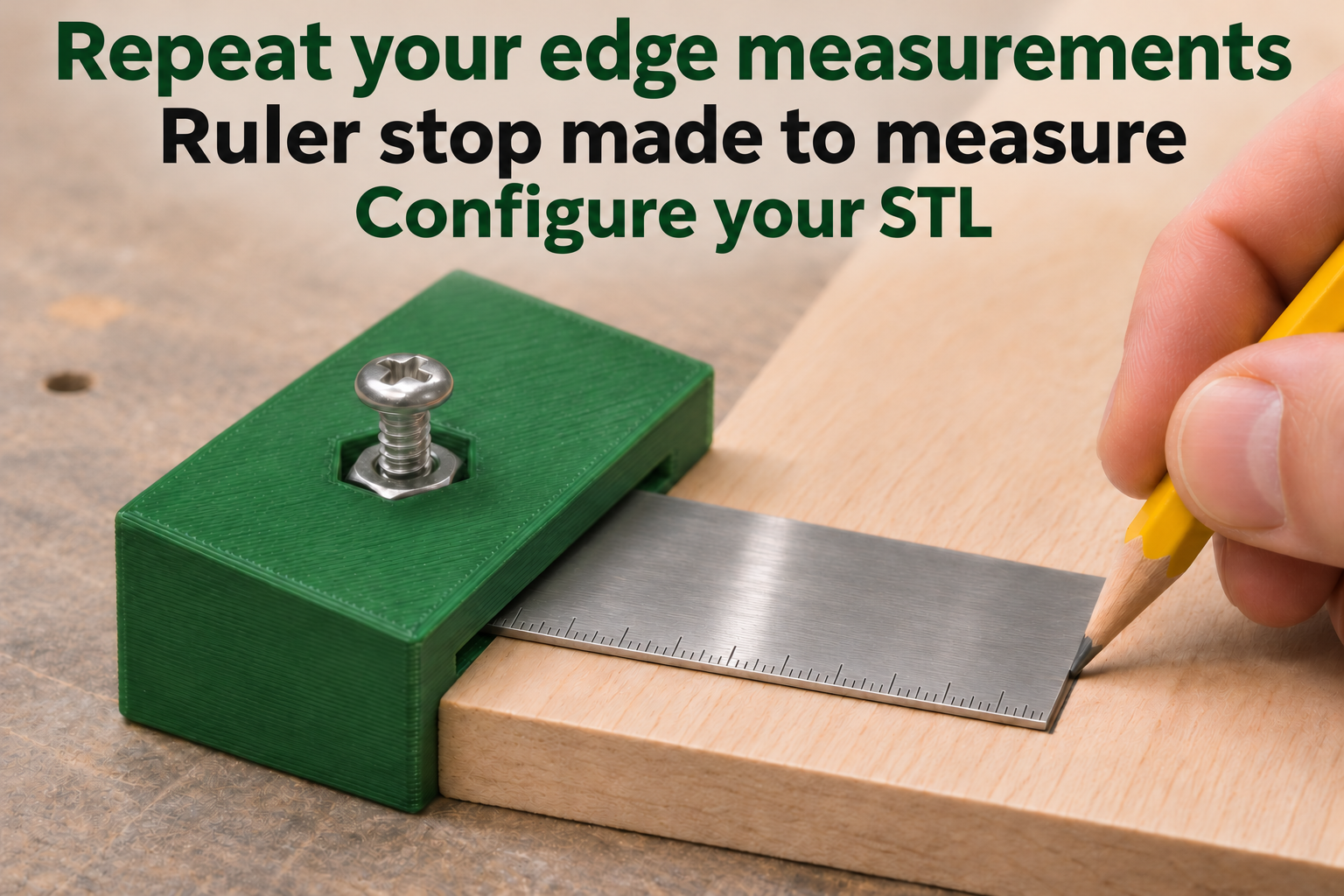
02.11.2026
Match the slot to your ruler’s width and thickness. A flat end face provides the reference edge, while a separate nut and screw hold the setting.
Read more →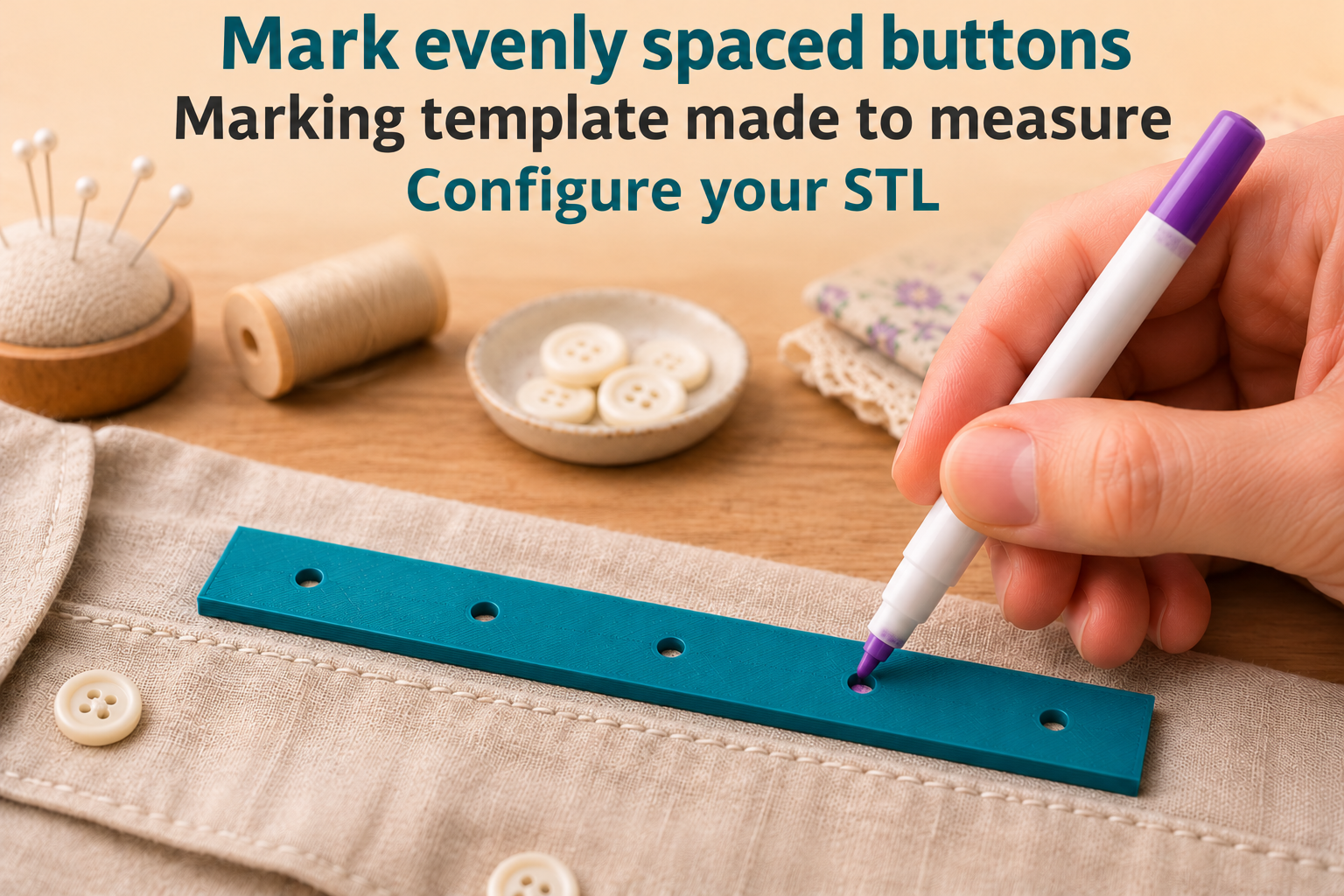
02.11.2026
Set the number and centre spacing of your button marks. Align the straight template parallel to the fabric edge and transfer the positions with a fabric marker.
Read more →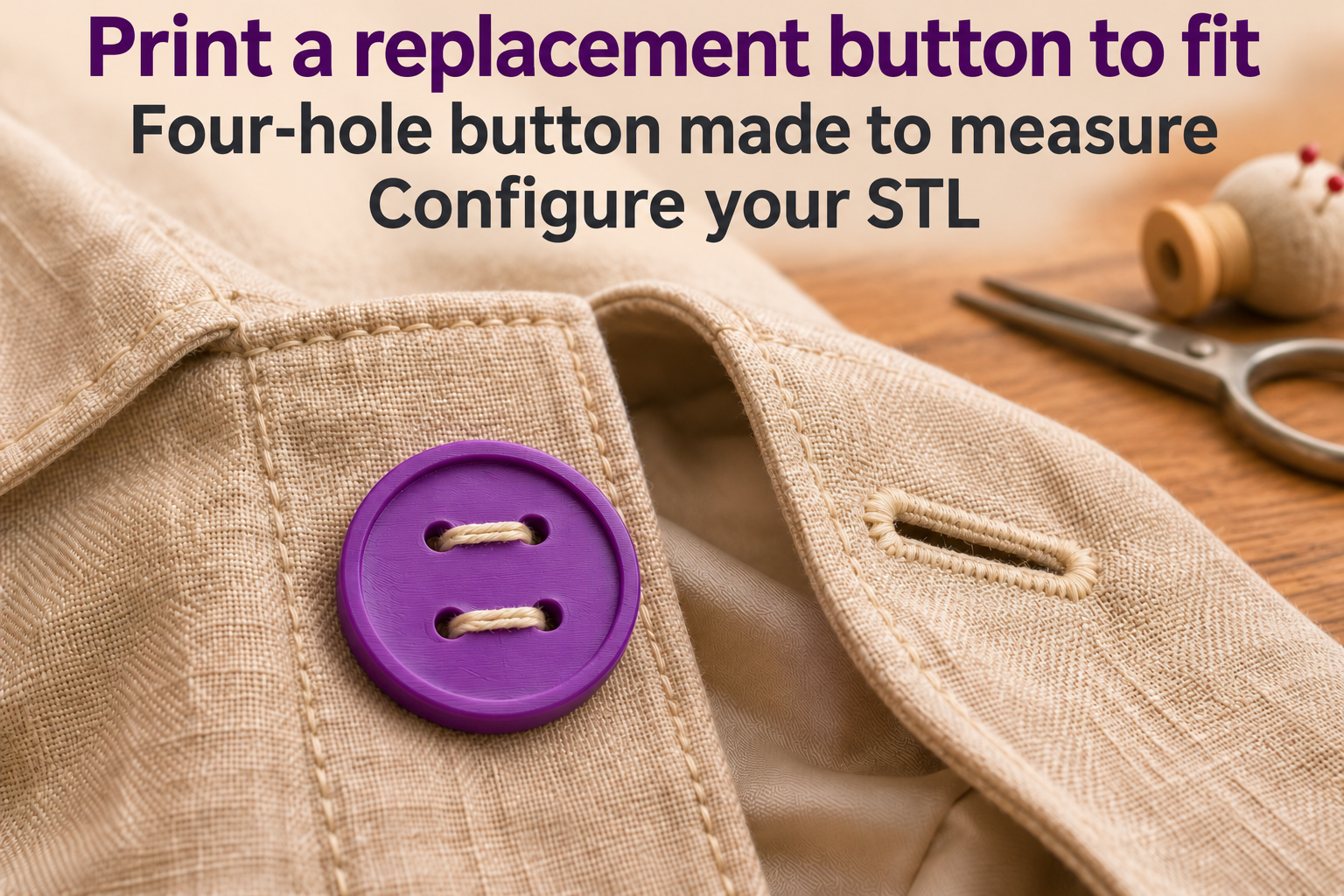
02.11.2026
Measure the buttonhole and an existing button before choosing diameter and thickness. Four sewing holes and a shallow thread recess suit adult clothing repairs.
Read more →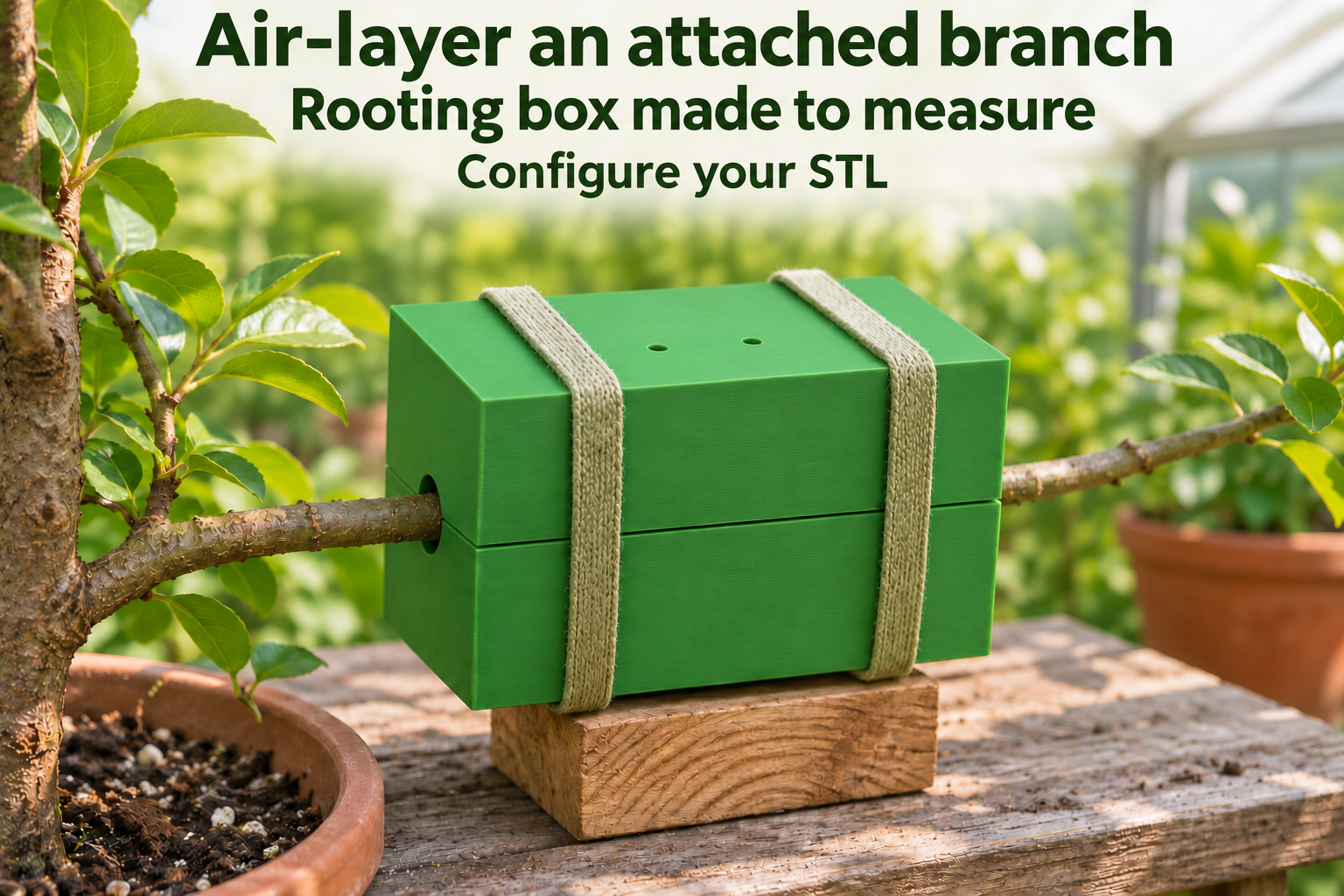
02.11.2026
Two removable box halves surround suitable rooting medium on an existing branch. Set the internal chamber and stem openings to match the available space.
Read more →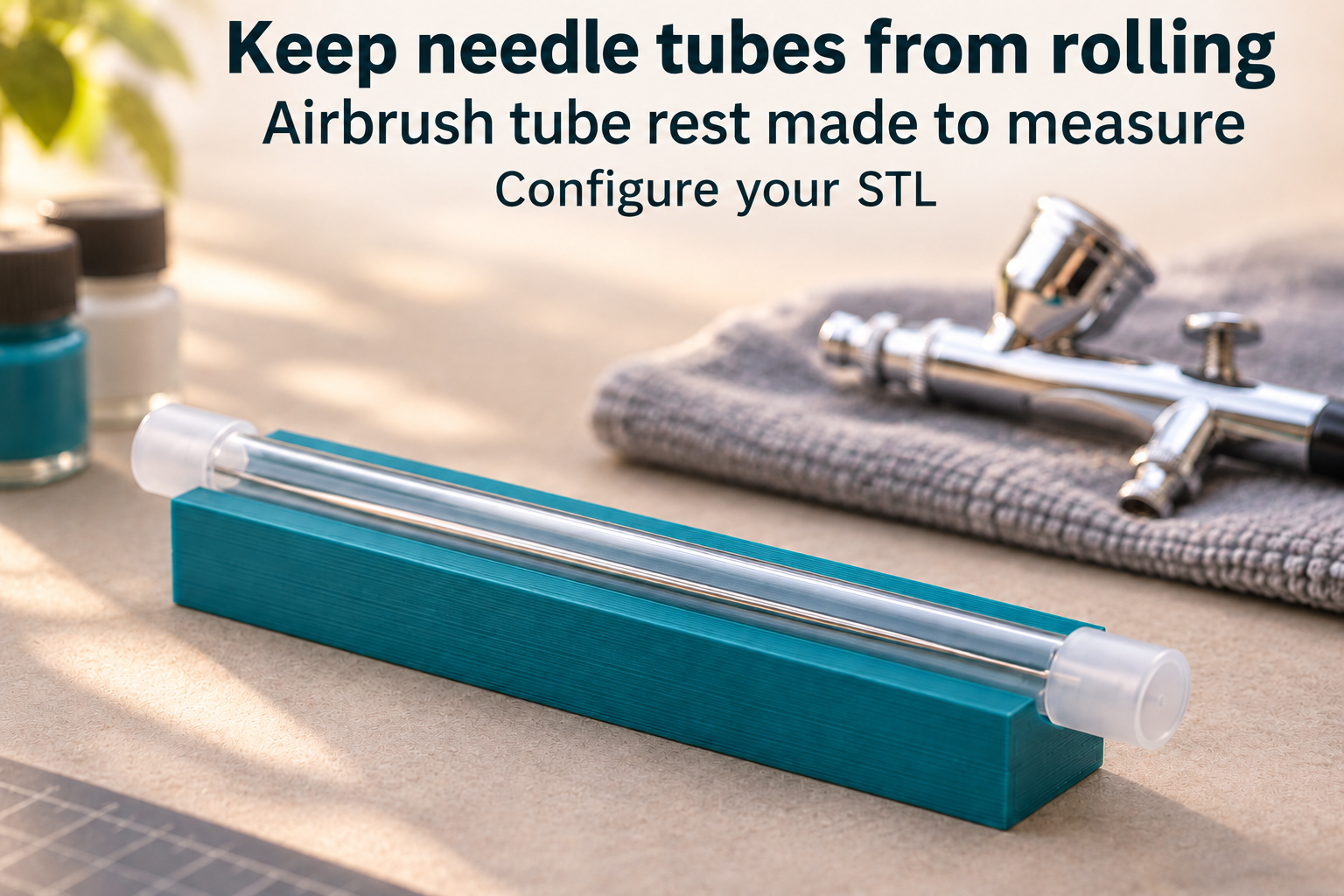
02.11.2026
Give a closed needle-storage tube a dedicated resting place. Match the semicircular groove to the tube’s outside diameter and keep the needle fully enclosed.
Read more →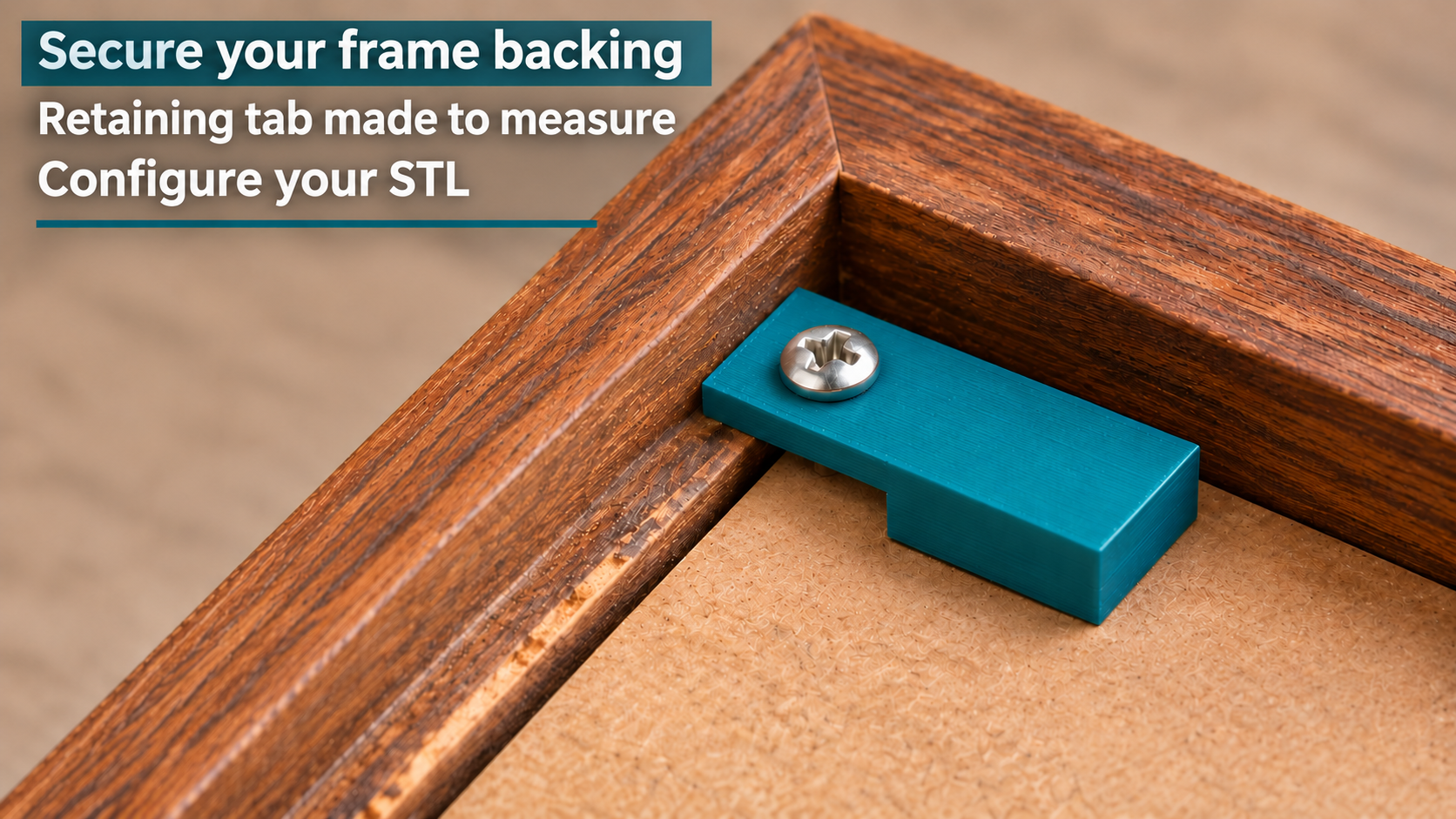
02.11.2026
Match the tab length, width and offset to your wooden frame. One screw passes through the thin half; the thicker half reaches down onto the backing.
Read more →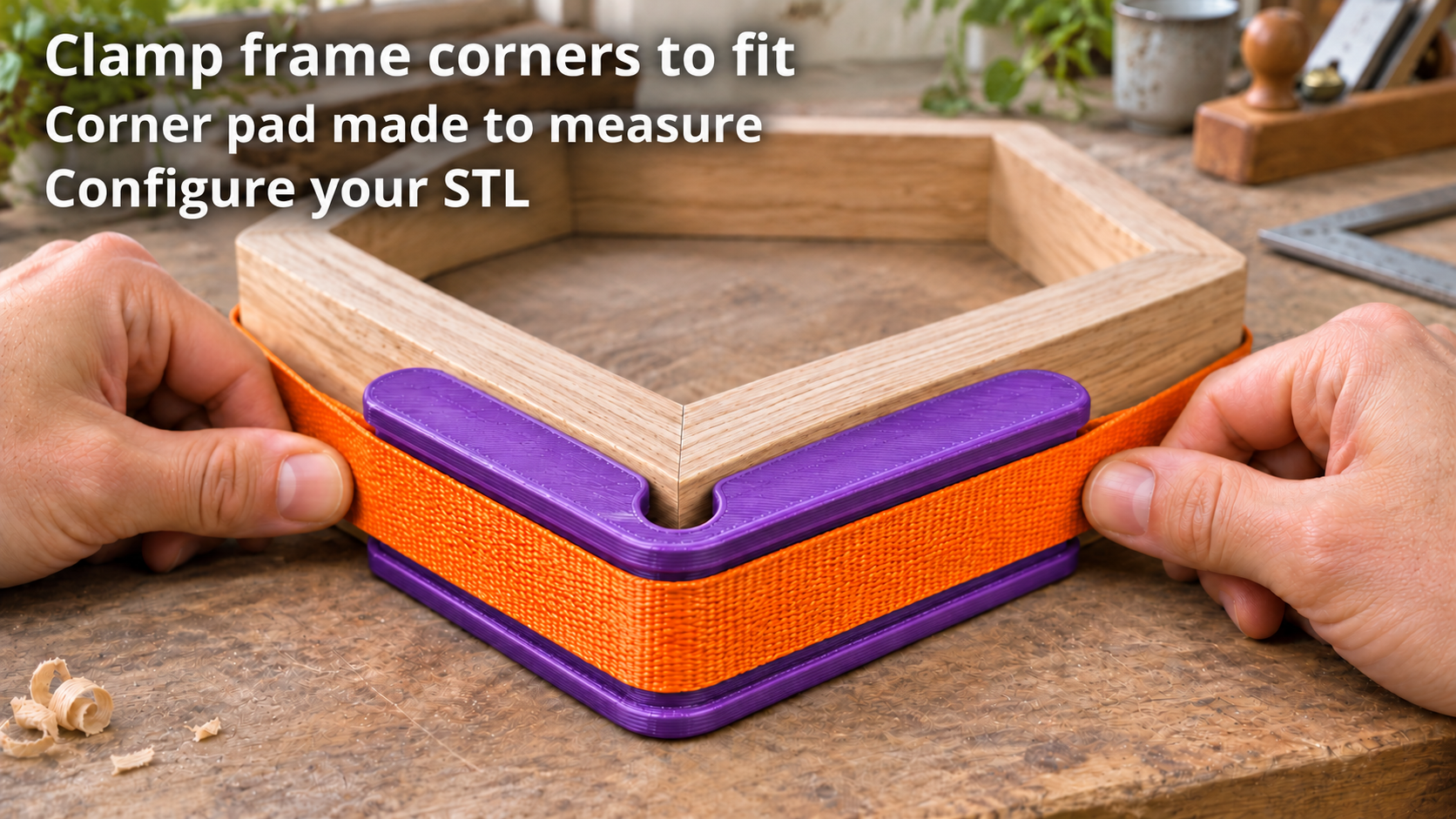
02.11.2026
Match the pad’s fixed inside angle to your frame corner. Two contact arms sit outside the wood, while the surrounding strap runs between guide flanges.
Read more →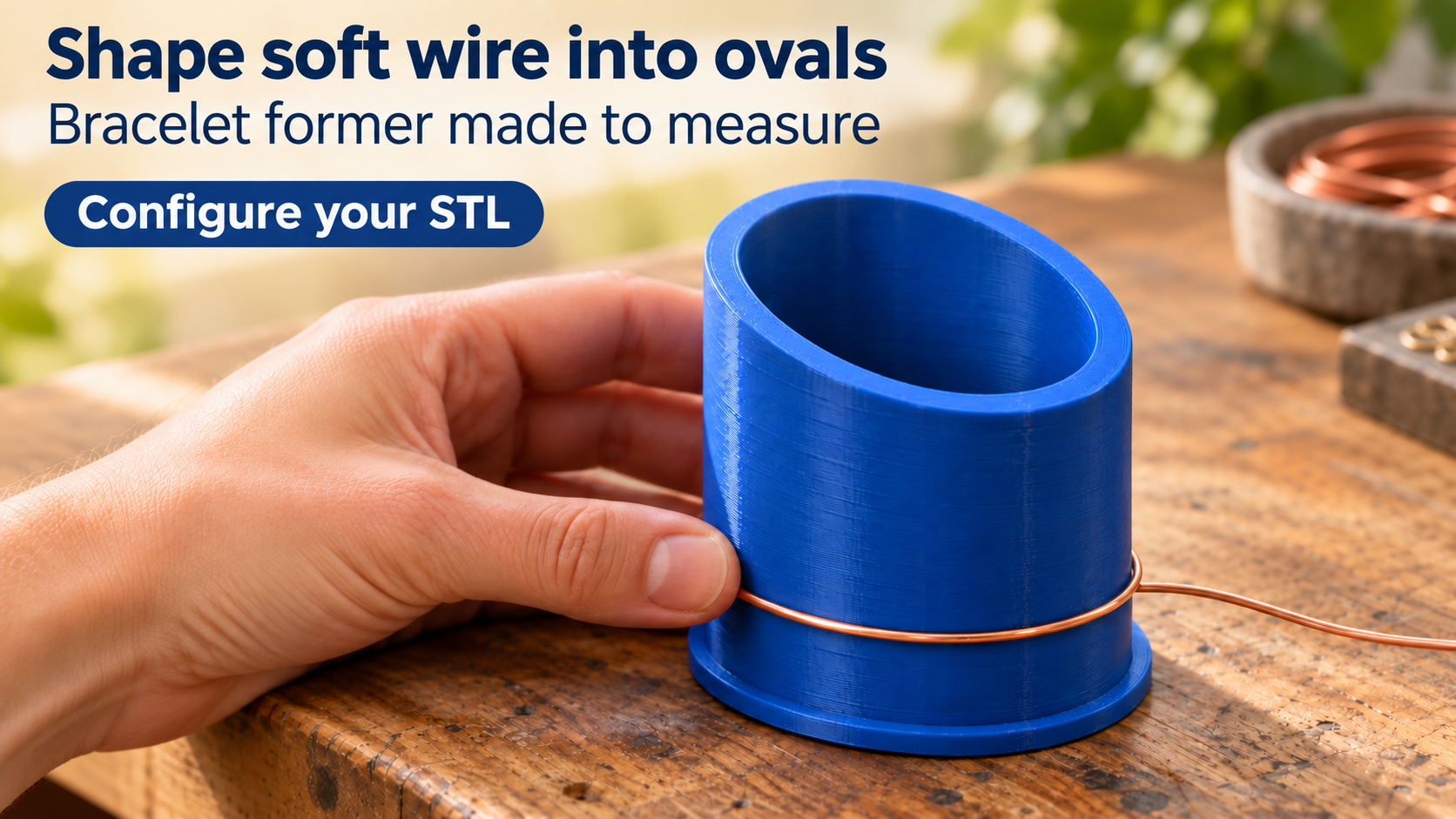
02.11.2026
Print a straight oval former with a lower flange. Its external axes define the working shape; measure the finished wire separately after removing it.
Read more →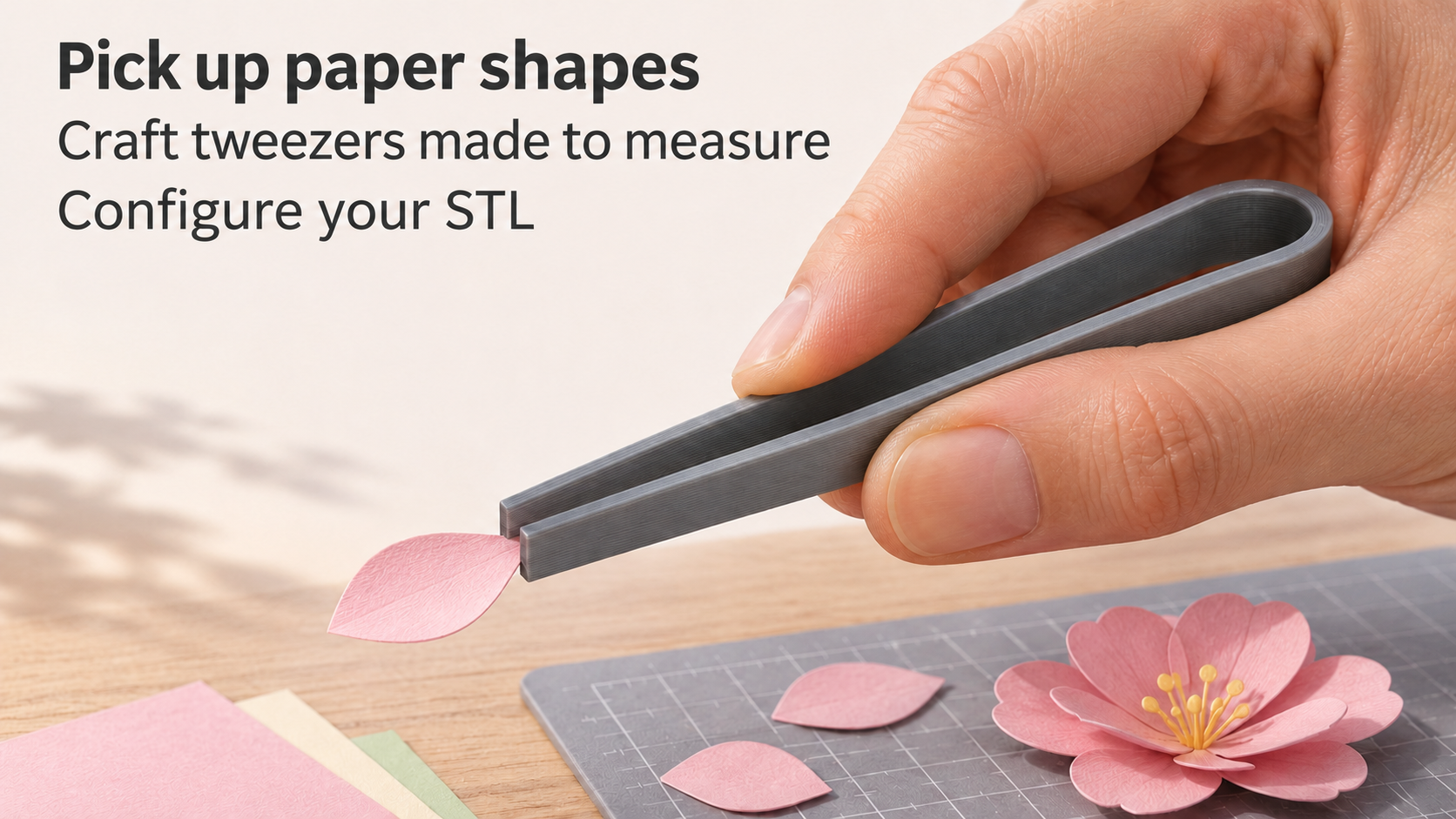
02.11.2026
Choose arm length, open jaw gap and jaw width for paper flowers and lightweight craft parts. Smooth blunt contact faces help you handle small shapes.
Read more →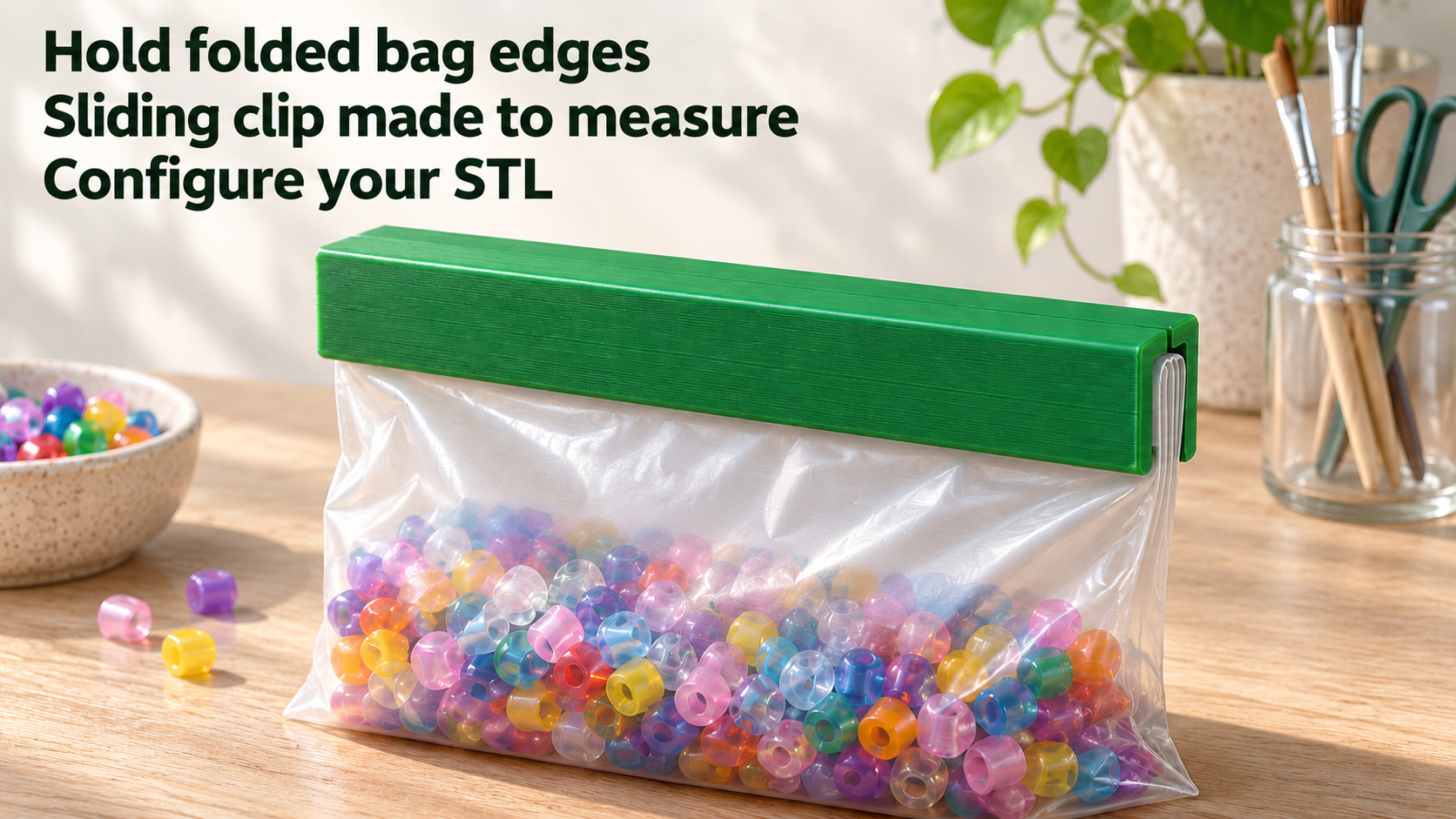
02.11.2026
Size the clip around your bag width and finished folded thickness. Its one-piece U channel slides sideways over the folded top edge.
Read more →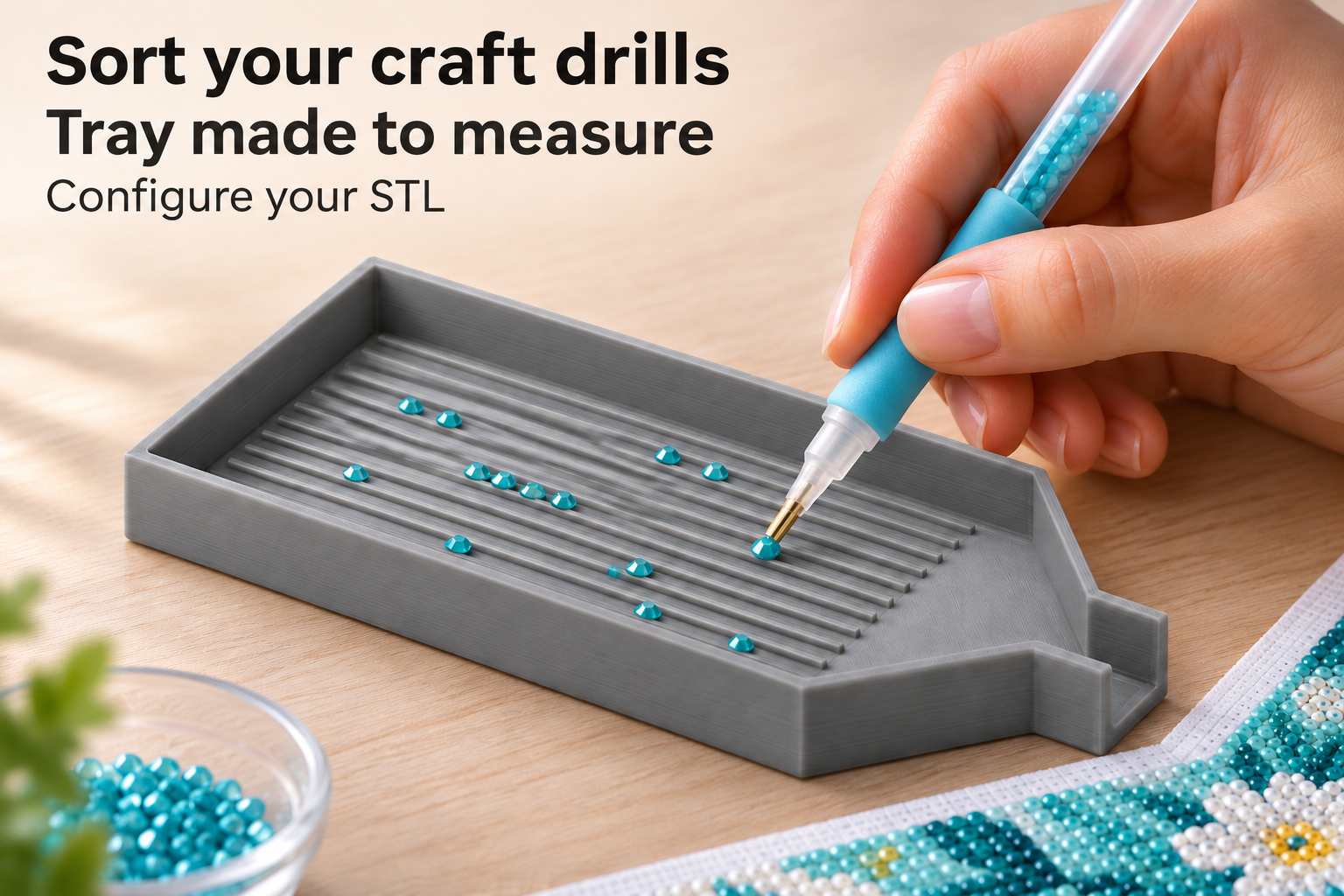
02.11.2026
Match tray size and ridge spacing to your craft drills. Low parallel ribs help organize a small batch, while the open spout provides a route back to the container.
Read more →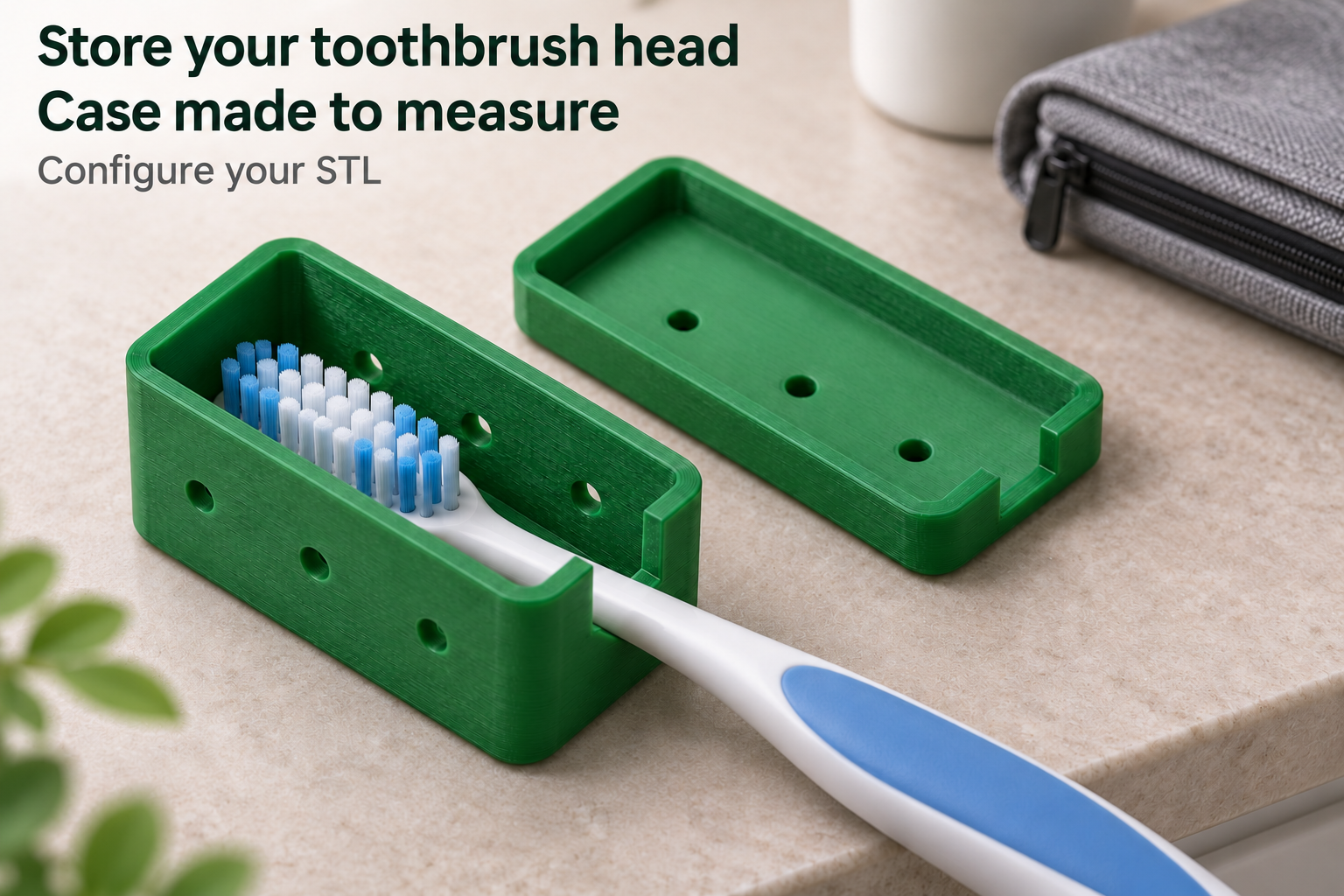
02.11.2026
Configure a ventilated tray and separate slip-on lid for your manual toothbrush. The handle stays outside while the head and bristles fit inside with clearance.
Read more →
02.11.2026
Print a rectangular tray and loose-fitting lid, then add your own sponge and suitable palette paper. Adjust the inside dimensions to your painting setup.
Read more →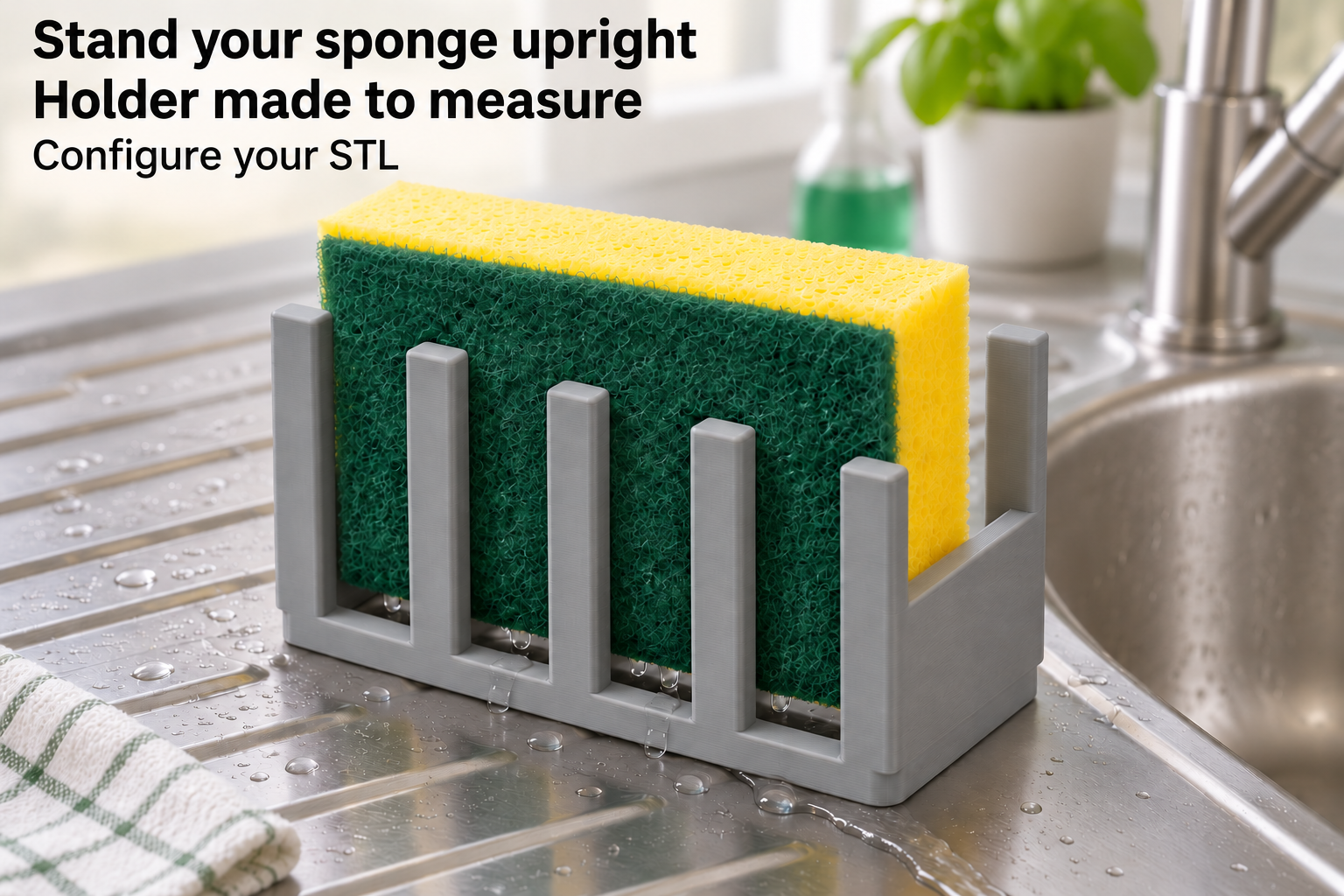
02.11.2026
Size an open slatted holder around your sponge. Its upright arrangement and open base let water reach a suitable draining surface beneath it.
Read more →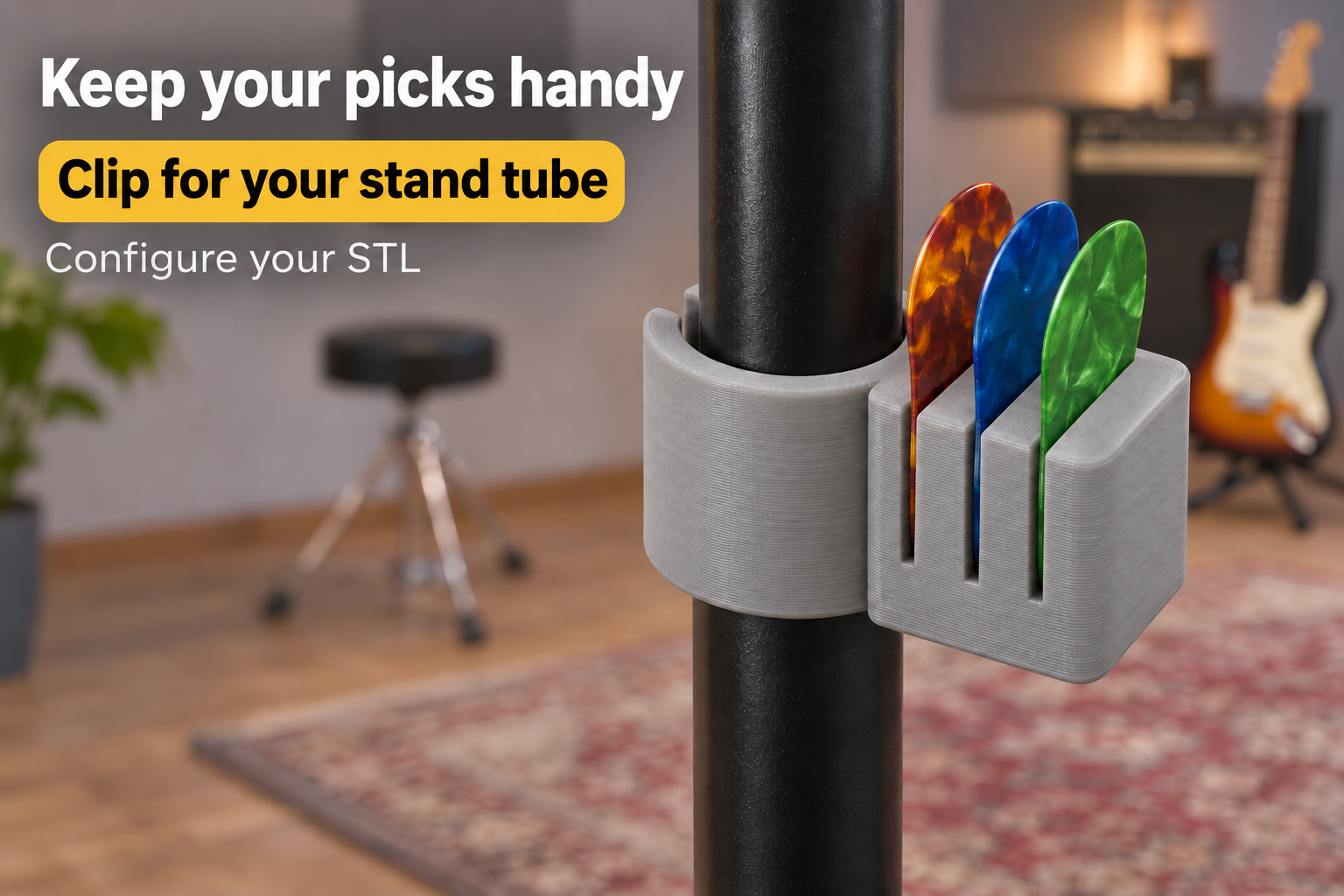
02.11.2026
Fit a small TPU clip to your stand tube and keep three picks beside it. Size the ring around the tube and the slots around the picks you actually use.
Read more →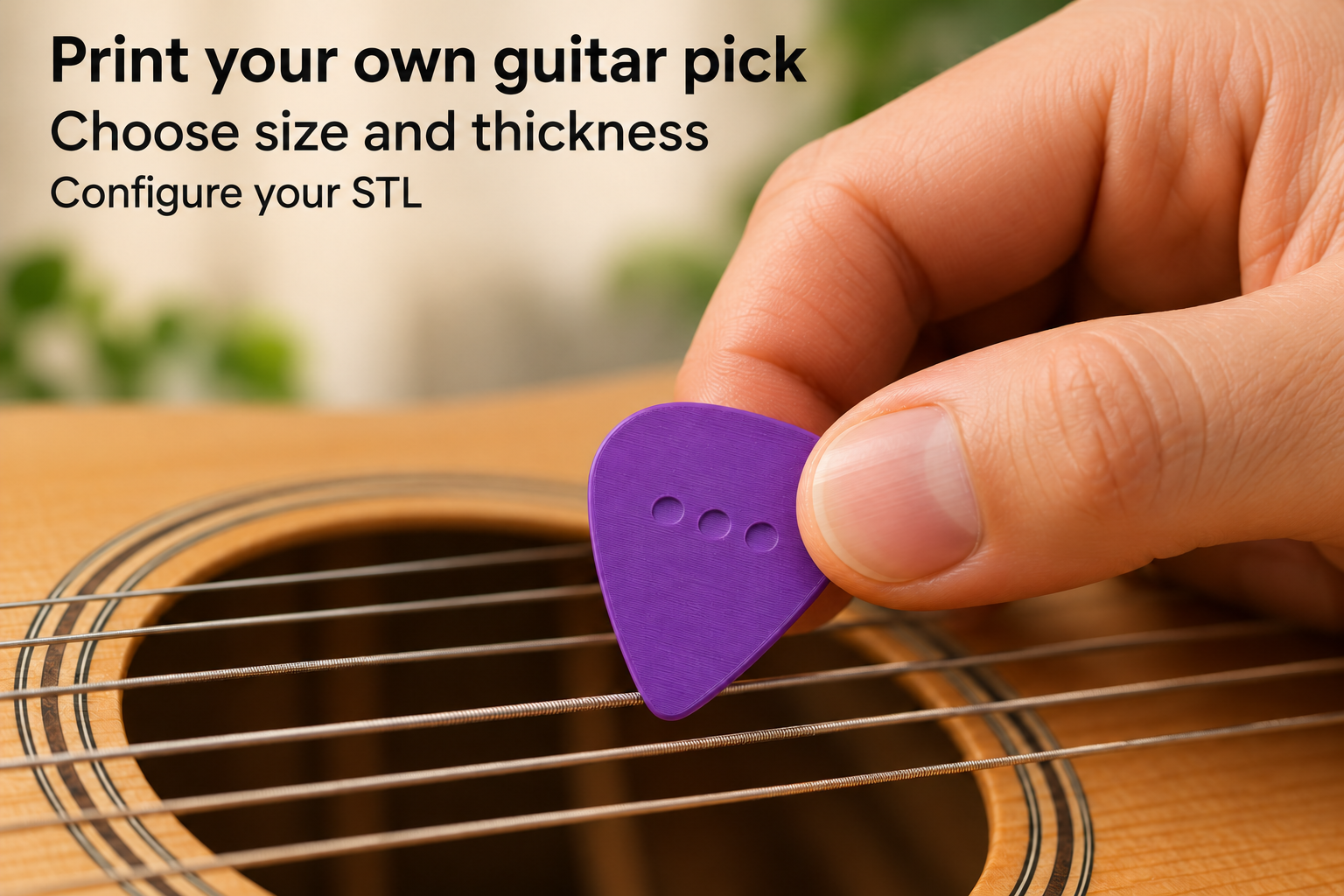
02.11.2026
Configure a rounded triangular pick for your grip. Three shallow dimples mark one face; size, material and printing all contribute to how it feels.
Read more →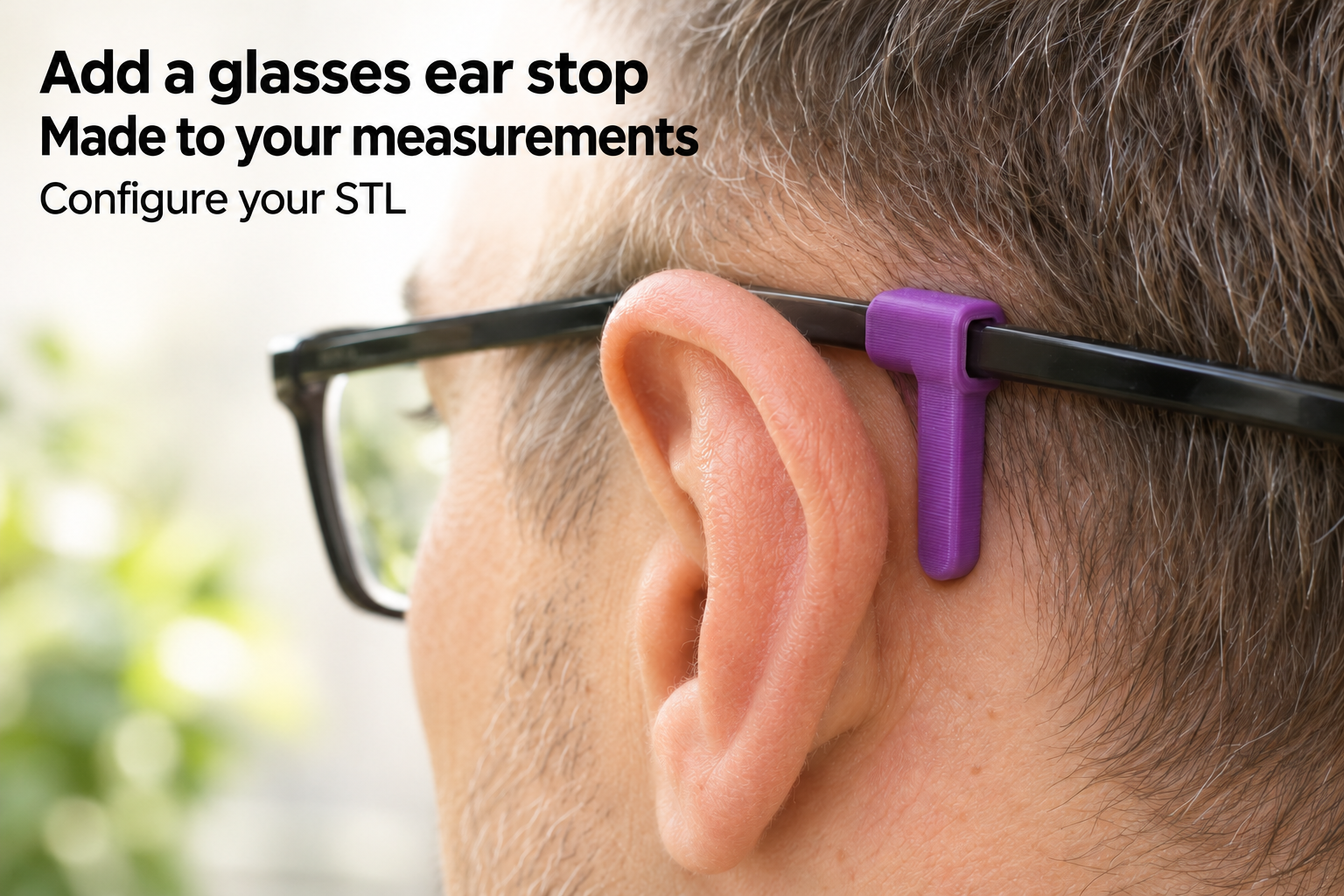
02.11.2026
Match a small TPU sleeve and rounded fin to your glasses. Check that it can slide over the temple tip and sit behind the ear without pressure.
Read more →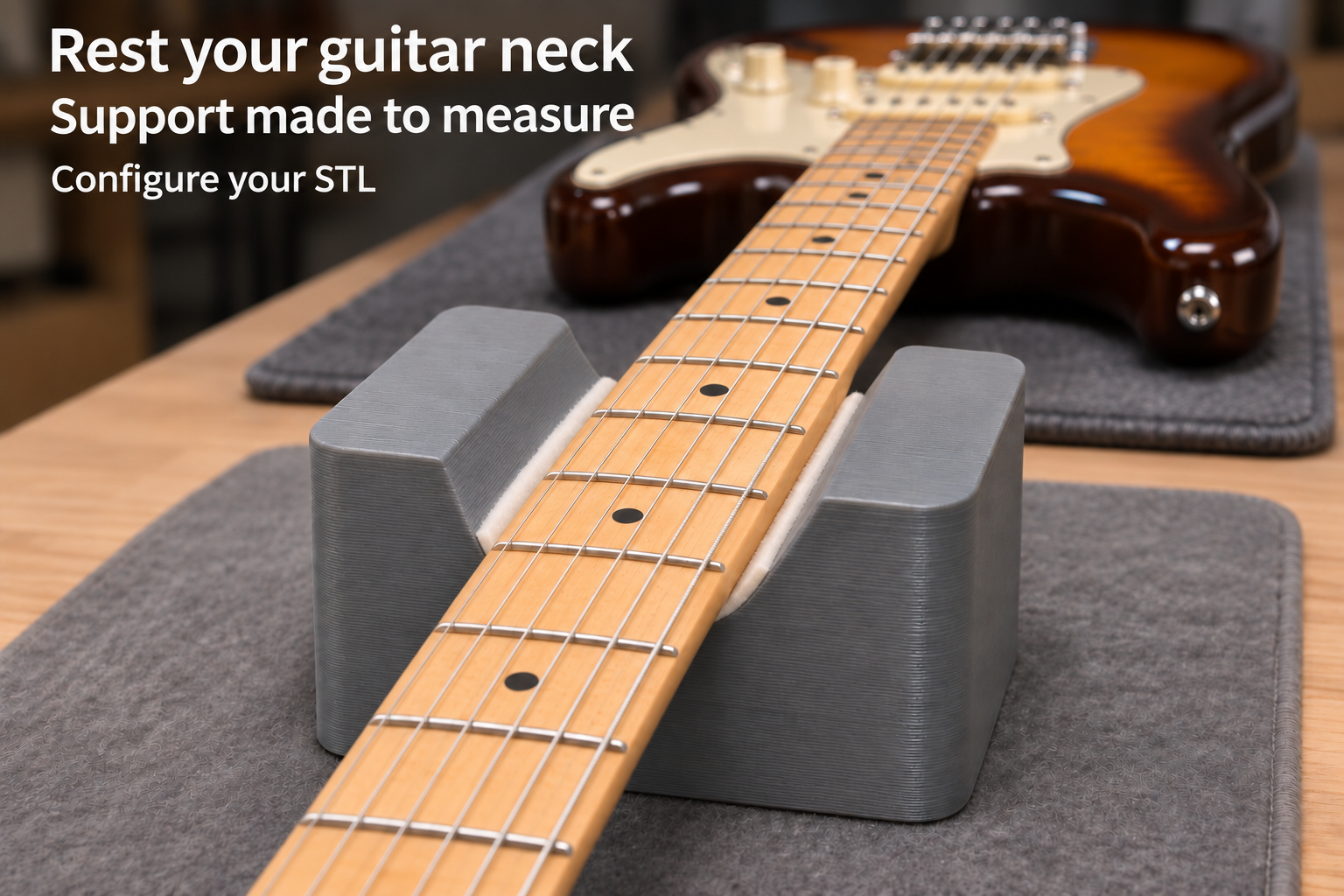
02.11.2026
Match a shallow cradle, support height and base depth to your guitar and separate soft padding, with the body resting on a padded surface too.
Read more →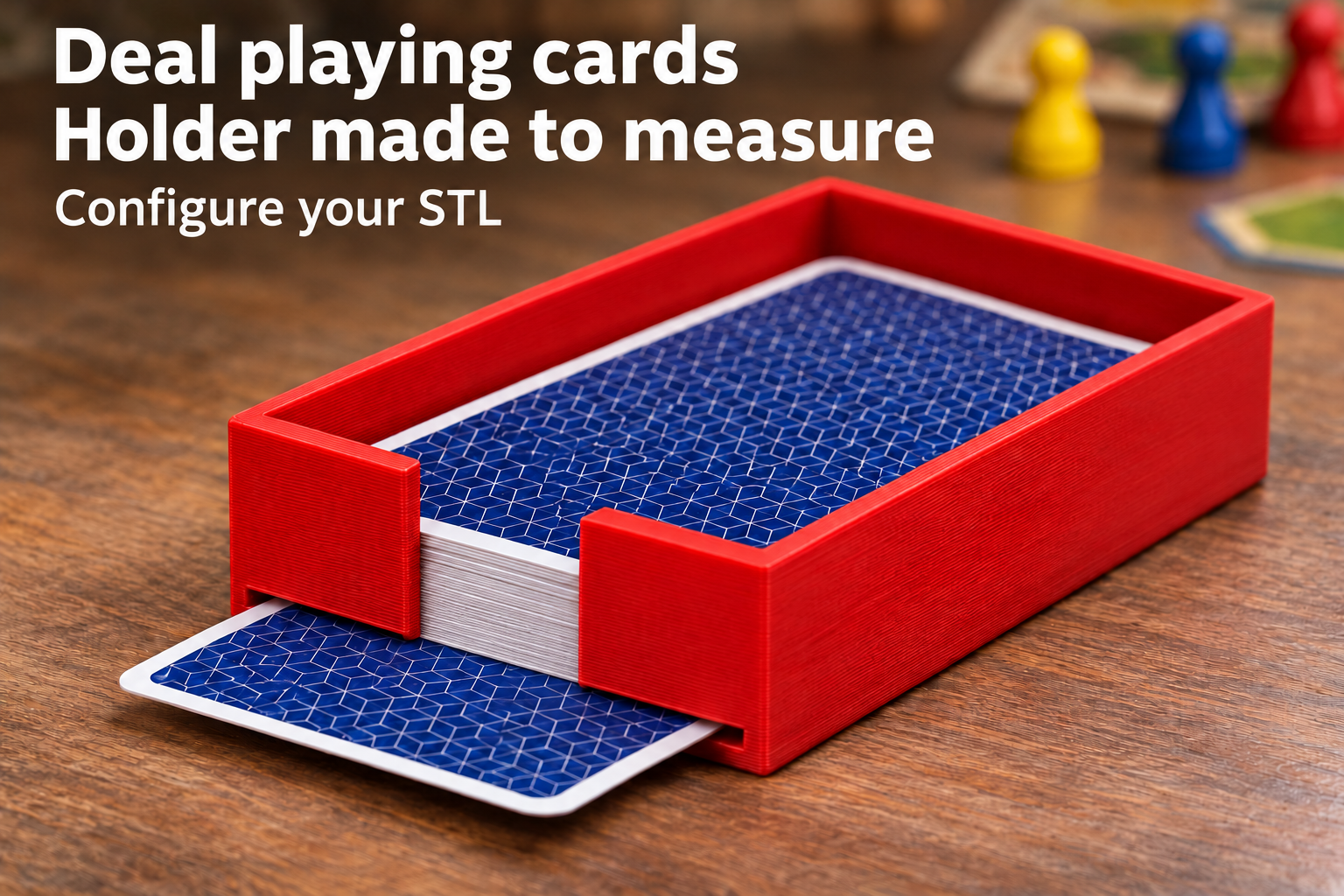
02.11.2026
Keep a horizontal card stack organized and slide the bottom card through a front slot. Match the tray dimensions and outlet gap to your deck.
Read more →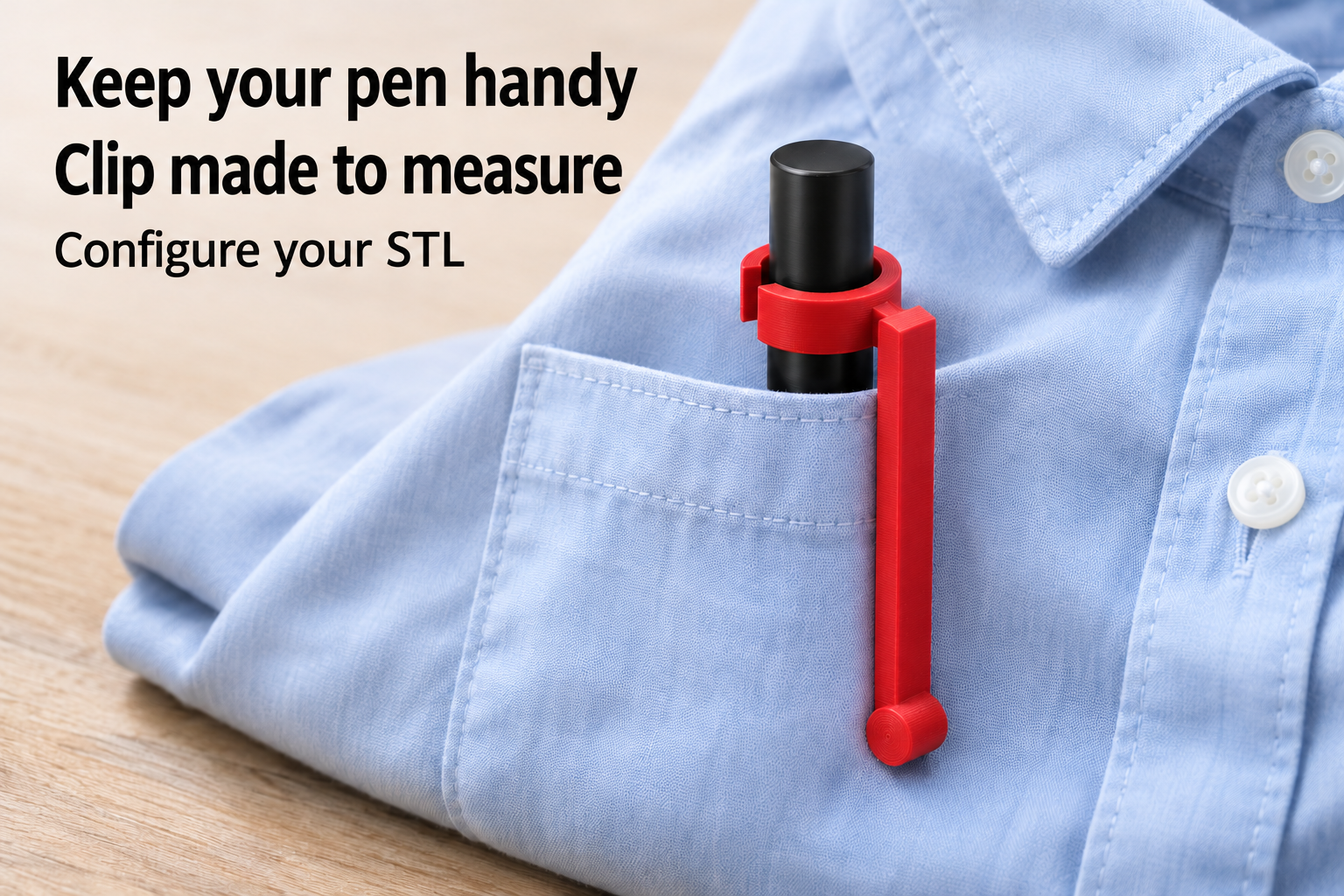
02.11.2026
A pen that still writes may only need a new clip. Size an open clamping ring and long clip arm for its barrel and a thin fabric pocket.
Read more →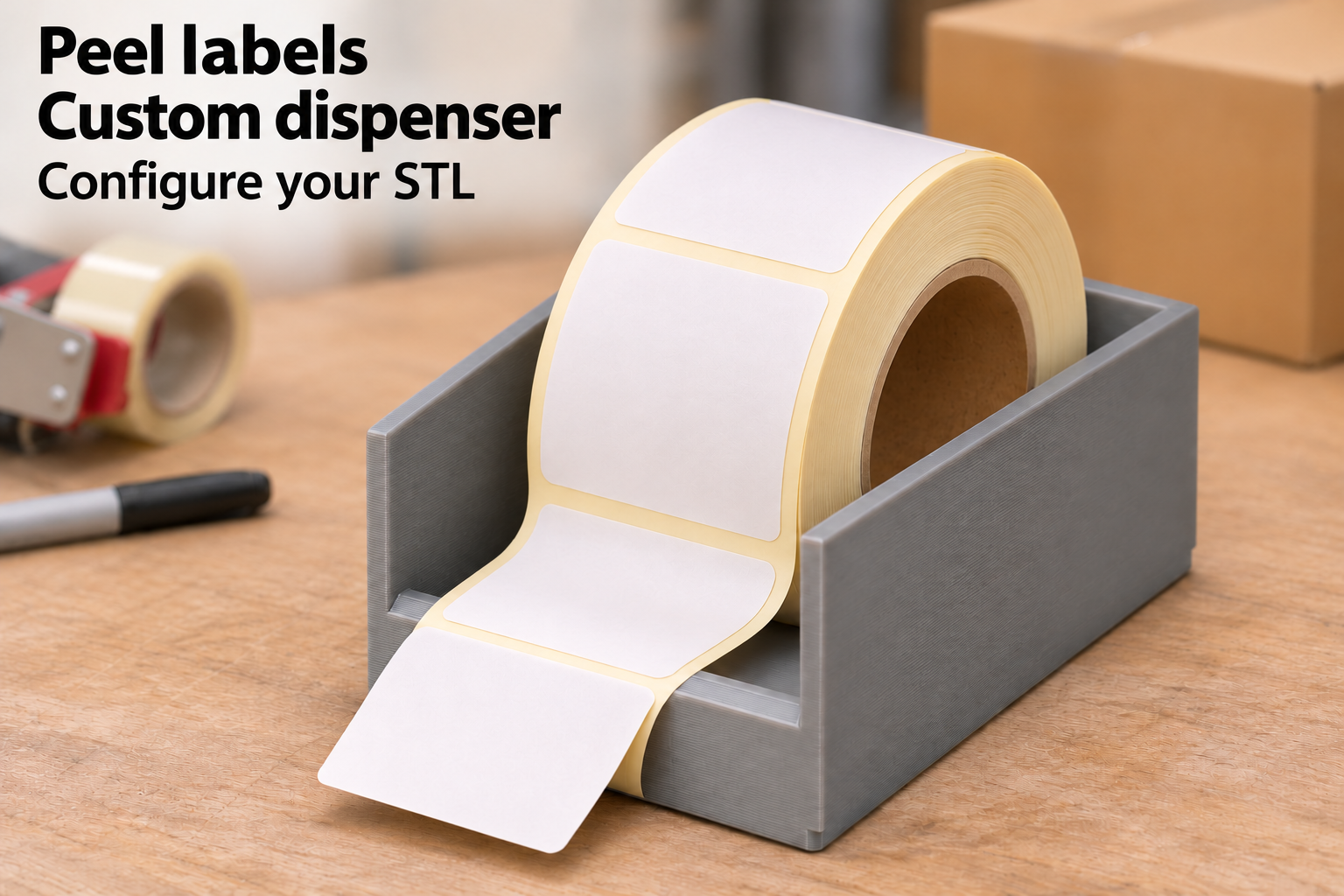
02.11.2026
Keep a label roll in an open tray and pull its backing down over a low blunt front edge. Size the holder to the roll you actually use.
Read more →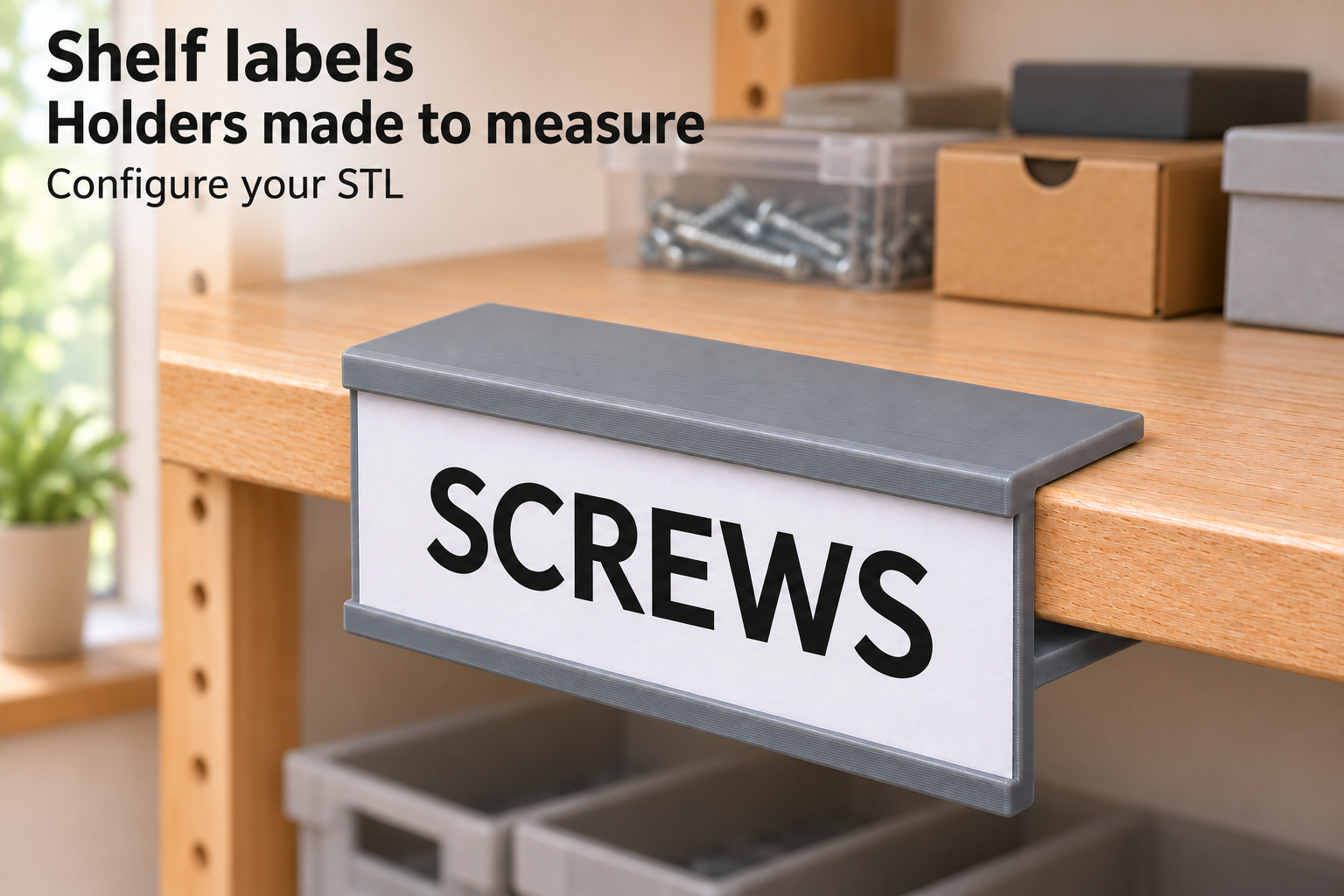
02.11.2026
Keep screws, craft supplies or storage bins easy to identify with replaceable paper labels in a slide-on holder matched to your shelf thickness.
Read more →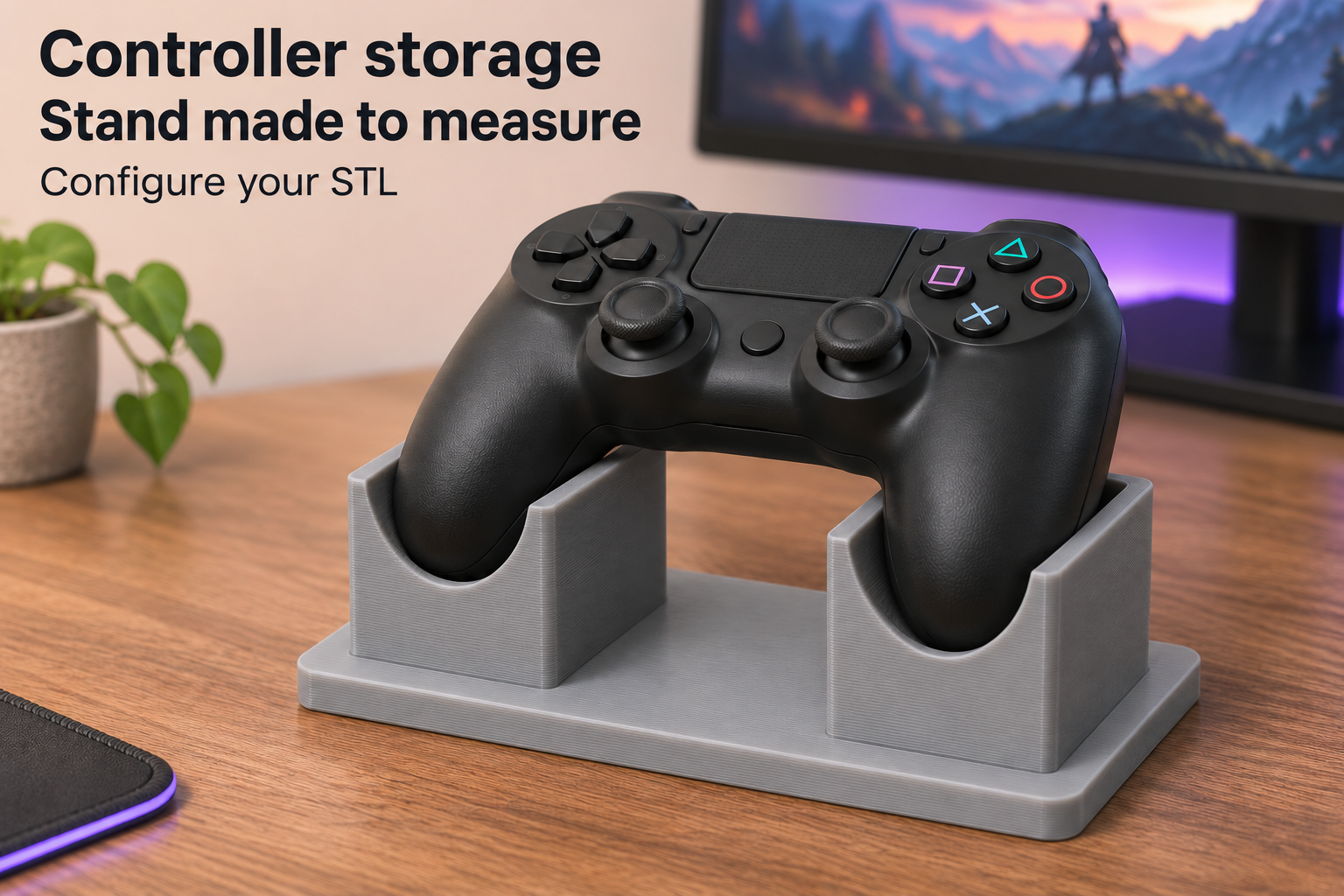
02.11.2026
Measure your gamepad at the actual contact points and create twin cradles that support its grips while keeping buttons, triggers and sticks clear.
Read more →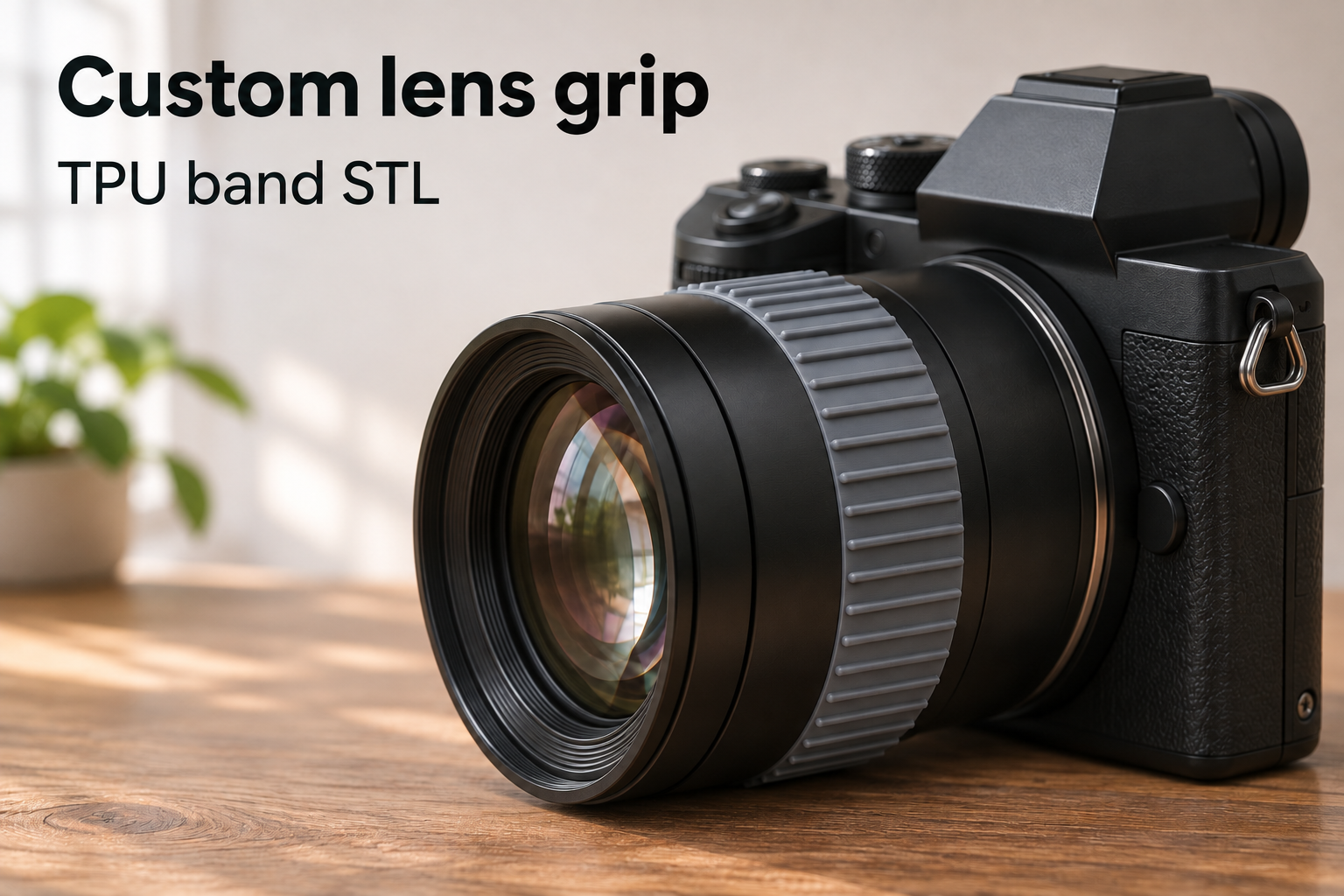
02.11.2026
If the focus or zoom ring still works but its rubber grip is missing, measure the existing grip zone and configure a ribbed TPU replacement that leaves moving joints clear.
Read more →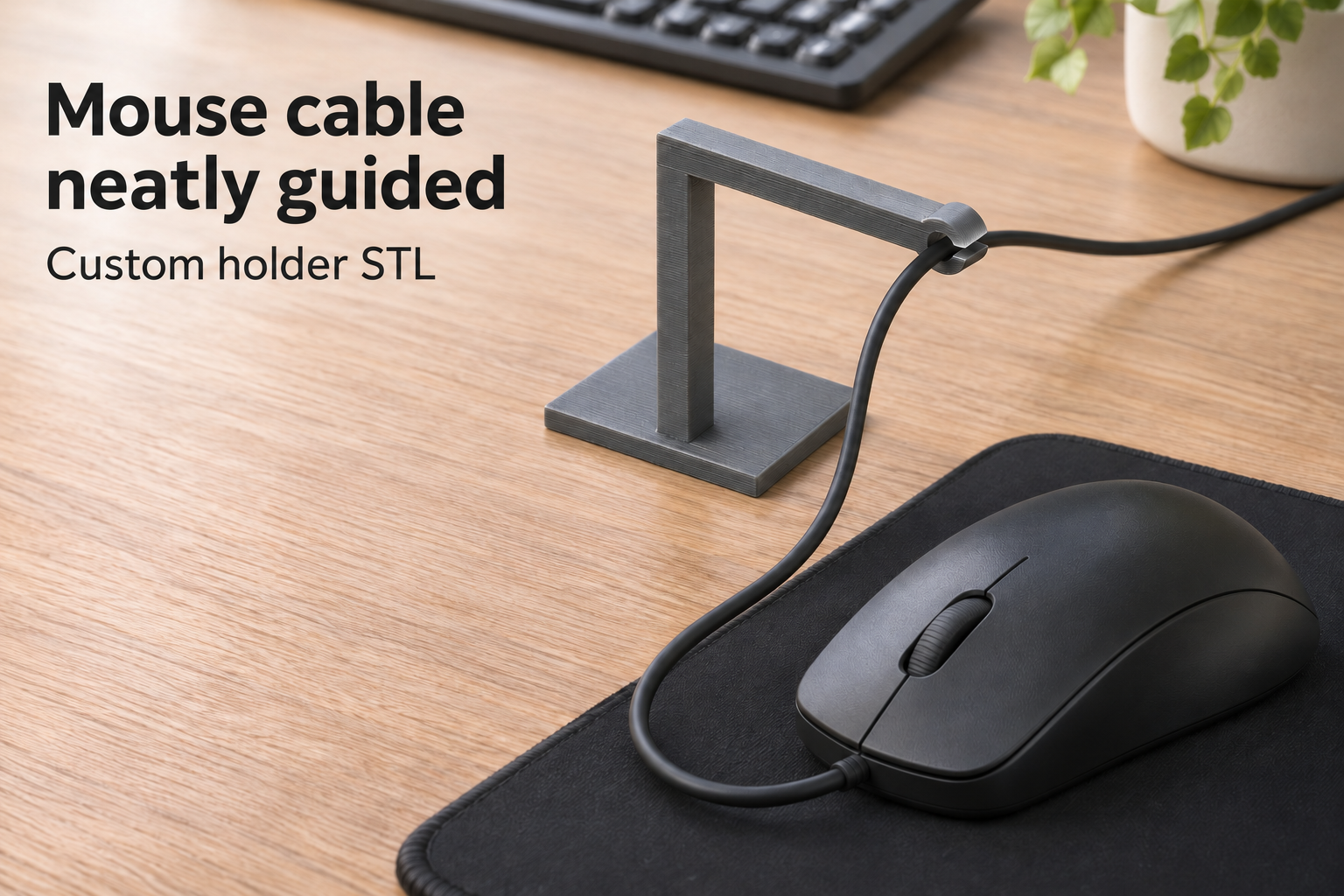
02.11.2026
Give your mouse cable a raised guide point. Choose arm height, reach and eye diameter, then leave a loose cable loop for your full mouse movement.
Read more →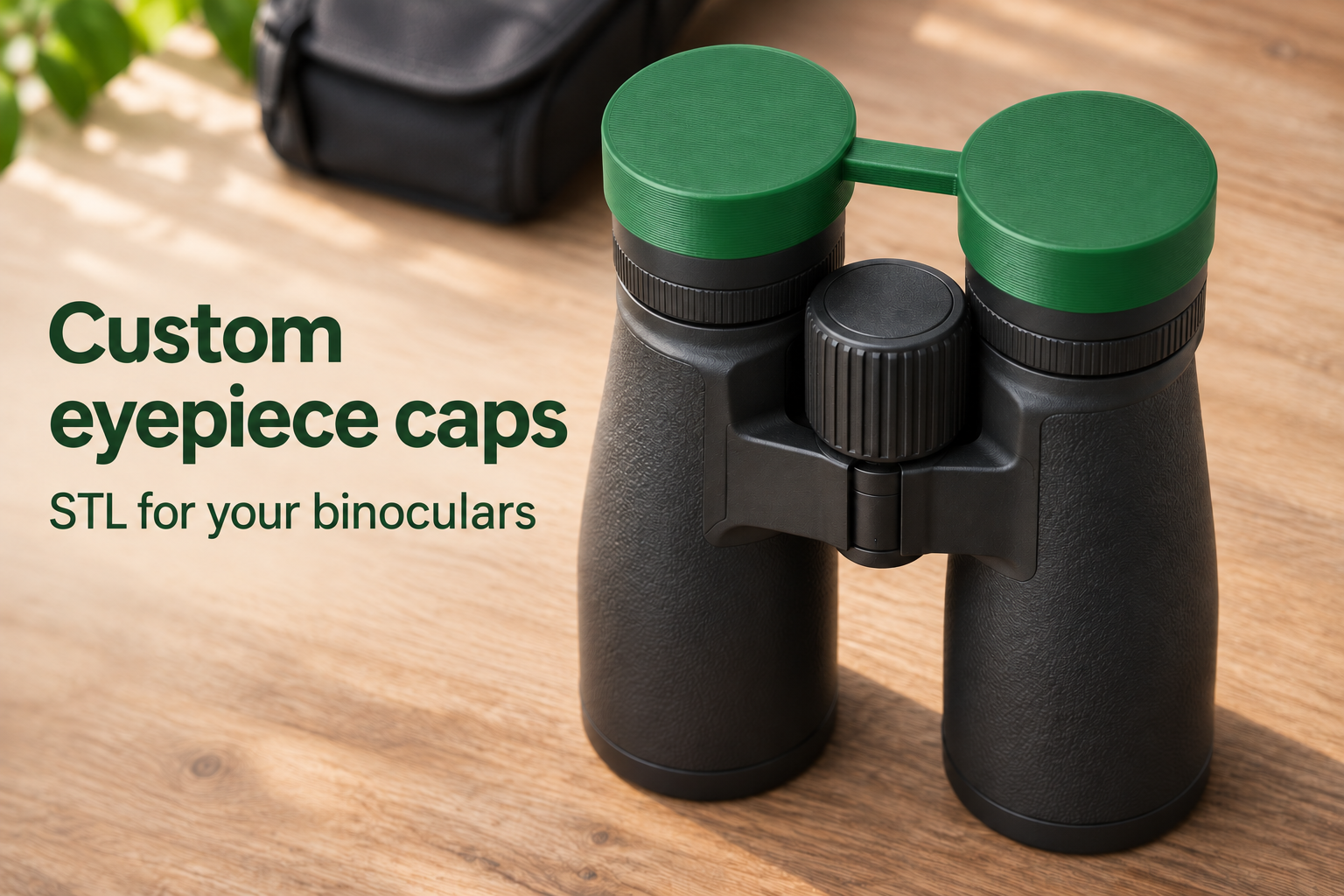
02.11.2026
Cover both eyepieces when putting your binoculars away. Measure the rims, socket spacing and insertion depth before configuring a printable TPU replacement.
Read more →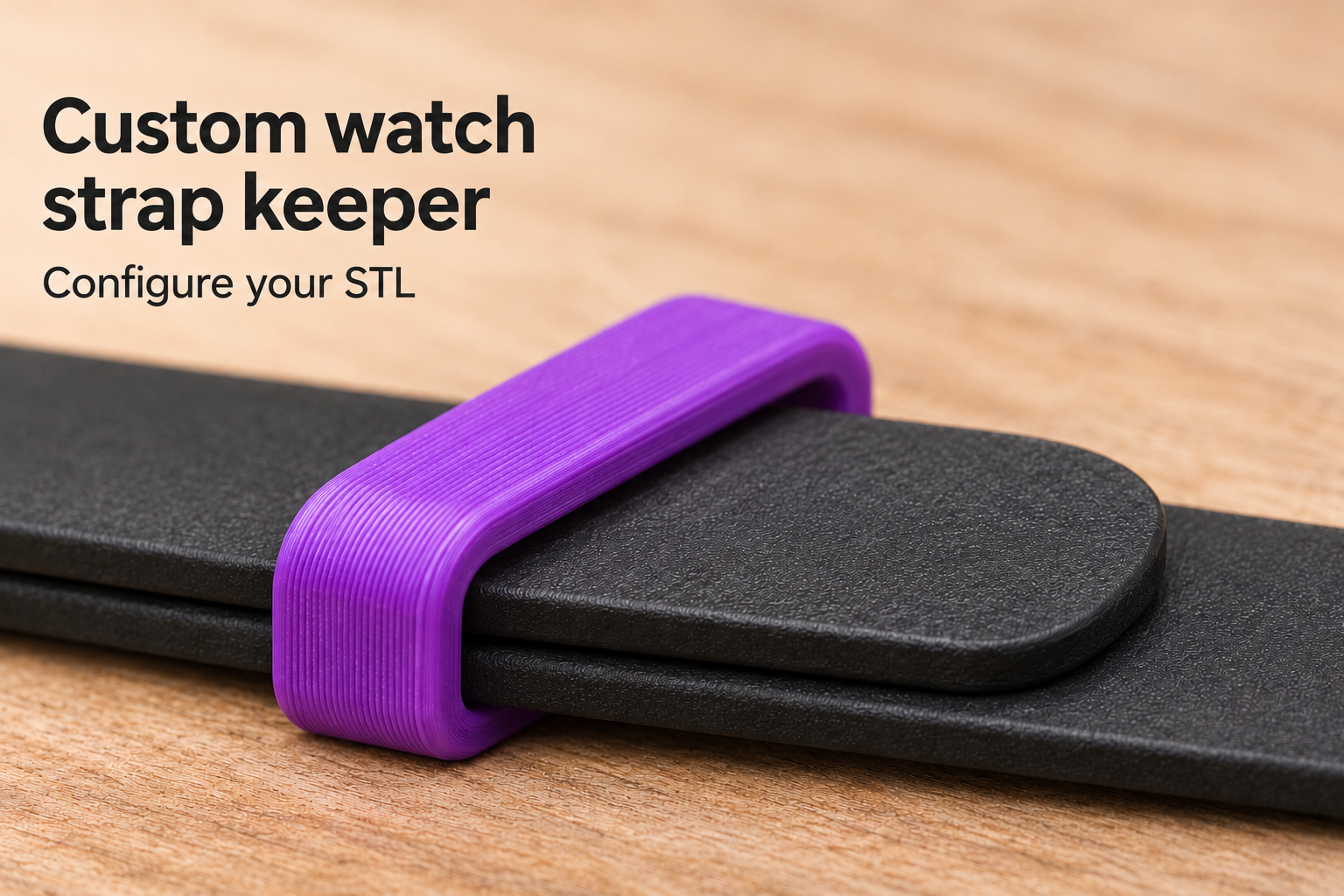
02.11.2026
Keep the loose tip of an already fastened watch strap in place. Measure both strap layers, configure the closed TPU keeper and print your custom STL.
Read more →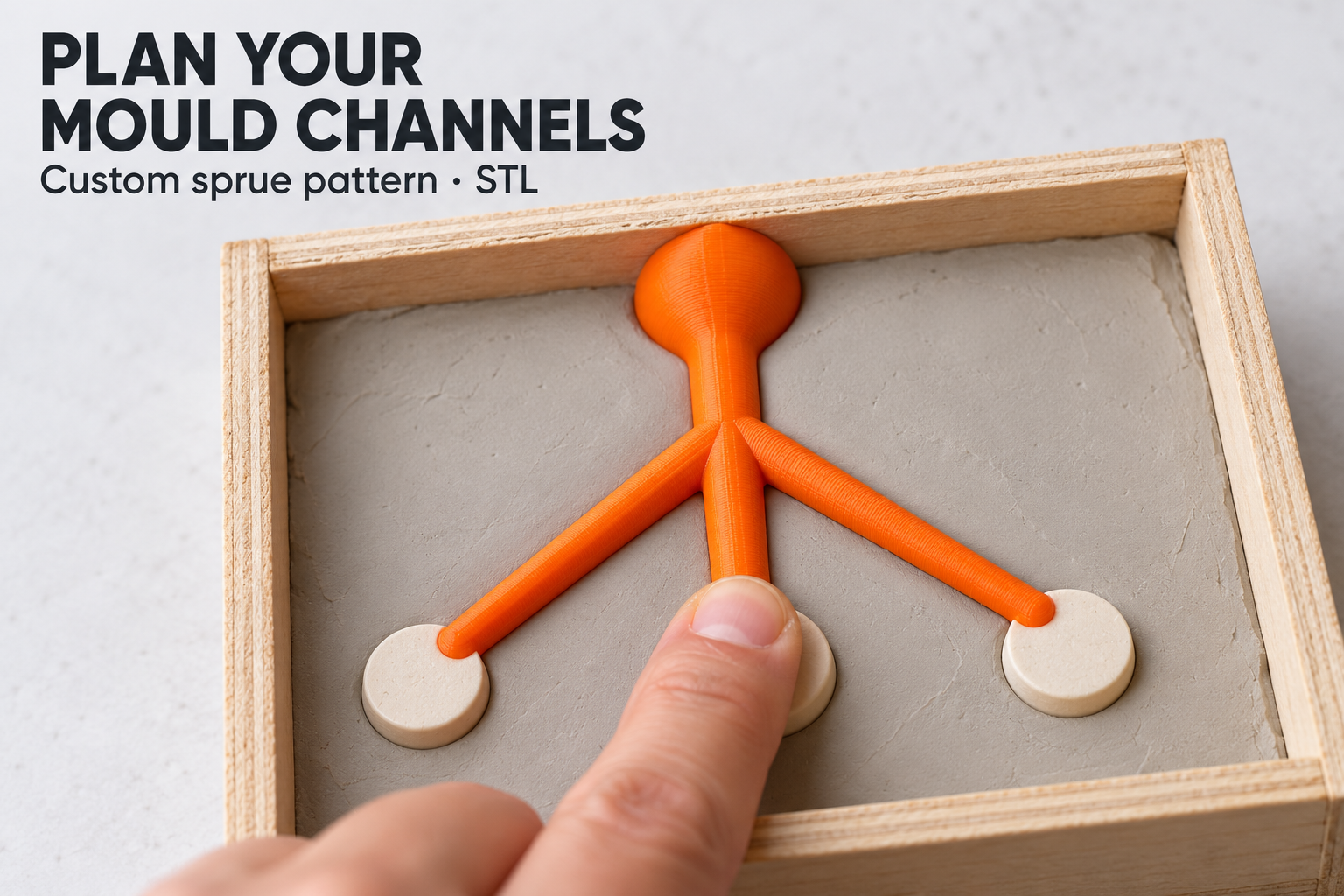
02.11.2026
Position a printed positive sprue pattern on your mould's parting plane. Adjust its length, outlet span and channel size before downloading the STL.
Read more →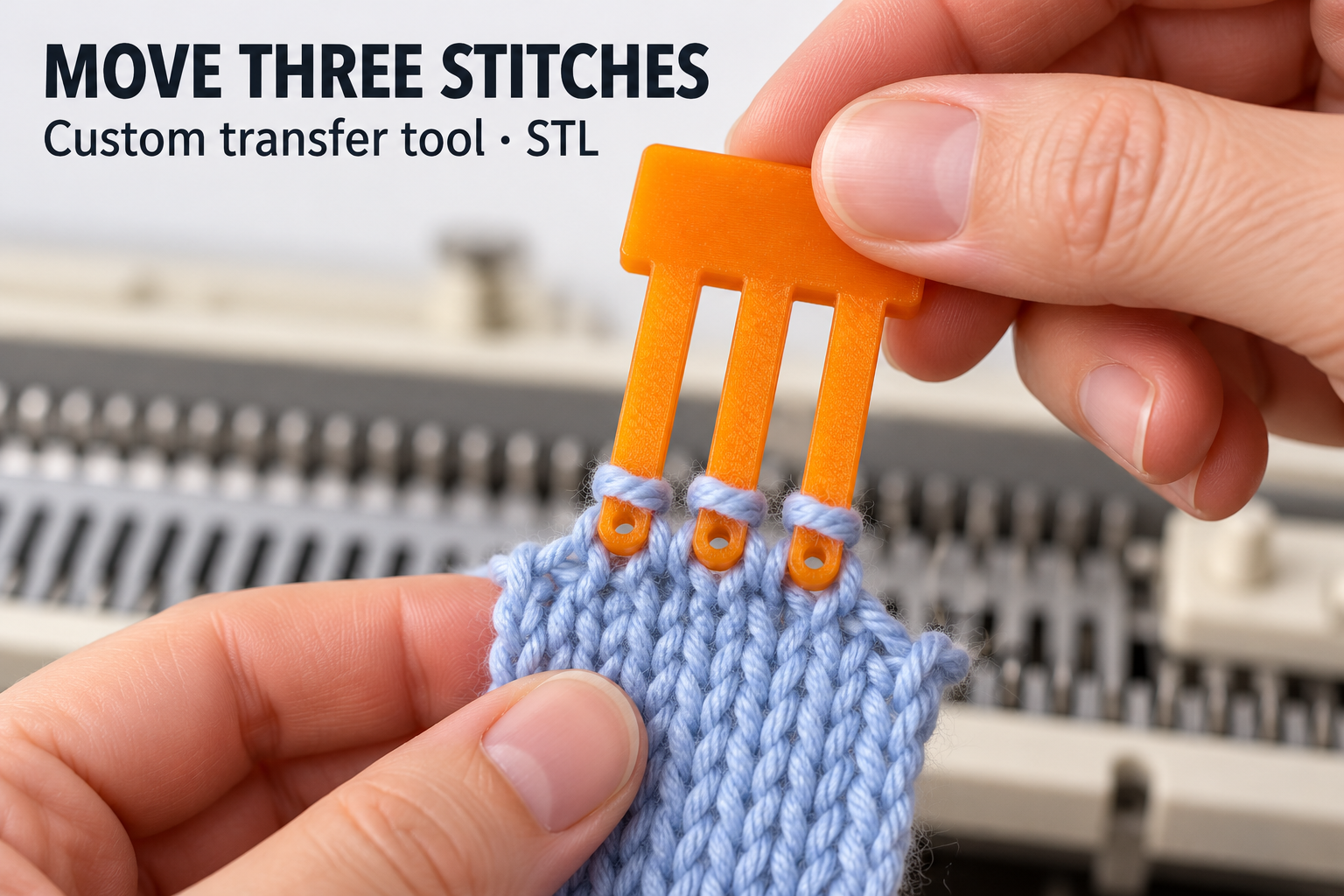
02.11.2026
Create a flat three-prong transfer tool with closed eyes. Set needle pitch, prong length and eye diameter, then print and check the fit with your own machine.
Read more →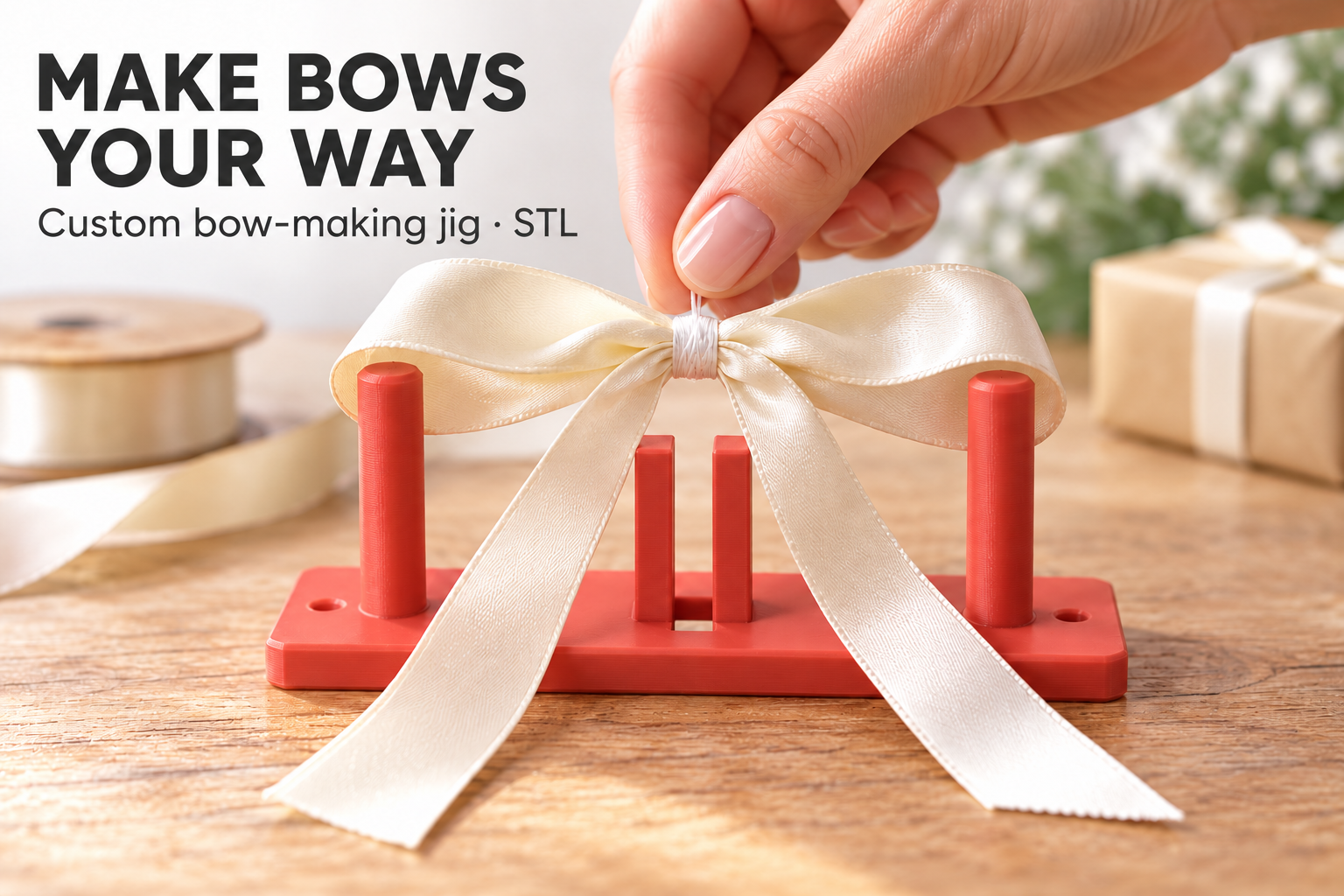
02.11.2026
Set the loop-post spacing, height and center gap for a bow-making jig you can print yourself. Wrap, tie and lift decorative ribbon bows from the same guide.
Read more →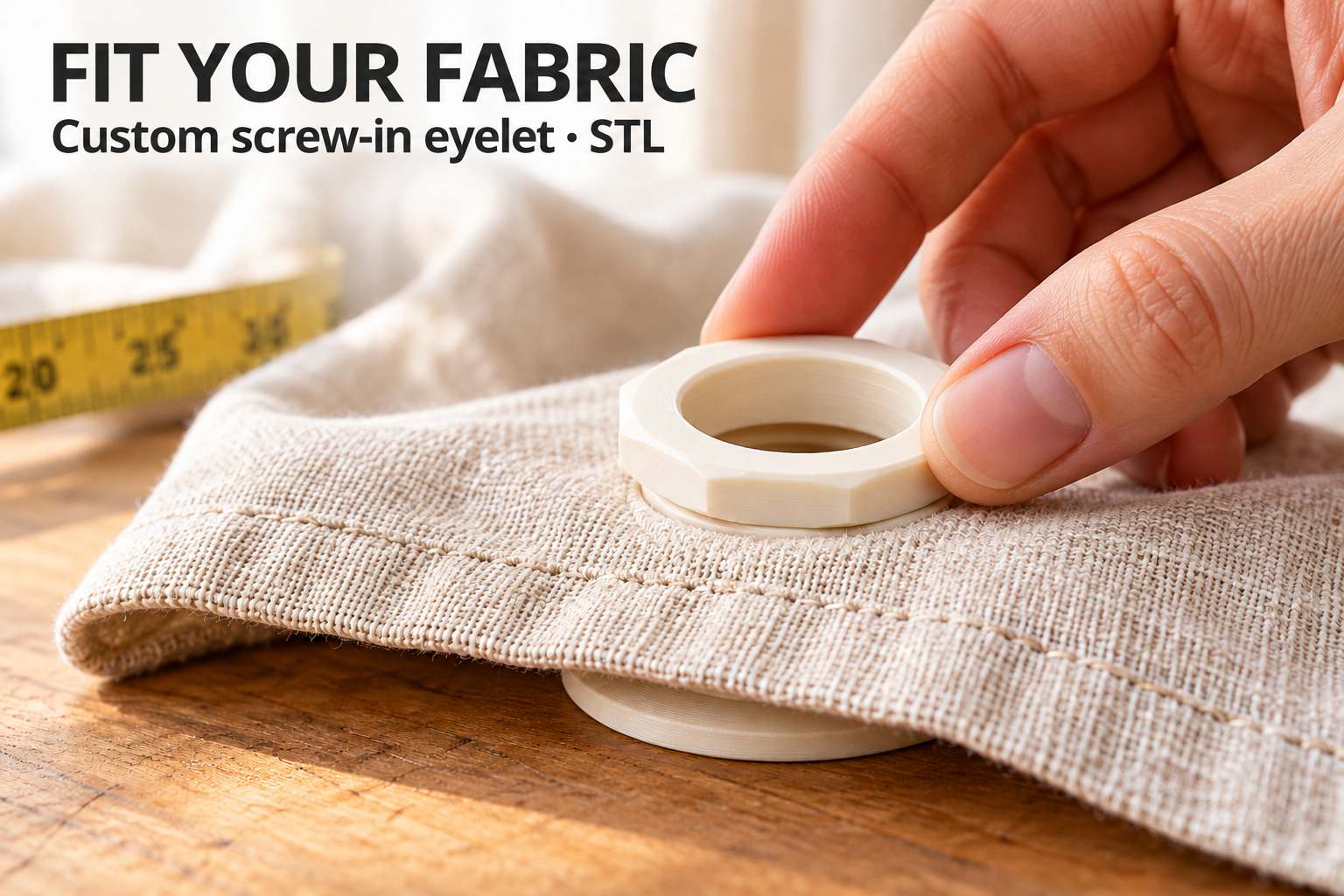
02.11.2026
Create a two-part eyelet sized for your fabric project. Adjust the opening, reinforced fabric thickness and rim, then download the STL to print both rings.
Read more →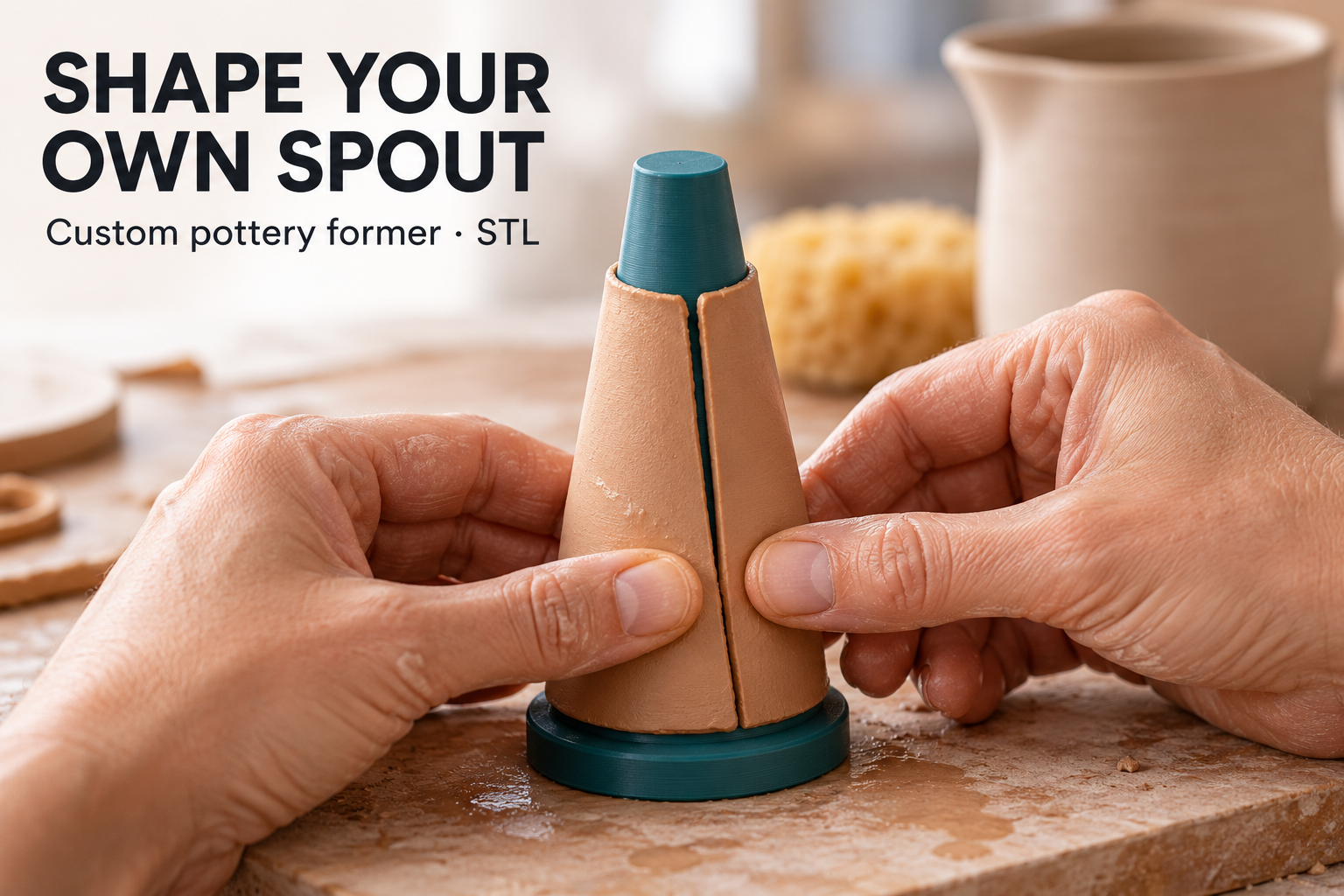
02.11.2026
Shape a hollow clay spout from a slab with a custom oval former. Set the base, tip and length, then download the STL for a reusable pottery tool.
Read more →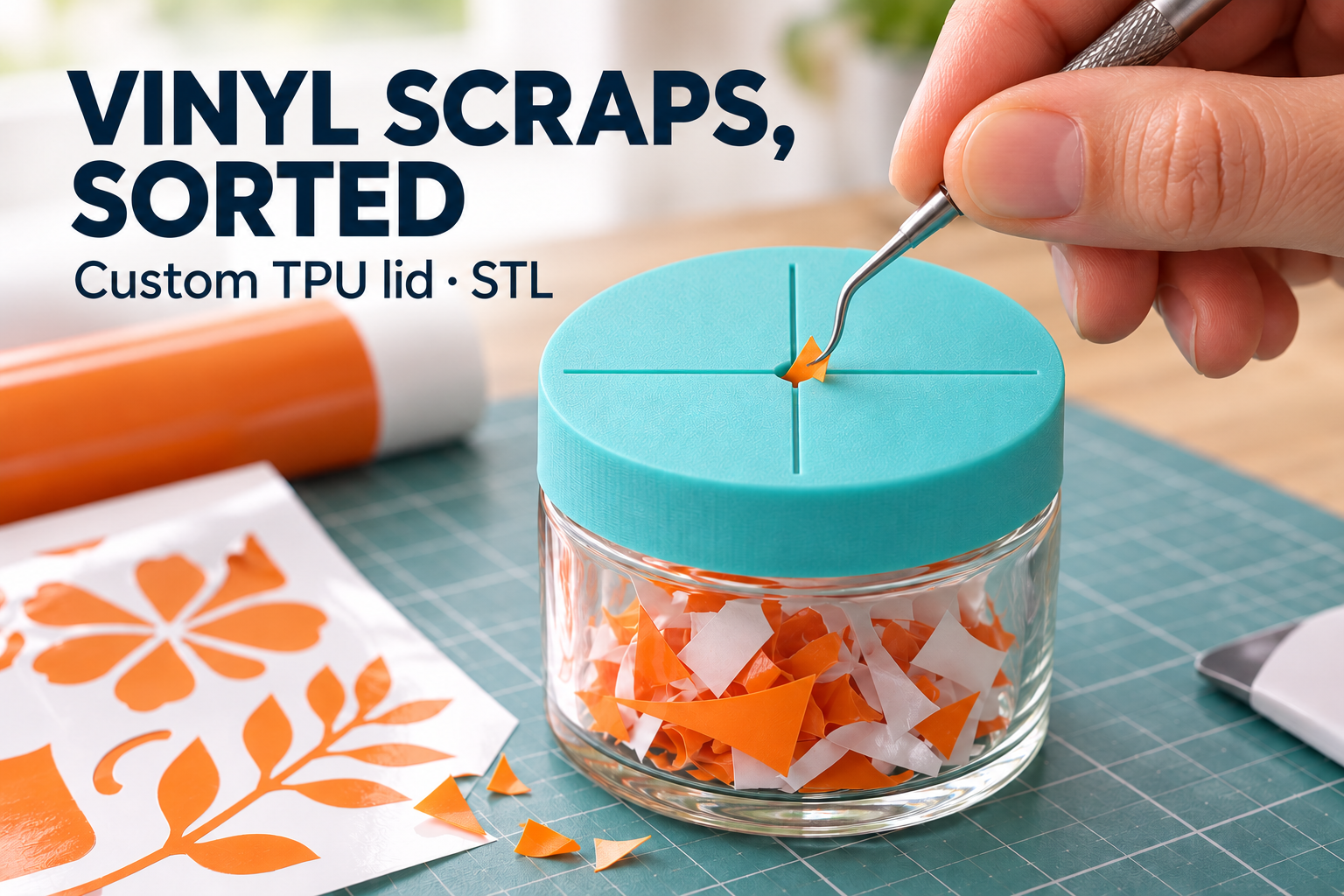
02.11.2026
Turn your own smooth-rimmed jar into a vinyl-scrap collector. Configure a flexible four-tongue lid, download the STL and print it in TPU.
Read more →
02.11.2026
Create a simple two-hole weight that hangs from your own soft loop while you separate embroidery floss. Adjust its diameter, thickness and hole spacing.
Read more →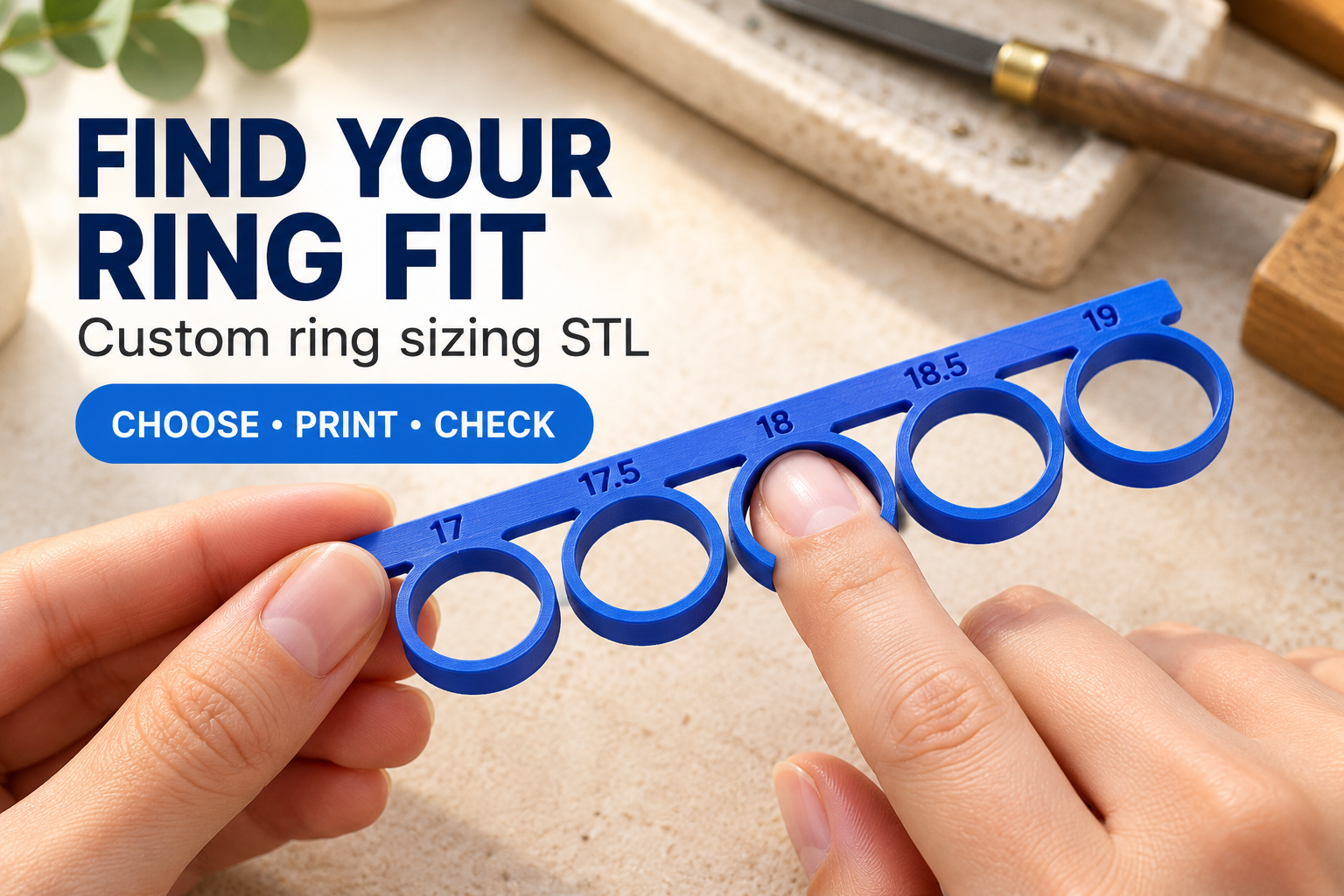
02.11.2026
Choose a middle diameter, size increment and band width to print five connected trial rings. Measure the finished openings before using the result in your ring design.
Read more →
19.04.2026
If the cup hinge hole in a cabinet door is torn out and the hinge no longer holds, a custom repair plate is often the simpler and more stable solution.
Read more →
19.04.2026
When two female threads need to be connected and no standard adapter fits properly, a custom double-threaded sleeve can solve the problem cleanly.
Read more →
18.04.2026
If an old sewing machine gear is broken and no spare part is available, measuring the gear and configuring a replacement can be a practical option.
Read more →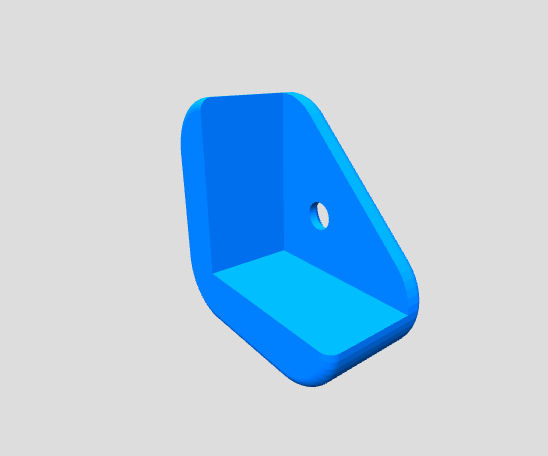
17.04.2026
A custom corner protector helps when standard profiles are too loose, too narrow, or not suited to the exact dimensions of the edge.
Read more →
17.04.2026
A custom remote control holder keeps the device in place when standard holders are too wide, too narrow, or poorly positioned.
Read more →