


Pipe Caps ·
Plastic Pipe Caps – The Complete Guide (Round, Square & Rectangular)
Configure pipe caps for round, square, and rectangular tubing to your exact dimensions. The complete guide: applications, how to measure a pipe, choosing the right material, and building a custom pipe cap online without standard sizes.
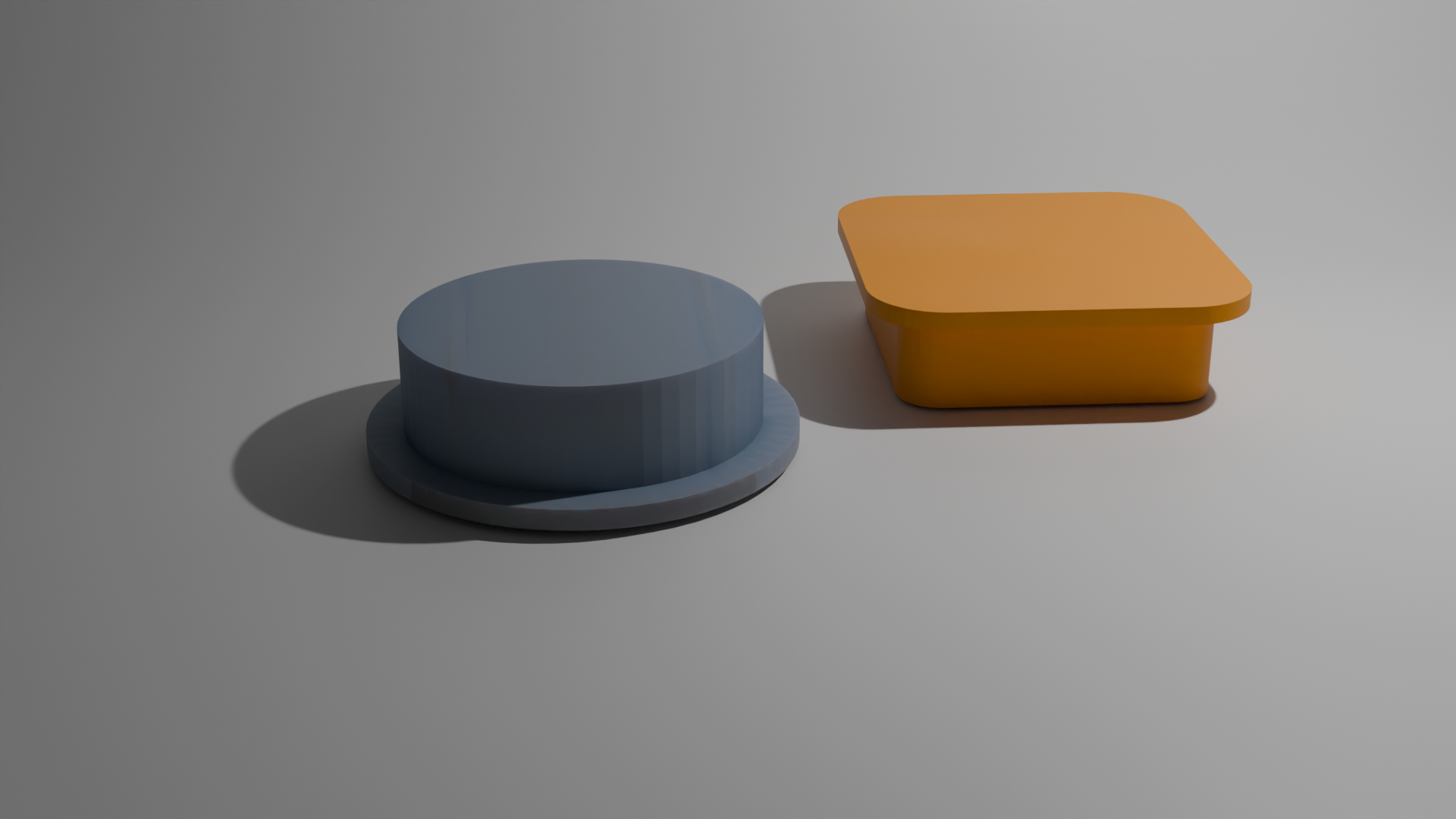
🔍 Configure a custom pipe cap online
Round, square, or rectangular: finding the right off-the-shelf pipe cap is often harder than it sounds. With three dedicated cap configurators you build your end cap to the exact dimensions of your pipe or profile - right in the browser, no CAD skills required.
- Choose the tube shape: round, square, or rectangular.
- Enter the diameter, side length, or width/height.
- Set the insertion depth and optionally a lip overhang or corner radius.
- Check the 3D preview, get an instant price, and order directly.
What is a pipe cap?
A pipe cap - also called an end cap, tube cap, or pipe plug - is a fitting placed over or inserted into the open end of a round pipe, square tube, or rectangular profile. It closes the opening fully or partially, creating a clean, safe finish. This is the same part often searched for as \"end cap\" in English-language catalogs and marketplaces.
Why do you need a pipe cap?
An open tube end is rarely just a cosmetic issue. Without a cap, moisture, dust, insects, and dirt work their way into the cavity, which can lead to internal corrosion on metal tubing. Sharp or rough cut edges on open tube ends are also an injury risk, especially on furniture, railings, and gym equipment that people come into direct contact with. A pipe cap solves both problems at once: it seals the tube against what's outside and rounds off the edge safely.
Where are pipe caps used?
Pipe caps show up anywhere a round, square, or rectangular profile has an open end that needs to be sealed, permanently or temporarily - from furniture making to gym equipment builds to industrial installations. The sections below cover the right cap shape and the concrete use cases in detail.
Which pipe cap do I need?
Choosing the right cap shape comes down entirely to the cross-section of the pipe or profile you're capping. The three base shapes cover nearly every common use case.
Round pipe cap - for round tubing
The round cap is the classic round pipe cap for circular tube cross-sections. It works for steel pipe, aluminum tubing, furniture legs, and any round-tube build. In the configurator you set diameter, insertion depth, and optionally a lip overhang - the latter gives a clean, slightly overhanging edge that fully covers the tube wall.
Square pipe cap - for square tubing
The square cap is the matching square tube cap for square profiles, such as table legs, frames, or square-tube structures. Alongside side length and insertion depth, you can also set the corner radius to precisely match sharp or rounded profile corners.
Rectangular pipe cap - for rectangular tubing
The rectangular cap fits rectangular profiles where width and height differ - common on many chair and table frames or railing profiles. Width, height, and insertion depth are entered independently, so even unusual aspect ratios get an exact fit.
What are pipe caps used for?
Pipe caps show up in nearly every field that uses tube or profile construction:
- Furniture: table legs, chair frames, shelving structures, and industrial-style pipe furniture.
- Gym equipment: weight benches, pull-up bars, and racks with open tube ends.
- Railings and stairs: handrails and railing posts, where open ends would be both unsightly and hazardous.
- Machine building: protective covers for open tube and profile ends on equipment and fixtures.
- Aluminum profiles: extrusion system profiles whose open ends need to be closed off.
- Steel pipe: fence posts, awnings, and outdoor structures where moisture ingress and internal corrosion need to be prevented.
- Outdoor furniture: tube frames on loungers, benches, and tables used outside.
How do I measure a pipe correctly?
For the cap to fit exactly, three measurements matter, which you should determine before configuring:
Outer diameter or outer dimension
The outer diameter (for round tubing) or the outer width/height/side length (for square and rectangular profiles) determines how far the cap covers the tube and how large the visible outer contour of the cap becomes. Measure with calipers as close to the open tube end as possible, since tubing can vary slightly due to manufacturing tolerances.
Inner diameter or clear opening
The inner diameter or clear opening of the profile determines how deep and with how much oversize the cap's insertion plug needs to be produced so it fits snugly, without force, into the tube. On the BuildYour3D cap models, this is captured through the \"insertion depth\" setting and the fit tolerance in the configurator.
Wall thickness
Wall thickness is the difference between the outer and inner dimension and affects how the cap sits against the tube edge - especially for caps with a lip overhang that visibly covers the wall from the outside. For thin-walled profiles, a smaller overhang usually works best; for thick-walled profiles, a more generous overhang can be used.
What materials work best?
Several materials are available for 3D printed pipe caps, differing in strength, temperature resistance, and weather behavior:
- PLA: Good for samples, indoor use, and applications without mechanical or thermal stress. Not UV- or weather-resistant.
- PETG: Noticeably tougher and more moisture-resistant than PLA, a solid standard choice for most furniture and indoor applications.
- ABS: Robust and somewhat more heat-resistant than PETG, but trickier to print (warping); suited to more heavily used indoor parts.
- ASA: The recommended choice for outdoor use - UV-resistant and weather-stable, ideal for outdoor furniture, railings, and fence posts.
- TPU: Flexible and shock-absorbing, useful when the cap also serves as a bumper or needs to seal snugly on a slightly out-of-round tube end.
As a rule of thumb: indoor use, low load → PLA or PETG. Higher mechanical load indoors → PETG or ABS. Outdoor use, sun, and moisture → ASA. Extra cushioning or tolerance compensation → TPU.
Custom 3D printed pipe caps instead of a fixed size
Hardware-store pipe caps only come in a handful of standardized diameters and edge lengths - for special sizes, older furniture, imported profiles, or unusual wall thicknesses, finding the right cap is usually a dead end. On BuildYour3D, pipe caps are generated to your exact requested dimensions: you enter diameter, side length, or width and height plus insertion depth directly in the configurator, check the result in the 3D preview, and get an exact-fit part - no standard sizes required. That's the key difference from catalog parts: instead of adapting to a preset size, the cap adapts to your tube.
Your benefits
- ✅ Three base shapes: round, square, rectangular
- ✅ Diameter, side length, or width/height freely adjustable
- ✅ Insertion depth, lip overhang, or corner radius individually adjustable
- ✅ No CAD skills required
- ✅ Instant price calculation
- ✅ Download as STL or order directly with 3D printing
FAQ
How do I measure a pipe cap correctly?
What matters is the outer dimension (diameter, side length, or width/height), the inner dimension or clear opening, and the wall thickness of the tube. Measure as close to the open tube end as possible.
What size pipe cap do I need?
The right size comes from the outer and inner dimensions of your specific pipe or profile. Since every cap is configured individually, you enter your measured values directly in the configurator.
Are the pipe caps weatherproof?
That depends on the material chosen. For outdoor use, ASA is recommended for its UV and weather resistance. PLA and PETG are better suited to indoor use.
Can I order a custom size?
Yes. That's the whole point of the configurator: you enter your own dimensions, and no standard sizes are required.
How thick should the pipe cap wall be?
That depends on the load and the material chosen. For purely cosmetic caps, a thinner wall is fine; for load-bearing or outdoor caps, a slightly thicker wall combined with PETG or ASA is recommended.
Can I download the STL file?
Yes. Once configured, you can download the model as an STL and print it yourself or through any provider, or order the 3D print directly.
How long does production take?
Configuration and pricing happen instantly online. Production time for the 3D print depends on size, material, and current load, and is shown during checkout.
Configure your pipe cap now
Choose the right shape - round, square, or rectangular - enter your dimensions, and order your custom pipe cap directly with 3D printing.
Nächster Schritt