


Timing Belt Pulley ·
Custom Timing Belt Pulley – Configure a Belt Pulley Online and Generate an STL File
Design a custom timing belt pulley online. Configure the number of teeth, belt pitch, shaft bore, flanges and pulley dimensions. Download an STL file or order a professional 3D print.
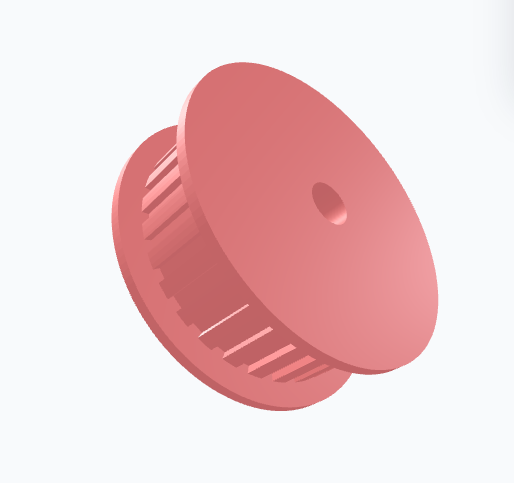
Configure a Custom Timing Belt Pulley Online
Timing belt pulleys provide accurate, slip-free power transmission and are widely used in CNC machines, 3D printers, robotics, conveyor systems and industrial automation. With our parametric configurator you can create a custom timing pulley that perfectly matches your belt drive without using CAD software.
How to Configure a Timing Belt Pulley
Number of Teeth
The number of teeth determines the pulley diameter and the transmission ratio. Larger pulleys rotate more slowly but move more belt per revolution, while smaller pulleys allow higher rotational speeds.
Belt Pitch
The belt pitch must always match the timing belt you are using. Common profiles include GT2, HTD and other timing belt standards. A pulley and belt with different pitches cannot mesh correctly.
Belt Width
Select the pulley width according to the width of your timing belt. Using the correct width ensures stable guidance and reliable torque transmission.
Shaft Bore
The configurator supports multiple shaft connections, including a standard round bore, D-shaft bore and keyway. This allows the pulley to fit electric motors, gearboxes and custom drive shafts.
Outside Diameter
The outside diameter depends on the tooth count and belt pitch. It influences the available installation space and the belt speed.
Flanges
Single or double flanges help keep the timing belt centered and prevent it from moving sideways during operation, especially in longer belt drives.
Tooth Groove Depth
The groove depth determines how accurately the belt teeth engage with the pulley. Proper geometry reduces wear and ensures smooth operation.
Typical Applications
- CNC routers
- 3D printers
- Robotics
- Automation systems
- Conveyor technology
- Packaging machines
- DIY engineering projects
- Prototype development
Why Use a Parametric Pulley?
Standard timing pulleys often do not provide the required tooth count, shaft bore or flange configuration. With a parametric model you can combine all critical dimensions into a single custom pulley that fits your machine perfectly.
Download the STL or Order a 3D Print
After completing your design you can immediately download the STL file or order a professionally manufactured pulley. This makes it easy to produce replacement parts, prototypes and custom drive components.
Frequently Asked Questions
Does the pulley pitch have to match the timing belt?
Yes. The pulley and timing belt must always use the same pitch.
Which shaft bore should I choose?
A round bore is suitable for many applications, while D-shafts and keyways provide improved torque transmission.
Why are flanges important?
Flanges keep the timing belt aligned and reduce the risk of the belt running off the pulley.
Can I download the pulley as an STL file?
Yes. After configuration you can download the STL file or order a professional 3D printed pulley.
Configure Your Timing Belt Pulley Now
Select the tooth count, belt pitch, shaft bore and flange type to generate a custom timing belt pulley in just a few minutes.
Nächster Schritt