

Hobbies, learning & leisure STL guides ·
Open dice tower STL: Create a Custom-Size 3D Model
Create a custom-size open dice tower STL for your own 3D printer. Check the model controls, measure the fit and buy the generated digital file.
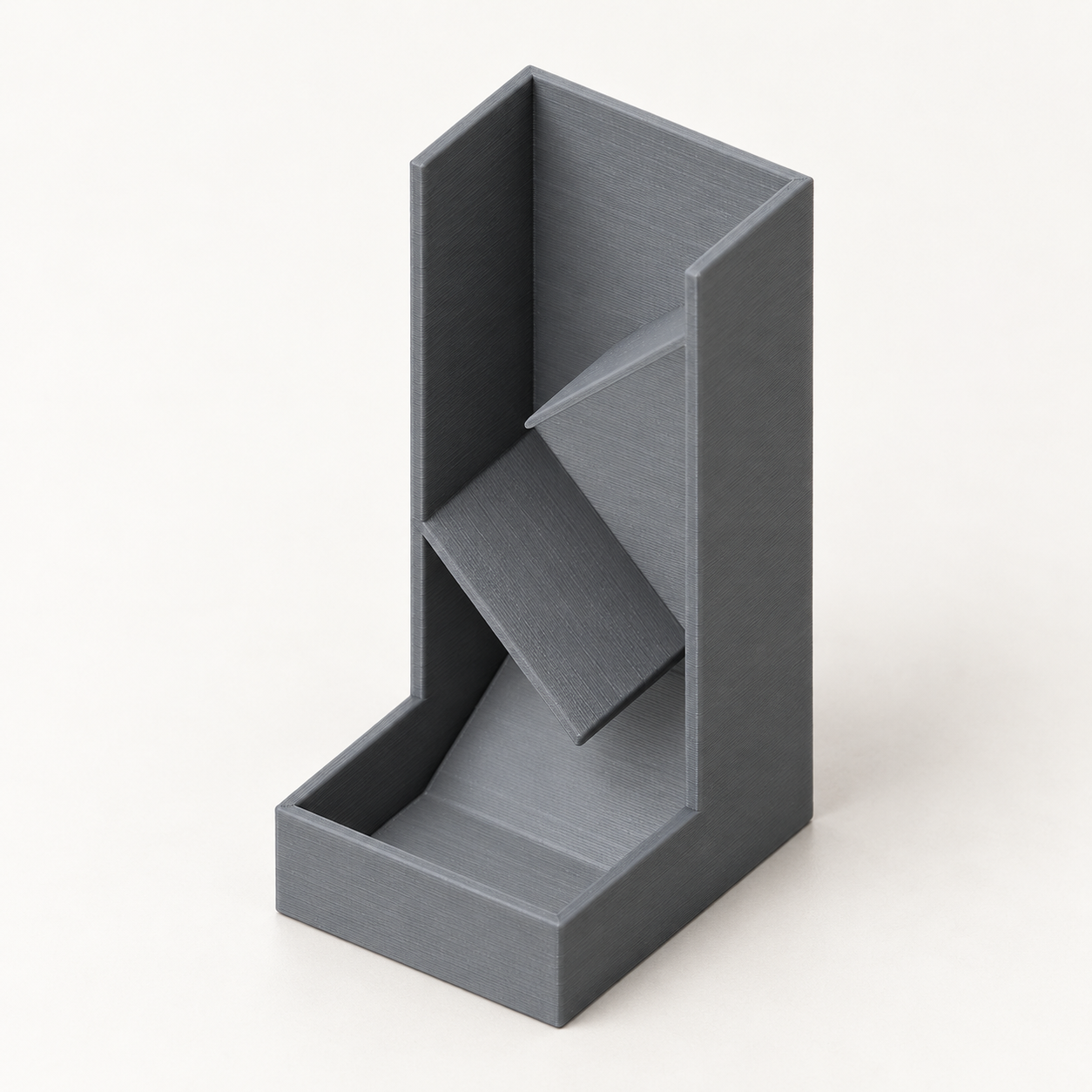
The open front provides access to two staggered ramps. A sloped floor sends dice into the integrated tray. Measure the largest dimension across opposite dice corners. Inner width is three times this dimension plus 20 mm; tower height is seven times it plus 50 mm. Drop one die gently at a time and check clearance and containment with your dice. No claim of statistically fair rolls. Check ramp supports in the slicer; remove through the open front. Use a brim for the tall print.
With the Open dice tower with two ramps sized to your dice template, you can turn those measurements into a custom-size STL. Review controls such as largest die dimension across corners, clear tray length ahead of tower, wall and ramp thickness, check your model in the preview and choose the digital file. You buy the generated STL and print it on your own 3D printer, using your preferred filament and slicer settings.
Measurements for your open dice tower STL
The product page exposes the following useful geometry controls. Work from your measured parts and check the displayed units and the preview before entering final values.
| Model control | What to check |
|---|---|
| Largest die dimension across corners | Check this feature against the matching component and confirm its effect in the 3D preview. |
| Clear tray length ahead of tower | Check both endpoints of the named feature, including its working reach or engagement. |
| Wall and ramp thickness | Check the remaining material around openings and inspect the walls in the slicer preview. |
Confirm the working geometry before buying the file
Compare the pictured shape with the actual task, not only the product name. Mark which faces touch other objects, which parts need to move and which pieces are supplied separately. The model controls change an existing design; they do not automatically add a feature that the template does not include. Check the complete motion or assembly space in the preview before choosing your final dimensions.
Configure the model, buy the STL and print locally
- Open the open dice tower product page and compare the model preview with your application.
- Enter the relevant measurements. Use the units displayed beside each input; convert inch measurements before using a millimetre field.
- Review the complete geometry and keep a record of your parameter values. Check small openings, mating features and remaining wall thickness.
- Choose the digital STL purchase option and review the current price and order details before payment.
- After receiving the STL, open it in your slicer, confirm the imported dimensions and inspect the layer preview before printing.
Configure my open dice tower STL
Check a first print before making more
A CAD dimension and a printed dimension can differ. Print a fit sample or one prototype before making a batch, and check the features that contact other parts. Choose print orientation, supports and material for the actual geometry and application. There is no universal clearance or print profile that guarantees the fit on every machine.
Before you choose your STL
Why configure the model instead of scaling a download?
Uniform scaling changes all dimensions together. Here you can work with the available controls, including largest die dimension across corners, clear tray length ahead of tower, wall and ramp thickness, and check the result before purchase. Keep your input values for later revisions: the downloaded STL contains the final mesh, rather than the original parametric editing history.
What do I buy?
Select the digital STL option for the file you will print yourself. Review the current price and selected configuration before paying. Ordering a finished print is a separate option.
Make the next print fit your project
Have your measurements ready? Open the open dice tower template, adjust the model and inspect the preview. When the geometry matches what you need, choose your STL and take it to your own printer.
Next step